
2026-08-07
A 72-year-old male patient was diagnosed with hepatocellular carcinoma with bone metastasis, classified as BCLC stage C. At presentation, both the primary liver tumor and the iliac bone metastasis had grown into large masses, with persistent bone pain that prevented him from standing or walking.
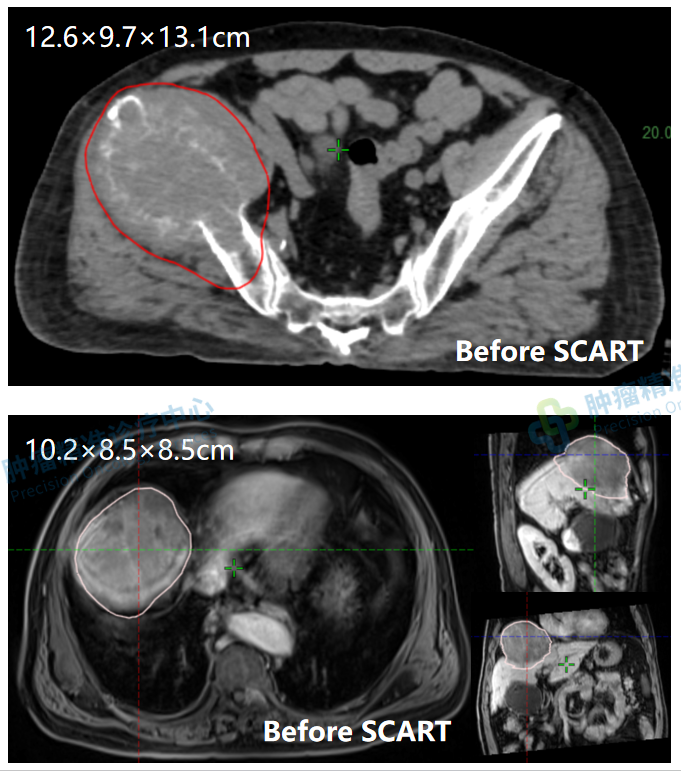
Imaging revealed an iliac bone metastasis measuring 12.6 × 9.7 × 13.1 cm and a primary hepatic tumor measuring10.2 × 8.5 × 8.5 cm. Given the massive lesion size, surgical resection carried a prohibitively high risk of complications. Standard stereotactic body radiation therapy (SBRT) was constrained by the tolerance dose limits of adjacent organs at risk, making it difficult to deliver an effective ablative dose. Meanwhile, systemic therapy with targeted agents and immunotherapy alone could not rapidly alleviate bone pain or control the bulky local lesions. Following a multidisciplinary team (MDT) evaluation, the medical team decided to perform local therapy using stereotactic central ablative radiotherapy (SCART).

The SCART regimen was prescribed as follows: a dose of 21 Gy in 3 fractions to the stereotactic tumor volume (STV), and 5 Gy in 3 fractions to the peripheral planning target volume rim (PTV rim). Using a dose-gradient approach, a high ablative dose was delivered to the tumor core, with a gradual dose decrease toward the margins—maximizing tumor control while minimizing dose to adjacent normal tissues.
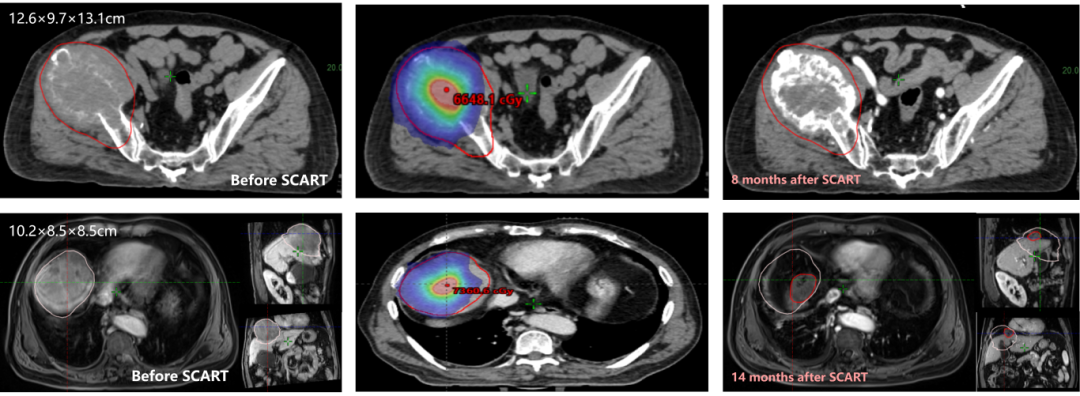
The patient achieved significant tumor regression following treatment. Approximately 6 months post-treatment, consolidation SBRT was administered to reinforce local control, combined with maintenance systemic therapy (targeted therapy plus immunotherapy).
Long-term follow-up demonstrated that at 8 months post-SCART, the iliac bone metastasis showed sustained regression; at 14 months post-treatment, the primary hepatic lesion remained stable and well-controlled. The patient's bone pain gradually subsided, allowing him to regain the ability to stand and walk, with a marked improvement in overall quality of life.
What Is SCART?
Stereotactic Central Ablative Radiotherapy (SCART) is a next-generation precision radiotherapy technique developed to tackle the clinical challenges of ultra-large, recurrent, and refractory solid tumors. SCART uses high-precision targeting to deliver a high ablative dose to the tumor core while tapering the dose at the margins to maximize tumor cell eradication. Compared with conventional radiotherapy, SCART minimizes damage to surrounding normal tissues, reduces side effects, and enhances patients' quality of life. Furthermore, it holds the potential to trigger additional biological immune responses——such as immunomodulation, disruption of tumor microvasculature, and the abscopal effect——thereby suppressing distant tumor lesions throughout the body.
The Core Advantages of SCART
1. Designed for Bulky Tumors: Optimized for large lesions (≥5 cm in diameter), overcoming the dose delivery limitations of conventional SBRT.
2. Dose-Gradient Organ Protection: Delivers a high ablative dose to the core with steep dose fall-off at the periphery, minimizing toxicity to surrounding healthy tissues.
3. Non-Invasive Treatment: Requires no surgery or anesthesia, offering high patient comfort and good tolerability for elderly and frail individuals.
4. Short Course of Care: Completes local tumor ablation in just a few fractions.
5. Synergy with Systemic Therapy: Combines radiotherapy with targeted therapy and immunotherapy, achieving both local tumor control and systemic disease management.
Eligible Patients for SCART
✓ Patients with large solid tumors where the maximum diameter is 5 cm or greater.
✓ Patients ineligible for surgery, or those for whom standard definitive radiotherapy is not feasible due to tumor size or organ-at-risk (OAR) dose constraints.
✓ Patients with inoperable locally advanced primary tumors, oligoprogressive or oligometastatic bulky lesions during systemic therapy, and recurrent tumors located within or adjacent to previous radiation fields.
✓ Patients with ECOG Performance Status 0—2 who are capable of adhering to motion management protocols.
Non-Eligible Patients for SCART
× Small tumors (<5 cm) amenable to SBRT
× Diffuse, widespread metastatic disease without a dominant bulky target lesion
× Inability to comply with image-guided radiotherapy (IGRT) or respiratory gating procedures
Conclusion
In the era of comprehensive cancer care, systemic medications alone often struggle to rapidly control bulky solid tumors. SCART precision radiotherapy offers a non-invasive, targeted local option for patients with advanced bulky tumors. By integrating SCART with systemic therapy, many patients who previously lost the opportunity for local definitive care have achieved long-term tumor control, pain relief, and restored mobility——gaining renewed hope for survival.
Fosun Health Foshan Chancheng Hospital is a top-tier Grade III Class A general hospital and one of the leading private hospitals in China. Our Precision Oncology Center provides world-class cancer care, including advanced radiotherapy technologies such as SCART and CyberKnife, backed by an experienced multidisciplinary team of specialists led by Dr. Yang Jun.
Related Reading
▶ Meet Dr. Yang Jun, Director of Precision Tumor Diagnosis and Treatment Center
▶ Oncology Center ——Precision Cancer Care
▶ CyberKnife Radiosurgery Technology
Fosun Health —— Bringing world-class healthcare closer to you.