
2026-10-10
A young life and a happy family were disrupted by recurring pain with no obvious cause. What was behind it? How does a stranger in a foreign land seek medical care? And how does a mother cope with being away from her children?
Recently, the Department of Orthopedic Surgery I at Guangzhou Fosun Chancheng Hospital (Guangzhou Xinshi Hospital), affiliated with Fosun Health, successfully treated a young mother from another country who had suffered from unexplained lower back and leg pain for seven months. She has recovered well and has been discharged home to continue her recovery.
AMY, a 20-year-old mother of two from Mali, had been suffering from recurring lower back and leg pain for seven months with no clear cause. At times, the pain made it difficult for her to walk, sit, or stand normally, seriously affecting her daily life.
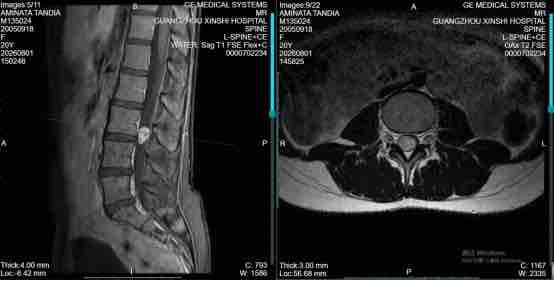
In September this year, when the pain became unbearable, AMY sought treatment at the Department of Orthopedic Surgery at Guangzhou Fosun Chancheng Hospital. Director Ying Wenkui led the team in conducting the necessary examinations.
Contrast-enhanced lumbar MRI revealed a mass within the spinal canal at the L3–L4 level, suspected to be a schwannoma, along with degenerative changes in the lumbar discs. The tumor was compressing nearby nerves—the main cause of her recurring pain and limited mobility. Director Ying recommended surgery to remove the tumor, relieve the nerve compression, and restore spinal stability.
Schwannomas are generally benign tumors that grow slowly. Their exact causes are not clearly established, and they are not directly associated with everyday factors such as personal habits, diet, emotional state, or physical trauma.
However, AMY's tumor was located at the critical L3–L4 level, close to nerves responsible for sensation and movement in the lower limbs, as well as bladder and bowel function. The limited surgical space and dense concentration of nerves made precision particularly important.
With extensive orthopedic surgical experience and a strong sense of responsibility for his patient, Director Ying Wenkui completed the preoperative assessment, developed a personalized surgical plan, and explained the procedure to AMY with patience. He then led the team in performing resection of an L3–L4 spinal canal mass, pedicle screw fixation, and bone grafting with autologous and artificial bone.
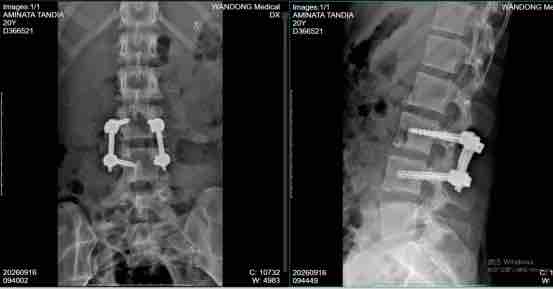
During surgery, the tumor was completely removed, relieving the nerve compression. Pedicle screw fixation and bone grafting with autologous and artificial bone were then used to restore spinal stability and lay the foundation for AMY's subsequent rehabilitation.
Postoperative lumbar X-rays showed that the internal fixation devices were well positioned.
Postoperative care became another act of compassion that transcended language barriers.
AMY, from Mali in West Africa, usually communicates in French. She had expected that seeking treatment abroad would mean struggling with language barriers and caring for her children. Yet the thoughtful support from the department meant that many of the preparations she had made before admission proved unnecessary.
Throughout her treatment, the medical team used translation software and involved her husband, who understood some Chinese, to facilitate communication. From taking her medical history and explaining the procedure before surgery to providing postoperative instructions and rehabilitation guidance, the team checked her understanding and explained matters repeatedly, building trust through patience and professionalism.
With careful treatment and nursing, AMY made a smooth recovery. She was soon able to get out of bed and walk with the assistance of a walking aid. In late September, she was discharged after her recovery and returned home to reunite with her children. Before discharge, the team reviewed the necessary precautions with her and advised her to attend regular follow-up appointments and gradually progress with her rehabilitation exercises.
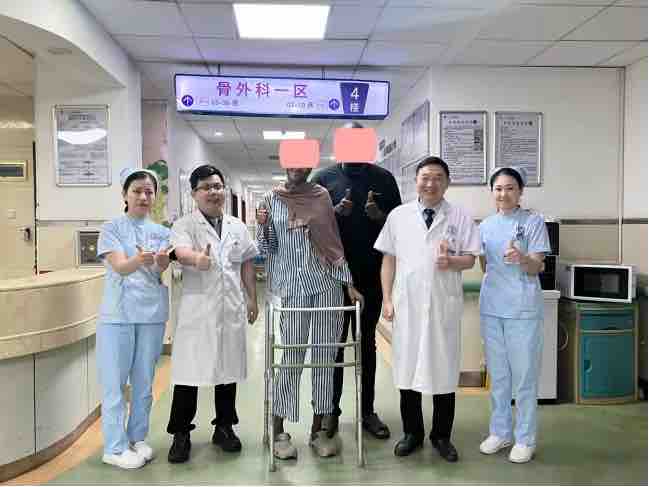
From Mali to Guangzhou, from a language barrier to mutual trust—AMY's successful treatment demonstrates the Department of Orthopedic Surgery's expertise in treating spinal canal tumors and performing spinal reconstruction. It also reflects the hospital's commitment to providing international patients with both skilled medical care and compassionate support.
Looking ahead, the Department of Orthopedic Surgery at Guangzhou Fosun Chancheng Hospital will continue to advance its work in spinal surgery—safeguarding patients' spinal health through surgical expertise and compassionate care.
Source: Guangzhou Xinshi Hospital Official WeChat Account