


Breast Cancer Overview
Breast Cancer Overview
Breast cancer is several diseases sharing one name, and the molecular report matters as much as the stage. This page explains what the disease is and how it behaves — then opens into six full guides covering symptoms, diagnosis, treatment, causes, prevention, and the practical questions international patients ask most.
-
2.3M
new breast cancer cases worldwide each year (WHO)
-
420,000+
new cases a year in China — about 17% of the world total
-
30–50%
of Europe or US cost for the same comprehensive drug treatment
-
48 hrs
from complete records to a personalized MDT plan
What breast cancer is
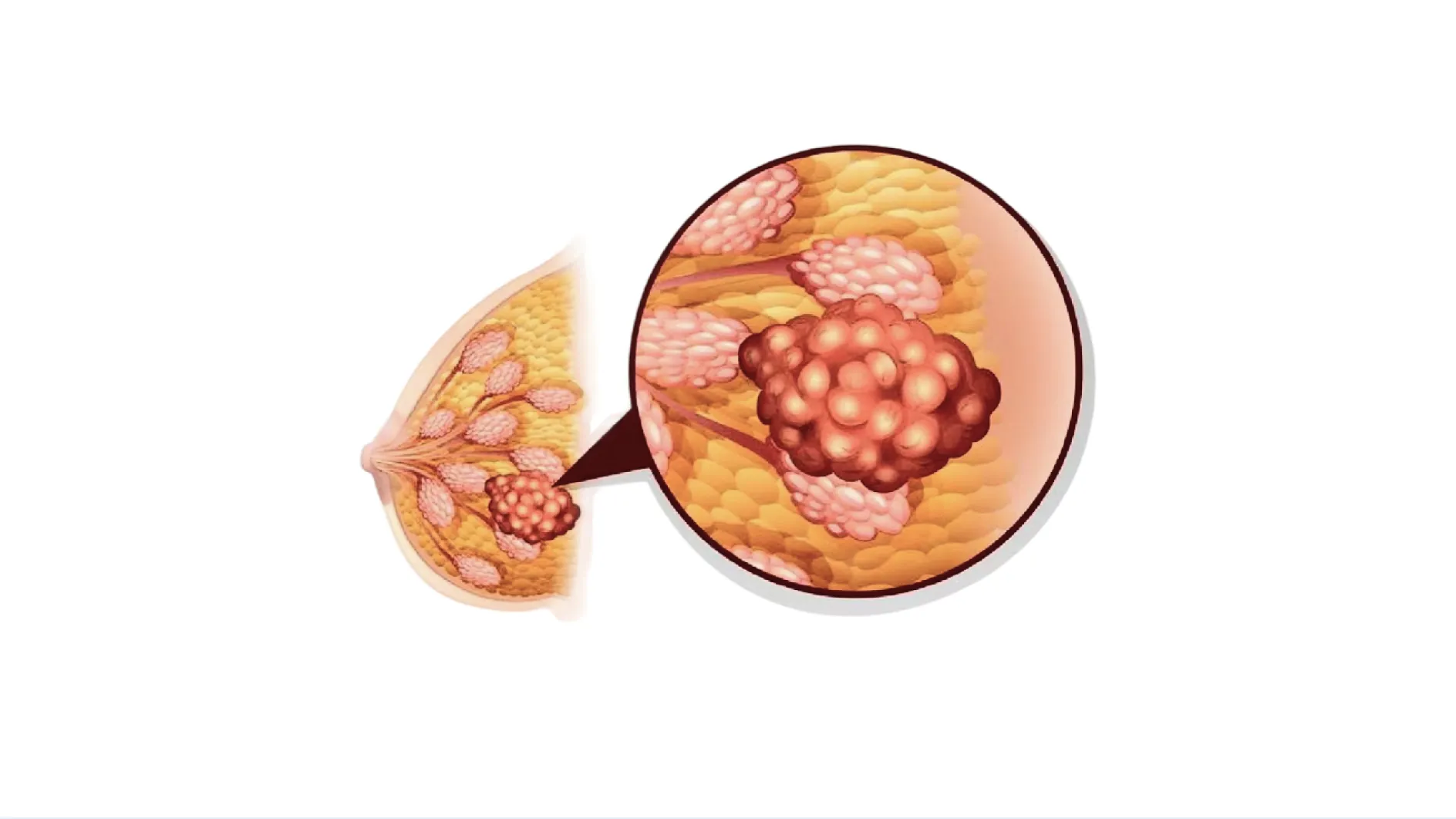
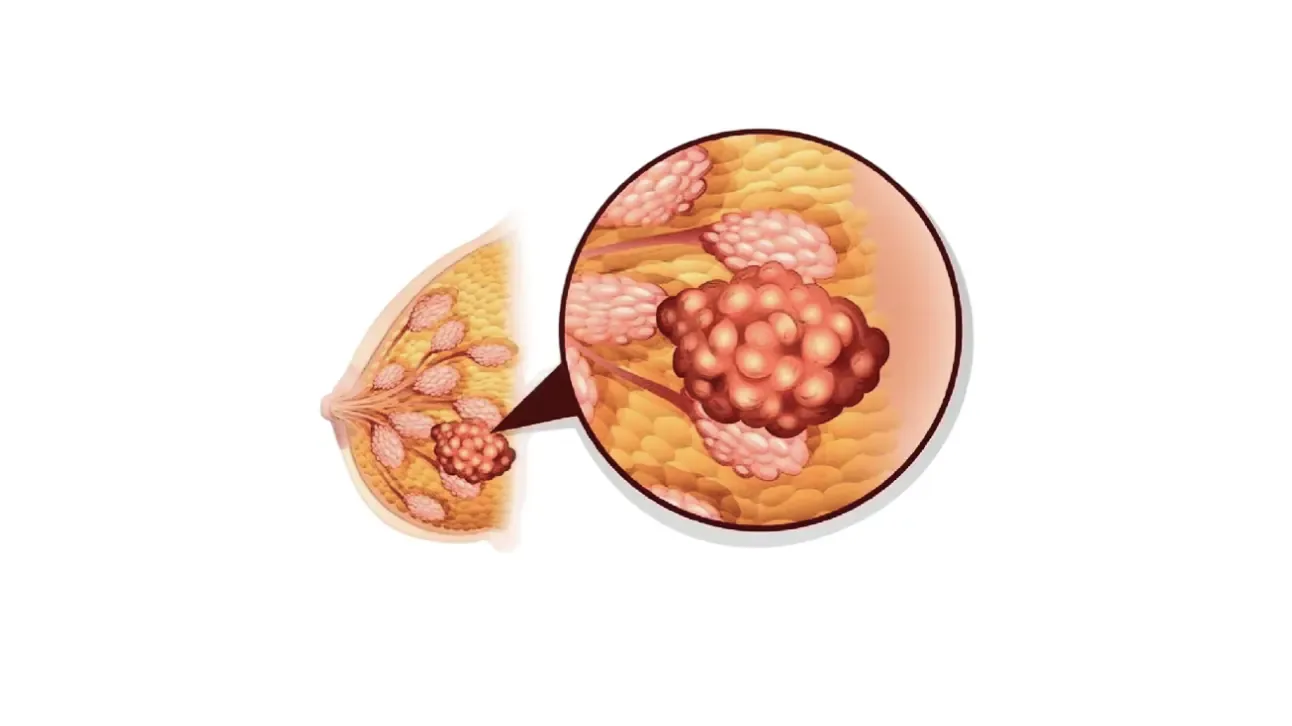
Breast cancer begins in the tissue of the breast itself — most often in the cells lining a milk duct, sometimes in the lobules that produce milk. It starts as a growth that has not yet broken out of its original compartment, and only later, if it is not stopped, gains the ability to travel. That sequence is why the disease is treated so differently depending on how far it has gone, and why finding it early changes what treatment can be offered.
It is the most common cancer in women worldwide and the second leading cause of cancer death in women. An estimated 2.3 million new cases are diagnosed globally each year, with around 670,000 deaths . China accounts for roughly 17% of the world's cases — more than 420,000 new diagnoses a year . That volume is not only a statistic; it is the reason Chinese breast teams have accumulated deep experience with both common and difficult presentations.
Breast cancer is not one disease. Two tumours that look identical under a microscope can behave in opposite ways, because what drives them differs at the molecular level. A tumour fuelled by oestrogen and a tumour driven by an amplified HER2 gene need entirely different drugs. What the pathology and molecular report says is therefore not background information — it is the decision. This is covered in how breast cancer is diagnosed .
The practical consequence for a patient is simple to state. Three questions decide everything: How far has the cancer spread? That is the stage. What is driving it? That is the receptor and molecular profile. What does the patient want her life to look like during and after treatment? That is the third, and it belongs in the room from the first consultation rather than being raised at the end.
Ductal and lobular, in situ and invasive
The first distinction is where the cancer started. Cancers arising in the ducts are ductal and account for the large majority of cases; cancers arising in the milk-producing lobules are lobular and behave somewhat differently, being harder to feel and more often found on imaging. The second distinction is whether the cancer is still confined. In situ disease (DCIS or LCIS) has not crossed the basement membrane and cannot spread to lymph nodes or organs; invasive disease has, and can.
Invasive disease is then classified by what the tumour cells carry on their surface and inside them. These are not academic labels. They set the drugs, the sequence, and the prognosis.
| Hormone receptor-positive | HER2-positive | Triple-negative | |
|---|---|---|---|
| What is present | Oestrogen and/or progesterone receptors | Amplified or overexpressed HER2 protein | None of the three markers above |
| Share of cases | The largest group overall | A smaller but well-defined group | About one case in six to eight |
| Mainstay of treatment | Endocrine therapy for years, plus surgery and often radiotherapy | Anti-HER2 targeted therapy combined with chemotherapy | Chemotherapy, and immunotherapy in eligible tumours |
| What makes it difficult | Long treatment duration; resistance can emerge over time | Resistance after first-line anti-HER2 therapy | Fewer targets; higher recurrence risk in the first years |
| Where the plan is heading | CDK4/6 inhibitors and newer endocrine combinations | Antibody-drug conjugates and bispecific antibodies | PD-1/PD-L1 blockade with chemotherapy; PARP agents in BRCA carriers |
Two further facts matter. HER2-low — tumours with a faint HER2 signal that were once reported as negative — is now a distinct treatment group in its own right. And lobular cancers more often spread to the lining of the abdomen and to bone rather than forming the classic lung or liver spots, which changes how follow-up imaging is read.
What the stage means
Staging answers one question: how far has it gone? It combines the size of the tumour (T), whether lymph nodes under the arm or near the collarbone contain cancer (N), and whether cancer has appeared in distant organs (M). Those three letters produce a stage number, and the stage number produces the shape of the treatment — whether surgery comes first, or whether drug treatment should lead and surgery follow.
| Stage | In plain terms | How it is usually approached |
|---|---|---|
| 0 | Cancer cells confined to the duct or lobule, not invasive | Breast-conserving surgery, with radiotherapy in most cases; endocrine therapy depending on receptors |
| I | Tumour up to 2 cm, no distant spread | Surgery first, then radiotherapy and systemic therapy based on the receptor profile |
| II | Tumour up to 5 cm, or a few mobile lymph nodes involved | Surgery, often with chemotherapy before or after; radiotherapy where indicated |
| III | Locally advanced: a larger tumour, skin or chest-wall involvement, or fixed lymph nodes | Drug treatment first to shrink the disease, then surgery and radiotherapy |
| IV | Distant spread, most often to bone, liver, lung or brain | Systemic therapy as the backbone, with local treatment for troublesome sites |
| Recurrence | Cancer returning in the chest wall, lymph nodes, or at distant sites after treatment | Depends on the site and number of lesions; isolated sites can be treated locally |
Stage is not a verdict. A stage III tumour that responds completely to drug treatment before surgery can do better over the following years than a smaller tumour with unfavourable biology. The stage decides the sequence; the biology decides the odds. Both are read together in a multidisciplinary meeting, not by a single department.
Why the molecular profile decides the plan
In breast cancer, the laboratory report changes the drugs. Every invasive tumour is tested for oestrogen receptor, progesterone receptor, HER2 and the proliferation marker Ki-67, and those four results place the cancer in the group whose treatments are known to work. This is not optional testing — treating without it means treating blind.
A second layer applies to selected patients. Genomic profiling of the tumour (NGS panels) looks for actionable changes beyond the receptors: PIK3CA, ESR1, AKT, NTRK, RET, and BRCA1/BRCA2 in the germline. Each of these now has a corresponding drug, and several of them are approved and available in China at a fraction of the price charged elsewhere. BRCA status matters twice over: it opens PARP inhibitor treatment for the patient, and it is information her daughters and sisters may need.
The clinical value of this is concentrated in exactly the situation patients travel for: the cancer has stopped responding to the first drug, and the question is what comes next. When standard treatment fails, the answer should come from the tumour's molecular profile rather than from a sequence written for the average patient — which is why we sequence the tumour before the next line, and why the treatment options page is organised by what the tumour carries rather than by stage alone.
Why patients come to China for breast cancer care
Three things draw international patients to our breast programme, and it is worth being precise about which of them applies to you.
-
Volume behind the surgery
With more than 420,000 breast cancers diagnosed in China each year, our breast surgeons operate constantly — including the cases other centres decline. Breast-conserving and oncoplastic techniques, sentinel node biopsy and immediate reconstruction are routine rather than occasional. More cases seen means more precise preservation of what the operation does not need to remove.
-
Drugs that are current, at a different price
Antibody-drug conjugates such as trastuzumab deruxtecan, bispecific HER2 antibodies, CDK4/6 inhibitors and PD-1/PD-L1 agents are approved and used in China. Because these therapies sit inside China's own development and manufacturing ecosystem, comprehensive treatment costs are typically 30%–50% of what the same course would cost in Europe or the United States . This is a genuine difference in what long-term treatment can look like for a family.
-
Non-surgical options for isolated disease
A chest-wall recurrence or a few spots in bone or lung do not automatically mean another major operation. CyberKnife stereotactic radiosurgery reaches these sites in one to five outpatient sessions, without interrupting the systemic treatment already underway, and its heart and lung sparing makes it usable for left-sided lesions.
What we do not claim is that travelling is always the right answer. If the same treatment is available at home at a cost you can carry, having it at home is better — and our team will say so. The comparison that matters is access and price, not prestige. For the practical side of coming here, see the practical questions page .










