

FOSUN HEALTH Logo

Featured Treatments

Not every hospital can offer every treatment option. These are the programs that international patients come to us for—explained in plain language, with the equipment, the evidence, and important considerations you need to compare your options before you decide.

Six Programs, One Philosophy

Every program below is designed for one reason: to treat or control the disease while preserving the functions and quality of life that matter to you—your voice, your ability to swallow, your bladder and kidney function, or your fertility. Each module provides the same clear overview you would receive from an in-house case review: what the treatment is, how it works, who it may be suitable for, what to expect during recovery, and what published evidence supports it.

  • Used in the treatment of solid tumors and hematologic malignancies, as part of an integrated approach combining surgery, medical oncology, and precision therapy.

  • Approximately 1,000 radiosurgery procedures have been performed at the Foshan CyberKnife Center since the system was installed in June 2022.

  • More than 800 Da Vinci robotic surgeries have been performed at FoshanFosun Chancheng Hospital since April 2023.

  • The first approved CAR-T therapy(Kailimei®) for solid tumors is currently used in clinical practice across the Fosun Health network.

  • Low-dose "Green Tube" PET-CT, dual-source CT, and high-field MRI support staging and early detection.

  • The hospital's TCM department dates back to its founding in 1958 and is integrated with modern oncology care.

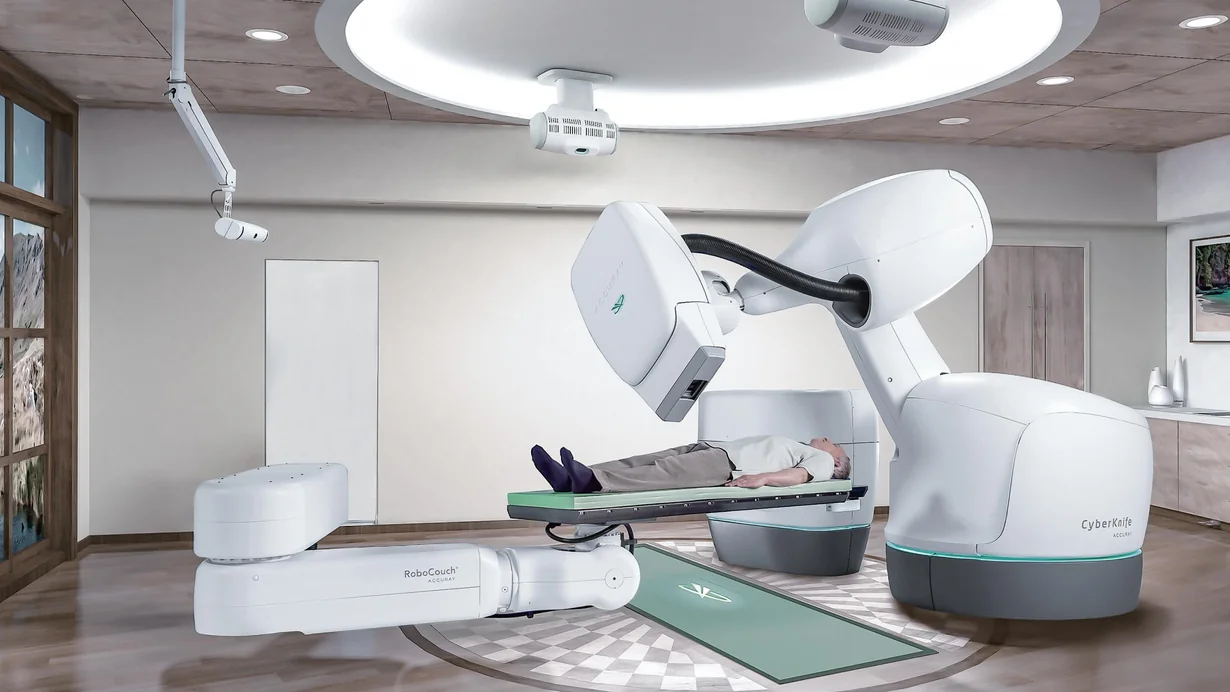
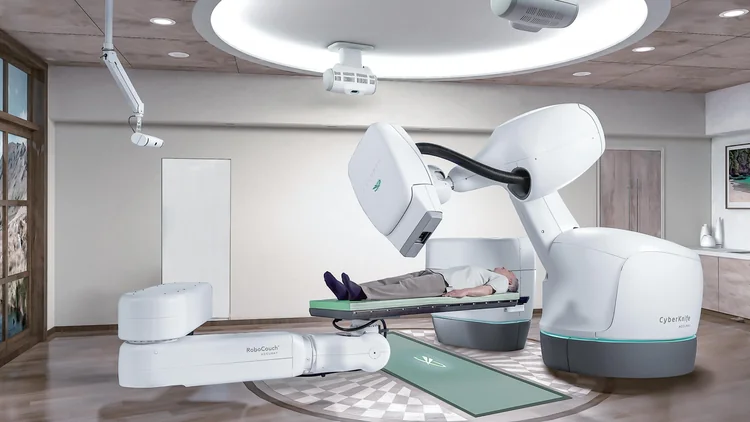
CyberKnife M6 treatment room at Foshan Fosun Chancheng Hospital

01Stereotactic Radiosurgery (CyberKnife)

CyberKnife M6 robotic radiosurgery system in the treatment room — Foshan Fosun Chancheng Hospital. Source 1.

What it is

A form of stereotactic radiosurgery (SRS) and stereotactic body radiotherapy (SBRT) that delivers a tumor-destroying radiation dose with sub-millimeter precision. Unlike a Gamma Knife, CyberKnife needs no rigid head frame — it is frameless and image-guided.

How it works

  • A robotic arm moves around you and delivers hundreds of narrow radiation beams that converge on the tumor from many angles.
  • The system tracks the tumor as you breathe, keeping the beam locked on target. This is particularly important for tumors in the lung, liver, and pancreas.
  • Our Foshan hospital operates the 6th-generation CyberKnife M6, installed in June 2022 — among only four in South China. The team is led by Dr. Yang Jun.
  • Radiation oncologists and physicists plan each case; the team is led by Dr. Yang Jun, co-author of international CyberKnife quality-control standards.

What to expect

  • Each session lasts roughly 15–30 minutes, with typical treatment courses consisting of 1–5 sessions.
  • No incision is required and, in most cases, no anesthesia is needed. Many patients can return to their normal activities on the same day.
  • No hospital admission is required for the treatment itself.
  • You will have follow-up imaging on a schedule to confirm tumor response.

Often used for

  • Brain: meningioma, pituitary adenoma, acoustic neuroma, arteriovenous malformation (AVM), brain metastases, trigeminal neuralgia.
  • Body: lung cancer and lung metastases, liver cancer, pancreatic cancer, prostate cancer, spinal and bone metastases.

Not every tumor is suitable for radiosurgery. Tumor size, location, and previous radiation treatment all need to be considered. A review of your imaging will help determine whether radiosurgery may be appropriate for your case.

Evidence & Track Record

  • →The Foshan Center reports ~1,000 radiosurgery cases completed since the M6 was installed in June 2022, based on hospital-published figures through March 2026.
  • →The center's team, including Chief Radiation Oncologist Prof. Wang Enmin, who holds China's first doctoral degree in Gamma Knife radiosurgery, has performed more than 10,000 radiosurgery cases.
  • →The center was the first institutional member in Asia of the International Radiosurgery Society (RSS). Its 2022 Best Paper Award recognized the team's SCART technique for ultra-large, recurrent, and refractory tumors.
  • →The center's protocols follow international standards and are subject to regular international quality audits.
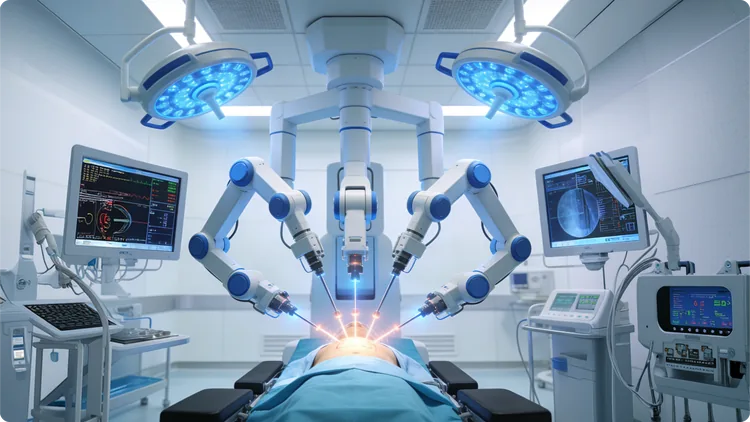
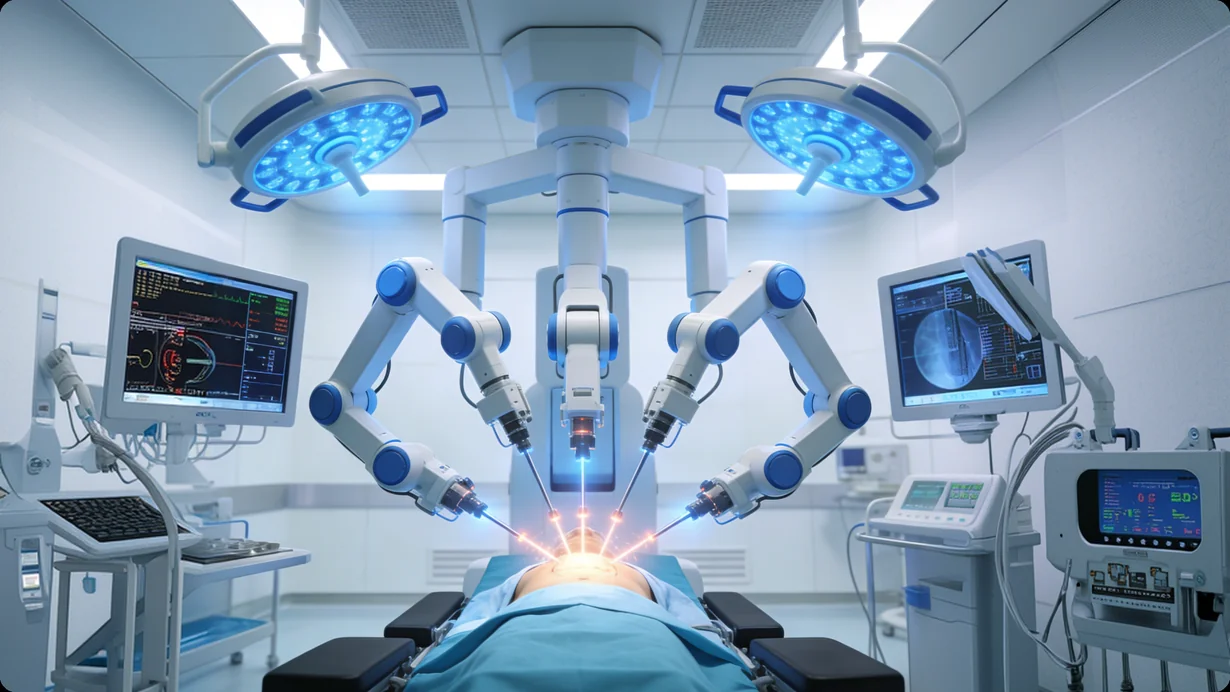
Da Vinci robotic surgery at Foshan Fosun Chancheng Hospital

02Robotic Surgery With The Da Vinci System

Organ-preserving cancer surgery

03Organ-Preserving Cancer Surgery

Precision radiation and systemic therapy

04Precision Radiation & Systemic Therapy

Advanced imaging and early diagnosis

05Advanced Imaging & Early Diagnosis

Integrative TCM supportive care

06Integrative TCM Supportive Care

Which Program Fits Your Case?

A plain-language comparison to help you get started. It is not medical advice—the final recommendation is based on a review of your medical records.

Program Best suited when… Incision / anesthesia Typical time commitment Recovery notes
01 · CyberKnife Radiosurgery Small or medium-sized tumors in the brain, lung, liver, pancreas, prostate, or bone — especially when surgery is risky or not preferred None; no anesthesia in most cases Outpatient, 15–30 min per session, usually 1–5 sessions Resume daily activities immediately; follow-up imaging over months
02 · Da Vinci Robotic Surgery Tumors that should be removed surgically, where precision near nerves and vessels and faster recovery matter 4–6 ports of ~0.5 cm; general anesthesia Hospital stay typically 3–5 days Less blood loss and pain than open surgery; activity resumes gradually
03 · Organ-Preserving Surgery Early-stage kidney, prostate, rectal, or gynecologic cancer where organ function can be safely preserved Usually robotic or minimally invasive Same as the underlying operation (often Program 02) Functional outcomes (continence, kidney function, fertility) discussed before surgery
04 · Precision Radiation & Systemic Therapy Radiation for many solid tumors; systemic therapy for advanced disease; CAR-T for eligible patients with gastric or GEJ cancer None for radiation; IV for systemic therapy Radiation: days to weeks of outpatient sessions; systemic therapy: cycles according to protocol Side effects vary and are actively managed; CAR-T requires inpatient care
05 · Imaging & Early Diagnosis Uncertain symptoms, elevated tumor markers, a second opinion on staging, or preventive screening None (tracer injection for PET-CT) Screening 2–3 hours; PET-CT about 1 hour Results guide treatment decisions
06 · Integrative TCM Care Supporting quality of life during or after any cancer treatment None (fine-gauge acupuncture needles) Ongoing outpatient sessions Coordinated with your oncology team; not a replacement for cancer treatment

From "Send My Records" to "I'm Ready"

Four steps, coordinated end-to-end by the Fosun International Medical Center (FIMC), Foshan's first provincial-level international medical pilot hospital.

  1. 1

    Send your records

    Imaging (CD/DICOM), pathology, surgery summaries, and treatment history — in any language. Our team arranges translation. WhatsApp is the fastest way to start.

  2. 2

    Free case review & MDT

    Specialists from the relevant programs review your case together and tell you which path may be suitable—and which may not be, based on your records.

  3. 3

    Plan, cost & insurance

    You receive a written treatment plan and a transparent estimate. We check coverage with 70+ international insurers for direct billing before you decide to proceed.

  4. 4

    Arrival & coordination

    We arrange airport pickup, interpretation in English, Indonesian, Vietnamese, and Chinese, hospital admission, and video follow-up after you return home.

Questions International Patients Ask

What is CyberKnife radiosurgery, and does it hurt?

CyberKnife is a robotic, image-guided radiosurgery system. A robotic arm delivers high-dose radiation from multiple angles while tracking the tumor in real time as you breathe. There is no incision and usually no anesthesia. Each outpatient session lasts about 15–30 minutes, and most patients need one to five sessions. The procedure is generally painless, and most patients can resume normal activities immediately.

Am I a candidate for radiosurgery instead of surgery?

It depends on the tumor's size, location, and your overall health. Small brain tumors and brain metastases, lung tumors, liver and pancreatic tumors, prostate cancer and spinal or bone lesions may be suitable for radiosurgery. Send your imaging and pathology for review, and our radiation oncology team will assess whether radiosurgery, surgery, or a combination may be appropriate for your case.

What is Da Vinci robotic surgery?

The Da Vinci system is an advanced minimally invasive surgical platform. The surgeon sits at a console and controls wristed instruments through four to six small ports, each about 0.5 cm, with a magnified 3D view and tremor filtration. Compared with open surgery, patients typically experience less blood loss and smaller scars and may be discharged within 3–5 days. Fosun Health's flagship Foshan hospital has completed more than 800 robotic procedures since introducing the system in April 2023.

Can treatment preserve my organ—kidney, prostate, rectum, or uterus?

Organ preservation may be possible when the tumor is diagnosed early enough and is favorably located. Our surgeons perform kidney-sparing partial nephrectomy, nerve-sparing prostatectomy, sphincter-preserving rectal resection, and fertility-sparing gynecologic surgery, supported by robotic technology and multidisciplinary planning. Whether organ preservation is safe for your specific tumor must be determined through a review of your imaging and pathology.

How long will I need to stay in China for treatment?

It varies by treatment. CyberKnife radiosurgery is outpatient, but patients typically stay a few days to a week for planning and treatment sessions. Robotic surgery usually requires a hospital stay of about 3–5 days, plus a short recovery period before long-haul travel. Your international patient coordinator will provide a personalized timeline and arrange video follow-up after you return home.

Can Traditional Chinese Medicine be combined with cancer treatment?

Yes. It serves as supportive care alongside mainstream oncology treatment, not as a replacement for it. Our TCM physicians coordinate with the oncology team to help manage nausea, fatigue, poor appetite, insomnia, and recovery after surgery or chemotherapy, using herbal formulas reviewed by chief pharmacists and non-drug therapies such as acupuncture.

What records should I send for a treatment case review?

Send as much as you have: imaging on CD/DVD or DICOM files, pathology reports (and slides when possible), surgery and discharge summaries, and details of any chemotherapy, radiotherapy, or targeted therapy you have received. Reports in any language are fine — our international team arranges translation. The initial review is free, and you will receive a clear recommendation on which treatment options may be appropriate for your case.

Will my insurance cover treatment?

Fosun Health works with more than 30 international insurers for direct billing at our flagship hospital, subject to policy terms. Our insurance support team checks your coverage and provides a transparent written cost estimate before treatment begins, so there are no hidden costs.

Which Treatment Fits Your Case?

The right treatment starts with a review of your medical records by the appropriate specialists. Send them to us, and we will explain which treatment options we recommend, and why.

Consult an Expert Request Video Consultation

Follow Fosun Health

Apply for an Appointment

Do you have test results*