


ALS (Motor Neuron Disease) Overview
ALS (Motor Neuron Disease) Overview
Amyotrophic lateral sclerosis is a disease of the nerve cells that command voluntary movement. Two populations of them degenerate together — the upper motor neurons in the brain and the lower motor neurons in the brainstem and spinal cord — and what that produces is progressive, painless weakness with wasting of the muscle, starting in one hand, one arm, one leg, or the muscles of speech and swallowing, and spreading to other regions over time. This guide follows the path patients actually walk: what the first sign really is and why twitching is not it, how a diagnosis is assembled from tracking and exclusion rather than from one test, and which parts of treatment change how long and how well people live.
-
48 hours
written opinion once complete records arrive
-
One team
neurology, rehabilitation, respiratory and nutrition planning together
-
Electrophysiology
EMG and nerve conduction studies alongside 3.0T MRI
-
124+
countries and regions our international patients come from
What ALS is — and what it is not
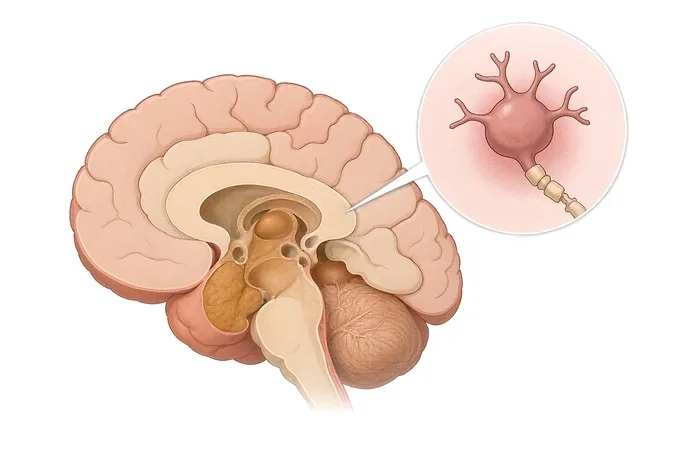
Movement is commanded by two sets of nerve cells working in sequence. The upper motor neurons start in the brain and carry the instruction down the spinal cord. The lower motor neurons sit in the brainstem and the spinal cord, and they are the cells that actually reach the muscle and make it contract. In ALS both populations degenerate. That combination is the disease, and it is what gives ALS its particular signature.
When the lower motor neuron is lost, the muscle it supplied goes quiet and then wastes: it becomes weak, thin, and it twitches. When the upper motor neuron is lost, the braking it provided is removed: the limb becomes stiff, the reflexes become brisk, and the movement that remains is slow and effortful. A single region of the body showing both of those at once — a weak, wasted, twitching hand with brisk reflexes in the same arm — is the core of the diagnosis, and no other common condition produces that pairing as cleanly.
Three things follow, and they are what this guide keeps returning to. First, the weakness is progressive and it spreads: from one hand to the other hand and then to the leg, or from the speech and swallowing muscles to the arms, and the pattern of that spread is part of how the diagnosis is made. Second, it is remarkably painless — the absence of pain in a progressive weakness is itself a clue, and pain that does appear usually comes from joints, posture and cramps rather than from the nerve loss. Third, some functions are usually spared: sensation, the movements of the eyes, and bladder and bowel control are typically preserved. That sparing is one of the features that separates ALS from diseases such as multiple sclerosis or a severe peripheral neuropathy, where numbness is prominent.
What ALS is not, and this matters because most people arriving at this page have searched after noticing twitching: it is not a disease of sensation, and isolated twitching without weakness or wasting is not evidence of it. The symptoms page sets out what is.
Where it starts, and the forms it takes
ALS is named for one disease but it presents in several patterns, and the pattern sets the problems that a particular person will face first, the pace of assessment, and where the planning should begin early.
| Pattern | What is noticed first | What it means for the plan |
|---|---|---|
| Limb onset, upper | A hand that cannot do up buttons, turn a key, or hold a pen; grip that fails; the small muscles between thumb and index finger flattening | The most common presentation. Hand function, writing, keyboard use and self-care are the early adaptations, and equipment is arranged early |
| Limb onset, lower | A foot that drops or catches, tripping on flat ground, a leg that feels heavy, walking that has lost its spring | Falls and mobility come first — ankle-foot supports, walking aids, and home assessment well before they are urgently needed |
| Bulbar onset | Slurred or nasal speech that others notice first, a tongue that tires, then choking on liquids and difficulty swallowing | Speech and swallowing lead everything: communication aids and a swallowing assessment are arranged early, and nutrition is watched from the first visit |
| Respiratory onset | Breathlessness on lying flat, waking at night, morning headache, exertion that has become impossible — before limb weakness is obvious | Uncommon, and the most urgent: breathing function is measured at once and ventilation is assessed rather than deferred |
| Primary lateral sclerosis | Stiffness, slowness and brisk reflexes with little wasting; progression is typically slower | A variant on the same spectrum. Spasticity management dominates, and the diagnosis is revisited over time because some evolve into ALS |
| Progressive muscular atrophy | Wasting and weakness with little in the way of upper motor neuron signs at first | Also on the spectrum, managed in the same way, with the same attention to breathing |
| Familial ALS | Similar to the sporadic disease, in someone with a family history of ALS or frontotemporal dementia | Genetic testing and counselling are offered, and eligibility for gene-directed treatments is assessed when a variant is found |
None of these is a different disease so much as a different starting point, and the reason to name them is practical: a person with bulbar onset needs a speech and swallowing assessment at the first visit, whereas a person with foot drop needs a falls assessment, and a person with respiratory onset needs lung function measured that week. The treatment page sets out each of those.
How it is tracked: regions involved and function retained
ALS is followed on two things at once — how far it has spread through the body, and how much function is left. Keeping those separate is what stops both errors: treating a person as more advanced than they are because one function has gone, and missing a decline in another because the person still looks well overall.
| Axis | What is recorded | Why it is recorded |
|---|---|---|
| Region and spread | Which of the four regions — bulbar, arms, trunk, legs — show upper and lower motor neuron signs | Spread to further regions is part of the diagnosis itself, and the pattern shapes what to plan for next |
| Function retained | Speech, swallowing, handwriting, feeding, dressing, turning in bed, walking, and climbing stairs — recorded as what is still possible | A standardised functional score tracks the trajectory far more reliably than a single examination, and it is what a trend is built from |
| Breathing | Forced vital capacity, and sniff nasal inspiratory pressure, measured repeatedly; orthopnoea, morning headache and sleep quality asked about directly | The single most consequential measurement in the disease. It is what decides when ventilation is discussed |
| Nutrition | Weight, and the effort and safety of eating | Weight loss tracks with outcome, and swallowing safety decides when a feeding tube is discussed |
| Cognition and behaviour | Screening for frontotemporal change at diagnosis and at intervals | It affects decision-making, and therefore when and how the decisions below should be made |
| Rate of change | The same measures repeated at intervals, so that a slope exists rather than a set of numbers | Pace differs substantially between people; the slope is what a plan is matched to, not the label |
What matters more than any single reading is the direction of travel. One measurement is a number; four across a year is a slope, and the slope is what tells the team whether something should be done now or watched. That is also why the living-with-ALS page insists on keeping your own dated record — a slope reconstructed from memory is not a slope.
How the diagnosis is assembled
There is no blood test, no scan and no single investigation that establishes ALS. The diagnosis is built from three kinds of evidence put together, and the third of them is the one that takes the time.
| Component | What it establishes |
|---|---|
| Examination of the regions | Where are upper and lower motor neuron signs present together — bulbar, arms, trunk, legs? |
| Electromyography and nerve conduction studies | Is there denervation in muscles that are not yet clinically weak? It is the strongest single piece of supporting evidence |
| MRI of the brain and the relevant spinal region | Is there a structural explanation — particularly cervical myelopathy — that would account for the findings? |
| Blood tests directed at the mimics | Thyroid disease, vitamin B12 deficiency, paraproteinaemia and others that can imitate or accompany the picture |
| Nerve conduction studies looking for conduction block | Is this multifocal motor neuropathy — a different disease with a treatment that works? |
| Antibody testing where indicated | Is there an immune-mediated motor neuropathy, which is treated entirely differently? |
| Respiratory function testing | Where is breathing now, and is it changing? Establishes the baseline at diagnosis rather than later |
| Swallowing assessment | Is swallowing safe, and is it deteriorating? Determines what is done about nutrition and when |
| Review over time | Has the picture spread to further regions? Progression is evidence, and it is the part that cannot be obtained in a single visit |
The exclusion work is not a formality. Several of the conditions on that list are treatable, and one of them — multifocal motor neuropathy with conduction block — is a disease that a person could be treated for rather than merely monitored. Ruling it out properly is the reason the assessment takes the time it does. The details, including what the electromyography is actually looking for, are on the diagnosis page.
Why patients travel to China for ALS care
Our neurology and neurosurgery services are organised around a standardised stroke centre built to national stroke-centre standards, and are a National Stroke Center construction unit and a national GCP base. Neurological assessment is supported by 3.0T MRI, dual-source CT, PET-CT and 3D DSA, with long-term video EEG monitoring and electrophysiology — electromyography and nerve conduction studies — available in the same programme rather than at a separate appointment weeks later.
What international patients mostly come for is not a medicine unavailable at home. It is the assembly: the exclusion work done properly and in one place rather than over a year of separate referrals; breathing and swallowing measured at the first visit instead of after a crisis; and a written plan that covers medicines, ventilation, nutrition and equipment, which a local team can continue. Care here is delivered by neurology together with rehabilitation, respiratory medicine, nutrition and speech therapy rather than handed from one department to the next. Those steps are described on the diagnosis page and the treatment page.
The first of them happens before any travel is discussed. Sending your records — clinic letters, the electromyography report, imaging reports, lung function results if you have any, and your current medicines — lets a clinician tell you whether anything is missing and what can be established where you are. The practical questions page sets out what to send and what a first visit actually involves.










