


Type 1 Diabetes Overview
Type 1 Diabetes Overview
Type 1 diabetes is an autoimmune condition: the body's own immune system destroys the cells that make insulin, and without insulin glucose cannot leave the blood and enter the body's cells. It is not caused by eating sugar, by weight, or by anything a family did or did not do. For a century the answer has been insulin for life. This guide follows the question patients actually ask — what the diagnosis means, how the condition is staged and confirmed, and what to make of a hospital-published programme that reports patients discontinuing insulin.
-
24 / 70
patients off insulin in a hospital-published interim analysis
-
14 months
longest duration off insulin reported at publication
-
3–5 days
typical inpatient stay in the HIM programme
-
124+
countries and regions our international patients come from
What Type 1 diabetes is — an autoimmune disease, not a lifestyle one
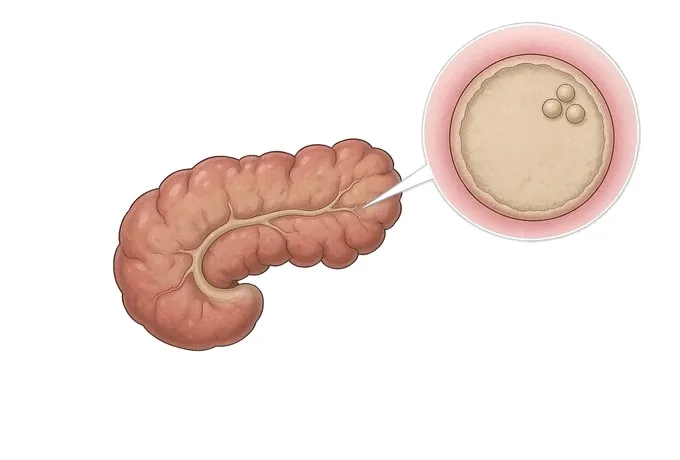
The beta cells of the pancreas are the only cells in the body that make insulin, and insulin is the hormone that allows glucose to leave the blood and enter muscle, fat and every other tissue. In Type 1 diabetes the immune system identifies those cells as foreign and destroys them — quietly over months or years, and then decisively. When enough of them are gone, insulin falls to nothing, glucose rises without limit, and the body begins to burn fat for fuel in a way that floods the blood with acid. Untreated, that state — diabetic ketoacidosis — kills. Treated with insulin, it is compatible with a full life: the condition is managed, not yet prevented or reversed.
Because the words sound alike, Type 1 is constantly mistaken for a severe form of Type 2, and the confusion does real damage. Type 2 diabetes is a disease of insulin resistance, commoner in later life and linked to weight and activity; the pancreas still makes insulin, sometimes a great deal of it. Type 1 is a different mechanism altogether: an immune attack, an absolute deficiency, and a body that cannot survive without injected insulin from the day of diagnosis. The treatment of one does not transfer to the other, and neither do the assumptions about cause.
It is also the younger face of diabetes. Most cases appear in children, teenagers and young adults, which is why the old name — juvenile diabetes — survives; but adults develop it too, and in adults it is the diagnosis most often missed, because it is assumed the age makes Type 2 certain. This guide is written for both groups, and for the parents who do most of the asking.
One more thing belongs at the start, because it is the reason this page exists in the form it does. The textbook answer to Type 1 diabetes has been insulin for life, administered for life. A hospital-published interim analysis from China — discussed honestly in the treatment page — reports patients who discontinued insulin under a structured integrative-medicine protocol. That claim is extraordinary, which is exactly why this guide reports it with its numbers attached rather than as a slogan.
The four types of diabetes, and why the label decides the treatment
"Diabetes" is a description of glucose, not of cause, and four different diseases produce it. Getting the type right is not pedantry: it decides whether tablets can work, whether the diagnosis is lifelong from day one, and whether a programme like the one described here is even applicable. The table is the shortest complete version of the distinction.
| Type | What is happening | Typical picture | What it means for treatment |
|---|---|---|---|
| Type 1 | Autoimmune destruction of the beta cells; insulin production falls to nothing | Children, teenagers and young adults most often, but any age; weeks of thirst, urination and weight loss, sometimes ketoacidosis at first presentation | Insulin from diagnosis, for life as standard; antibody-positive by definition, which is the eligibility frame for the HIM programme |
| Type 2 | Insulin resistance with a failing but still-working pancreas | Commoner from middle age, strongly linked to weight and inactivity; often found on routine tests rather than by symptoms | Diet, activity and tablets first; insulin later if needed. Autoantibodies negative |
| LADA | Latent autoimmune diabetes of adults — the same immune attack as Type 1, moving slowly | Adults, often slim, mislabelled Type 2 for months or years because tablets seem to work at first | Antibody-positive: it progresses to insulin dependence, and it is Type 1 in slow motion for the purposes of this guide |
| MODY | A single inherited gene fault affecting insulin secretion — monogenic, not autoimmune | Young, with a striking family history of early diabetes across generations | Some forms respond to tablets rather than insulin; genetic testing settles it |
The practical trap is the middle row of this page's audience: the slim adult with fast-onset diabetes who is told it must be Type 2 and is started on tablets. If tablets fail within months, or ketoacidosis appears, the type was wrong from the beginning — and the antibody tests on the diagnosis page are how the record gets corrected.
The three stages before and at diagnosis
Type 1 diabetes has an official staging, and it is worth knowing because it reframes what the disease is: the immune attack runs for years before the first symptom, and the symptomatic illness is the third act, not the first. The staging comes from international consensus and applies to people with confirmed islet autoantibodies.
| Stage | What the tests show | What the person notices |
|---|---|---|
| Stage 1 | Two or more islet autoantibodies positive; glucose still normal | Nothing at all. The disease is present immunologically but has not yet reached the glucose |
| Stage 2 | Autoantibodies positive and glucose starting to swing — dysglycaemia on formal testing | Still usually nothing, or the subtlest early thirst |
| Stage 3 | Overt hyperglycaemia; C-peptide falling; symptoms begin | The four Ts, and sometimes ketoacidosis — the conventional diagnosis |
Two consequences follow. For relatives, staging is the logic of screening: a blood test can place a child at stage 1 years before any symptom, changing the first presentation from an emergency to a planned start. And for the insulin question, staging is the eligibility frame — the published programme reports its results by remaining islet function, which is to say by how early in this sequence the patient still is. After diagnosis there is also a period many families know as the honeymoon, in which residual beta cells briefly make the disease easier to control; it passes, and it is not remission.
The tests that settle what kind of diabetes this is
Every test on this list answers one question, and together they close it. None is difficult or exotic; the failure mode is simply not doing them, and treating the label instead of the mechanism.
| Test | What it measures | What it answers |
|---|---|---|
| Glucose and HbA1c | Current blood sugar and its three-month average | That diabetes is present, and how severe the metabolic state is |
| Islet autoantibody panel | Immune markers against GAD65, IA-2, ZnT8, the islet cells and insulin itself | Whether the cause is autoimmune — the Type 1 signature, and the entry criterion for the programme described here |
| C-peptide | The protein released alongside insulin; a measure of remaining beta-cell function | How much insulin production survives. The 0.5 ng/ml threshold recurs throughout the published programme as the line above which outcomes were reported |
| Blood or urine ketones | The fat-burning acids that rise when insulin is absent | Whether the presentation is safe or already ketoacidosis — checked at first contact, every time |
Thyroid and coeliac screening belong on the same blood draw, because the immune tendency that took the pancreas travels with company; up to a quarter of patients acquire a second autoimmune condition, most often the thyroid, and finding it early is easy while missing it is expensive.
Why patients travel to China for Type 1 diabetes
For most of the world's clinics, a Type 1 consultation ends where it began: insulin, adjusted and monitored well or badly, for life. The reason patients travel to us is the programme at Shenzhen Hengsheng Hospital — Fosun Health's chronic-disease integrative-medicine centre — which treats the disease as the immune process it is rather than only as a glucose number, and which has published interim results that argue the textbook answer is at least partly negotiable.
The programme is built on Holistic Integrative Medicine (HIM), a protocol that combines four lines of attack: precision diagnosis on mass-spectrometry platforms to identify the immune pattern in the individual patient; immune regulation through molecular nutrition and Chinese herbal medicine, aimed at quieting the attack on the islets; metabolic repair through acupuncture, herbal medicine and nutritional intervention; and continuous precision monitoring, with AI-assisted analysis of glucose and immune markers guiding adjustments between visits. An inpatient stay of three to five days establishes the protocol; follow-up runs through tele-digital healthcare rather than requiring the patient to remain in China.
How to read the results. The figures on this page come from the hospital's own published interim analysis and are presented as such. In a two-year clinical observation, 70 patients diagnosed with Type 1 diabetes were treated under the protocol; 24 of them — about a third — discontinued insulin entirely, maintaining HbA1c below 7% with C-peptide testing showing recovery of islet function, and the longest patient had been off insulin for 14 months at the time of publication. The reported pattern favours patients diagnosed early with C-peptide above 0.5 ng/ml. This is single-centre, interim data with a defined eligibility frame: it is a reason to be evaluated, not a promised outcome, and insulin remains the standard of care until an individual assessment says otherwise.
Around the programme, the practical machinery is the same as for every condition we treat. Records sent ahead receive a written specialist opinion, with an evaluation of eligibility for the protocol, before any journey is booked. We work with more than 30 commercial insurers for direct billing and have received international patients from 124 countries and regions. Follow-up after discharge runs through the programme's tele-digital platform — glucose and immune-marker data reviewed continuously, doses and protocols adjusted remotely — so the treatment does not stop at the airport.










