


Recurrent Miscarriage Overview
Recurrent Miscarriage Overview
Recurrent miscarriage is a conclusion drawn from a history rather than a symptom anyone reports. It describes a pattern — usually two or more consecutive losses of a pregnancy that had been confirmed — and it is reached in retrospect, which is why the first useful conversation is not about what went wrong this time but about what the pattern is made of. One miscarriage is not recurrent miscarriage, and one episode of bleeding is not a miscarriage. From that point the assessment is a search for the things that can be changed: a chromosomal rearrangement carried by one of the parents, a septum or adhesions in the uterus, antiphospholipid syndrome, thyroid function, poorly controlled glucose, a cervix that opens too early. In about half of couples a complete assessment finds none of these. That outcome is a result rather than a failure, and it moves the plan towards early monitoring, honest expectation and support instead of towards a treatment that was never available. Two things run through the whole pathway: most losses are not caused by anything either partner did, and the part that can be lowered should be lowered before the next pregnancy rather than once it has begun.
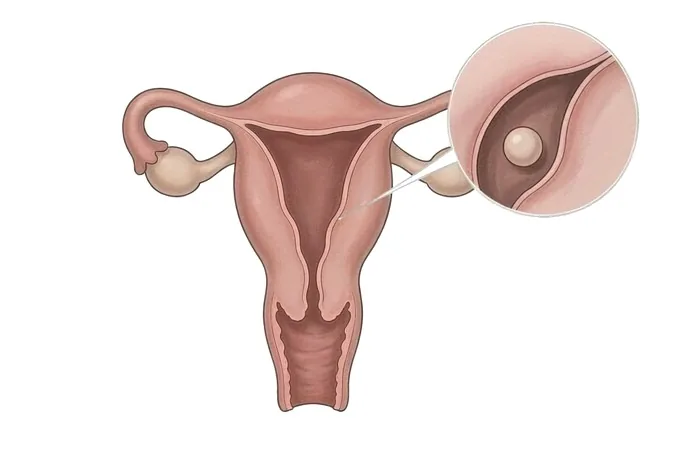
-
It is a history, not a sensation
two or more confirmed pregnancies lost in succession is the point at which the pattern becomes the subject
-
One loss is not recurrent loss
and bleeding is not the same as a miscarriage — an early scan answers both questions
-
The assessment looks for what can be changed
chromosomes, the uterus, antiphospholipid syndrome, thyroid function, glucose, the cervix
-
Often nothing is found, and that is a result
in about half of couples, and it turns the plan towards monitoring and support rather than towards a treatment
What recurrent miscarriage is, and what it is not
The definition is a count of events that have already happened, which is why it is reached in review rather than felt at the time:
- It is a pattern, not an episode. The usual threshold is two or more consecutive losses of a pregnancy that was confirmed — seen on a scan, or shown by a test. The word to hold on to is confirmed: bleeding that was never shown to be a pregnancy is counted differently, and this distinction changes the whole plan.
- There is no symptom of the condition itself. Nothing is felt between pregnancies. What brings a couple to this page is a history, and the assessment exists to find out what that history is made of rather than to treat a complaint.
- It is not a verdict about fertility. A couple with repeated losses have generally conceived without difficulty. Recurrent miscarriage and infertility are different problems with different assessments, and being told that one of them has been found says nothing about the other.
- Most losses are not anyone’s fault. They are not caused by a previous decision, by work, by exercise, by intercourse, by a shock or by a mood. This is not said to be kind; it is said because couples routinely arrive convinced otherwise, and the belief does real harm.
- It is not a promise that the next one will work. What the assessment changes is how much is known and how much of what can be corrected has been. It cannot remove the part that is random, and a plan that pretends otherwise is not a plan.
Why the definition is worth being precise about. Much of the distress in this field comes from a plan built on the wrong history — losses counted that were never confirmed, or a single loss treated as a pattern. Taking the history accurately is the first clinical act, and it costs nothing but time. It is also the step that decides whether the assessment that follows is proportionate to what has actually happened.
The pattern, and what each one points towards
Recurrent miscarriage is not one thing. The stage at which losses happen is the single most useful clue, because it is what directs the assessment:
| Pattern | What it suggests | What it changes |
|---|---|---|
| Early losses, before a heartbeat was seen | A pregnancy that stopped developing very early, where the likeliest explanation is the chromosomes of that particular pregnancy rather than anything carried by either parent | Testing of the pregnancy tissue, where it is available, to tell a random event apart from a pattern worth investigating further |
| Early losses after a heartbeat was seen | A different group, in which the uterus, the clotting picture and the hormonal and metabolic background carry more weight | An assessment weighted towards the cavity, antiphospholipid antibodies and thyroid function rather than towards parental chromosomes alone |
| Loss in the second trimester after a painless opening | Typically a pregnancy that was developing normally and was lost because the cervix opened without warning — a mechanical problem rather than a problem with the pregnancy | Assessment of the cervix, surveillance in the next pregnancy, and consideration of a stitch |
| A pregnancy found to have stopped on a routine scan | A missed loss, in which the pregnancy stopped developing without bleeding or pain announcing it | A plan for how the loss is managed, and a conversation about the options before they are needed rather than after |
| A mixed pattern, or losses that do not fit one group | Recurrent loss in which no single mechanism explains every event — which is common and is not a sign that something obvious has been missed | An assessment that covers each of the groups in turn, and an honest account of what it can and cannot separate |
Why the stage matters more than the number. Two early losses and two second-trimester losses lead to different assessments, and a plan that ignores the stage will investigate the wrong thing thoroughly. The count establishes that there is a pattern worth investigating; the stage determines what is investigated.
What changes the plan, and how urgently it moves
There is no grading of recurrent miscarriage from mild to severe. What differs between couples is what the assessment turns up and how quickly the next pregnancy should be approached:
| Factor | Why it changes the plan |
|---|---|
| A treatable cause found on assessment | Antiphospholipid syndrome, thyroid disease, uncontrolled glucose or a correctable uterine finding each turn the plan from investigation into preparation, and each has to be dealt with before conception rather than after |
| The stage and mechanism of earlier losses | A second-trimester loss following a painless opening changes the plan towards cervical assessment and surveillance in a way that a series of early losses does not |
| Age, which is the strongest factor that cannot be changed | It acts through the chromosomes of each individual pregnancy, so it shapes how the plan is discussed and how long it is sensible to keep investigating rather than treating |
| Whether a pregnancy tissue test is possible | Being able to test the tissue of a loss can separate a random chromosomal event from a repeating mechanism, and the decision to arrange it has to be taken at the time of the loss |
| The couple’s own account of what they can face next | How quickly to try again, and how much investigation to do before doing so, is a clinical and personal decision rather than a fixed interval, and it belongs in the plan rather than outside it |
Why pace, rather than severity, is the practical question. Couples who ask how serious their situation is usually mean how fast they should move and what they should agree to first. Those answers depend on what the assessment finds, which is the strongest argument for completing it before the next pregnancy rather than during one.
What the assessment is looking for
The assessment is a search for causes that can be acted on, and it is deliberately not an open-ended hunt:
| Question | What it establishes |
|---|---|
| What the losses actually were | How many, at what stage, whether each was confirmed on scan, and whether the pattern has repeated — taken from both partners, because the history is the diagnosis |
| Whether a parent carries a chromosomal rearrangement | Found in a small proportion of couples with repeated loss, and worth knowing because it changes what is offered rather than who is blamed |
| Whether the uterus can hold a pregnancy | A septum, adhesions or a fibroid distorting the cavity are looked for because they are correctable — and because an uncorrected one is a finding nobody wants to discover after another loss |
| Whether antiphospholipid syndrome is present | The single most worthwhile treatable cause to look for, which is why the antibody test is repeated rather than decided on one result |
| Whether thyroid function or glucose is out of range | Both are treatable before conception, and both are usually easier to correct in advance than to adjust once a pregnancy has begun |
| What has already been tested elsewhere | Records are read together rather than repeated, and the parts that remain unexplained are named as explained-nothing rather than left open |
Why the assessment ends deliberately. Recurrent loss attracts tests that are not supported by evidence, and a pathway that never concludes keeps a couple in investigation instead of in preparation. The useful end point is a written summary of what has been checked, what it showed, and what is going to be done differently in the next pregnancy.
Why patients come to China for this assessment
This is an assessment that has to end in a plan, and travelling for it is usually about keeping the whole sequence with one team:
- The history is taken properly, from both partners, at the start. The stage and confirmation of each loss is what directs everything that follows, so it is recorded in detail rather than summarised.
- The assessment is completed and read as one picture. Antibody testing repeated after the interval it requires, the cavity seen rather than assumed, thyroid and glucose measured, chromosomes analysed — reviewed together so that a plan follows from them rather than from whichever result arrived first.
- What is correctable is corrected before conception. Surgery for a septum or adhesions, control of thyroid function or glucose, anticoagulation for antiphospholipid syndrome — all arranged in advance, because correcting them inside a pregnancy is not possible.
- The next pregnancy is monitored on a schedule rather than reactively. An early scan is booked before it is needed, so that a question can be answered while there is still something to do about it.
- Records are prepared to travel and to be continued elsewhere. Results and the written plan are issued in English with the reasoning included, so that care continued at home continues from a document rather than from memory.










