


Portal Hypertension & Varices Overview
Portal Hypertension & Varices Overview
Portal hypertension is a raised pressure in the system of veins that carries blood from the gut, spleen and pancreas into the liver. Blood that cannot pass through the liver freely finds other routes back to the heart, and one of those routes runs through thin-walled veins at the lower end of the oesophagus and the top of the stomach. Under sustained pressure those veins stretch into varices — fragile, dilated channels that cause no pain and give no warning, and whose first sign is often bleeding. That is why this condition is organised around a single clinical idea: the work is done before the bleed, not after it. Endoscopy finds the varices, their size and the red signs that mark the ones most likely to bleed; endoscopic banding ligates those at risk; medication lowers the pressure that inflated them; and the underlying liver disease is treated, because in most patients the pressure originates in the liver itself.
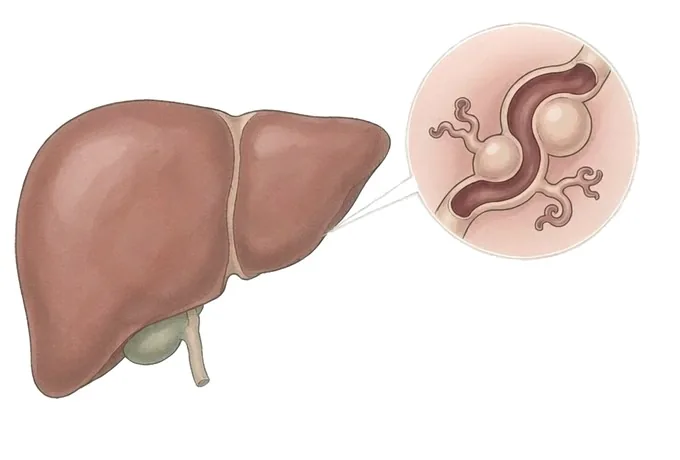
-
Pressure behind a blocked river
portal blood that cannot pass through the liver finds other routes back to the heart
-
Varices are silent until they bleed
the first sign can be vomiting blood — that is an emergency, not an appointment
-
Screening is the intervention
endoscopy grades the varices and identifies the ones worth banding
-
48 hrs
from complete records to a personalised MDT plan
Portal hypertension and varices: the pressure and the veins
The portal vein is the river that carries blood from the intestines, spleen and pancreas to the liver. Portal hypertension means the pressure in that river is too high. Almost always the reason is that the blood meets resistance on its way through the liver; in a minority the blockage sits in the vein itself. Either way the consequence is the same: blood that cannot go through the liver must go around it.
It goes around through smaller veins that were never designed to carry that volume. The most consequential detour runs through the lower oesophagus and the upper stomach, where the veins stretch under the load and become varices — dilated, thin-walled channels sitting just under a surface that was made for swallowing food, not for holding pressurised blood.
Two properties of varices shape everything that follows. They are silent: they do not hurt, do not show up on how a patient feels, and are usually discovered either by endoscopy done on purpose or — far less desirably — by the emergency their rupture creates. And they are fragile: when they bleed they can bleed in volume and without warning, so a variceal bleed is a vascular emergency rather than a stomach upset.
From those two facts comes the architecture of modern care. Because varices are silent, patients with the conditions that raise portal pressure are screened before anything happens. Because they are fragile, the ones most likely to bleed are ligated electively, on a schedule, rather than watched. And because the pressure comes from the liver in most patients, the liver disease itself is treated as part of the same plan — antivirals, alcohol abstinence, metabolic control, or the specific treatment that each cause requires.
One distinction belongs at the top of the page: portal hypertension is a pressure problem with several causes, not a synonym for cirrhosis. Cirrhosis is the commonest cause by a distance, and much of what this guide describes is written with it in mind. But a blocked portal vein, schistosomiasis and several rarer conditions raise the pressure without cirrhosis, and the difference changes parts of the plan — which is why the cause is established rather than assumed.
What raises the pressure: the causes, grouped
Grouping the causes is useful because the group determines part of the treatment, not merely the label:
| Group | The mechanism | What it means for care |
|---|---|---|
| Cirrhosis — intrahepatic | Scarring inside the liver increases resistance; blood backs up into the portal system | The commonest setting: the liver is treated as well as the varices, and the liver condition determines the wider plan |
| Portal vein thrombosis — prehepatic | The portal vein itself is blocked, so pressure rises behind the block | Anticoagulation and the management of the clot enter the plan, alongside treating the varices |
| Schistosomiasis — prehepatic | Parasite-induced changes in the portal vein system; the liver itself is often well preserved | Endoscopic and drug treatment of the varices carries most of the weight, since the liver may be functioning well |
| Other causes | Congenital hepatic fibrosis, Budd-Chiari syndrome, cardiac causes — each uncommon | Named because the diagnosis changes the approach; each is assessed for its own mechanism |
Gastric varices deserve their own mention, because they behave somewhat differently from the oesophageal ones that get most of the attention: they can bleed in a way that endoscopic treatment alone may not control, so their presence is one of the factors that pushes the plan towards a shunt procedure or a combined approach. Oesophageal and gastric varices often coexist, and the endoscopy report describes both.
Two axes: how large the varices are, and whether they have bled
Two axes are read together when the plan is made. The first is the varices themselves — their size at endoscopy, and whether they carry the red signs that mark fragile, high-risk walls. The second is what has already happened: nothing yet, a bleed that was controlled, or bleeding that cannot be controlled. The second axis weighs heaviest, because a patient who has bled is treated as someone at high risk of bleeding again.
| Category | Typical picture | What it asks for |
|---|---|---|
| Small varices, no bleeding | Seen on screening endoscopy; no red signs | Surveillance endoscopy at set intervals, treatment of the underlying liver condition, and a decision about medication |
| Large varices or red signs, no bleeding | The high-risk appearance — the group in which prevention is most clearly worthwhile | A banding programme and/or pressure-lowering medication, planned electively |
| Bleeding that stops with treatment | An acute bleed controlled endoscopically; the patient is stabilised | Completion of the treatment course after the bleed, then a documented secondary prevention programme |
| Bleeding that does not stop | Bleeding not controlled by endoscopic treatment, or recurring early | Escalation: a temporary bridging measure, then a shunt procedure, or transplantation assessment where appropriate |
The pressure itself is also described in the workup, and one honest note belongs here: a single number does not decide the plan on its own. How high the pressure is estimated to be, what the liver can still do, what the varices look like and what has already happened are read together, and the plan is written from the combination rather than from any one of them.
Finding it before it bleeds: how the diagnosis is made
The workup answers two different questions: what condition the varices are in, and what is driving the pressure. Endoscopy answers the first; everything else answers the second.
| Step | What it answers |
|---|---|
| Upper endoscopy | The decisive test: whether varices are present, how large they are, and whether they carry red signs. It is the examination that decides who needs banding |
| Blood tests | The state of the liver and of the spleen: liver function, and the falling platelet count that accompanies an enlarged spleen |
| Ultrasound with Doppler | The portal vein: its calibre, the direction of flow, whether it is blocked; plus spleen size and any ascites |
| Liver stiffness measurement | A non-invasive estimate of how stiff the liver is, which correlates with how high the pressure is likely to be |
| CT or MRI of the portal system | Mapping the veins: thrombosis, collateral routes, gastric varices, and planning for any shunt procedure |
Two points about this sequence are worth stating plainly. The first is that endoscopy is not optional — a patient whose pressure is known to be raised but whose varices have never been looked at has an unanswered question, and it is the question that matters most. The second is that the interval between endoscopies is a clinical decision with its own logic: how often the examination is repeated depends on what was found and on whether the liver condition is improving, stable or worsening. Patients who have been screened once and told to come back are entitled to know when, and on what basis.
Why patients travel to China for this assessment
This condition asks for two things at once: an endoscopy service that grades and treats varices as a routine programme rather than an occasional procedure, and a liver team able to treat the cause behind the pressure. Both are core work here.
- Volume in liver disease. Chronic hepatitis B and C, alcohol-related and metabolic liver disease are seen at scale, which means varices, banding programmes and acute bleeding are everyday work rather than rarities.
- The whole chain in one place. Gastroenterology with therapeutic endoscopy, hepatology, interventional radiology for TIPS and portal vein work, and transplant assessment when it is relevant.
- A plan, not just a procedure. The useful output is a schedule: which test, when, what would change it, and what to do if bleeding occurs — written down and shared.
- 48-hour written MDT plan from complete records, so the assessment and the plan are formed before travel.
- Cost at roughly 30%–50% of Europe or the US, with international insurers working with us on direct billing.










