


Polycystic Ovary Syndrome Overview
Polycystic Ovary Syndrome Overview
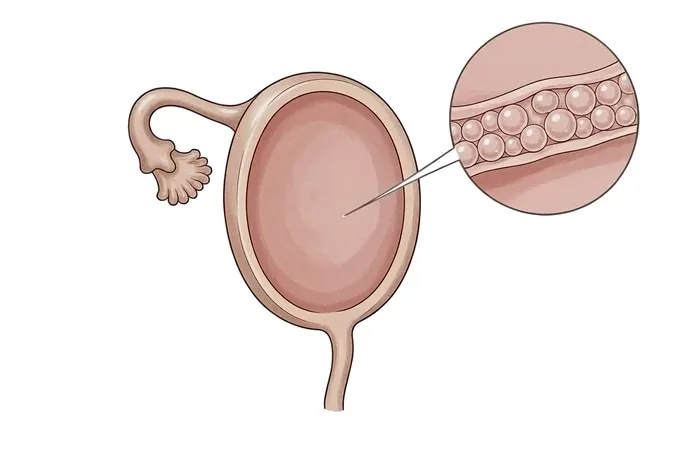
Polycystic ovary syndrome is named after a picture rather than after what it is, and the name is the first thing that has to be corrected. The “cysts” are not cysts: they are follicles — eggs that began to develop and did not go on to be released — and they are one of three possible features rather than the condition itself. The diagnosis is made when two of three features are present: ovulation that is infrequent or absent, evidence of androgen excess on examination or in the blood, and the ovarian appearance on ultrasound. A woman can therefore have the syndrome with a normal scan, and a woman can have the scan appearance with nothing else and not have it at all. What the features have in common is a hormonal environment in which follicles develop but ovulation does not complete reliably, and how much of the picture is present differs greatly between individuals. The metabolic side belongs to the condition rather than following from it: insulin resistance is common, and with it a raised long-term risk of type 2 diabetes and of changes in the lining of the womb when ovulation has been infrequent for years. Weight is discussed here carefully, because it influences the hormonal picture and is influenced by it, and it is not evidence that anyone caused their own condition. Two things run through the whole pathway: the diagnosis is a pattern rather than one test, and ovulation is the part that can most often be acted on when a pregnancy is wanted.
-
The name describes a picture, not a cyst
the “cysts” are follicles that did not complete ovulation, and they are only one of three possible features
-
Two of three criteria make the diagnosis
irregular or absent ovulation, evidence of androgen excess, and the ovarian appearance on ultrasound
-
A scan on its own diagnoses nothing
women can meet the criteria with a normal scan, and have the scan appearance with nothing else
-
The metabolic side is part of the condition
insulin resistance is common, and it carries its own long-term consequences after the fertility question is settled
What PCOS is, and what the name gets wrong
It is a syndrome — a set of features that occur together — and the name points at the least important of them:
- The “cysts” are not cysts. They are follicles: eggs that began to develop and were not released, resting in the ovary in a row along its edge. Calling them cysts suggests something that formed, filled and might need removing, when what is happening is that a normal process is stopping short of ovulation. This single correction changes what a woman understands about her own ovaries, and it is worth making at the first appointment.
- The diagnosis needs two of three features, not one. Ovulation that is infrequent or absent, evidence of androgen excess, and the ovarian appearance on ultrasound. Any two of the three establish it. Reading a third of the criteria as a whole diagnosis is the commonest error made about this condition, and it goes in both directions.
- A woman can meet the criteria with a normal scan, and can have the scan appearance with nothing else. The ovarian appearance is common in women with regular cycles and no androgen excess, and in that situation it is a finding rather than a diagnosis. Conversely, a scan performed with an older technique can miss the appearance entirely.
- How much of the picture is present differs enormously between individuals. Some women are told after a scan performed for another reason and have periods that are close to regular; others come because their periods stopped; others are referred for acne, hair growth, or difficulty conceiving. These are not mild and severe versions of one thing so much as different combinations of the same three features.
- It affects fertility through ovulation, and that is the part most often acted on. The follicles develop but are not released reliably, which is why cycles are long or unpredictable. Ovulation induction addresses exactly that step, and it is planned on its own terms rather than as a general treatment for the syndrome.
What the word does not mean. It does not mean the ovaries are diseased, that they are filling with cysts, or that they will fail early — that is a different condition, with a different name and a different pattern. It does not mean a woman cannot conceive, and it does not mean her weight is the explanation. It describes a hormonal pattern with three possible features, of which two establish the diagnosis and whichever are present determine what is treated.
The five pictures the criteria describe
The criteria combine into recognisable pictures, and the picture rather than the label is what the plan is built on:
| The picture | What follows from it |
|---|---|
| Irregular ovulation, androgen excess and the ovarian appearance | The commonest full picture. Cycle control and androgen features are treated on their own terms, and ovulation is induced when a pregnancy is wanted |
| Irregular ovulation and androgen excess, with a normal scan | The diagnosis still stands, because only two features are required. It is the picture most often missed, because a normal scan is taken as an answer rather than as one absent feature |
| Androgen excess and the ovarian appearance, with regular cycles | Ovulation is happening, so the fertility question is different. The androgen features and the metabolic assessment are what the plan covers |
| Irregular ovulation and the ovarian appearance, without androgen excess | The cycle is the subject. A progestogen is used to protect the lining of the womb where ovulation has been infrequent, and ovulation induction follows if a pregnancy is wanted |
| Any of the above with a marked metabolic picture | Insulin resistance is documented rather than assumed, and it is treated and followed in its own right, because the long-term risks it carries continue after the fertility question is settled |
Why the picture matters more than the label. Two women with the same diagnosis on paper can need entirely different plans: one needs the lining of the womb protected, one needs ovulation induced, one needs the androgen features treated and nothing else. A plan written for the label rather than the picture tends to treat the least relevant feature and to leave the one that matters unattended.
What changes the plan, and how the pace is set
What changes the plan is not how severe the label sounds but which features are present and what the woman wants next:
| What changes the plan | What it changes |
|---|---|
| Whether a pregnancy is wanted now, later, or not at all | It decides whether the plan is about regulating cycles and protecting the womb lining, or about inducing ovulation, or both at different times |
| Which features of the three are actually present | Only the features that are present are treated. A normal scan closes one line rather than the question, and absent androgen excess takes the androgen treatments off the plan |
| Whether insulin resistance is documented | It changes the metabolic treatment, the long-term follow-up, and in selected cases whether metformin is added alongside ovulation induction |
| How long ovulation has been infrequent | A long period of unopposed oestrogen is what makes protection of the womb lining a separate decision, taken whether or not a pregnancy is being planned |
| What has already been tried, and for how long | A course of ovulation induction that did not produce ovulation moves the plan along rather than leading to the same course repeated |
Why pace is the practical question. Couples who ask how serious it is usually mean how quickly they should move and what to agree to first. Those answers come from which features are present, what has already been tried, and how the fertility question sits against the long-term parts of the plan — which is why the two are discussed in the same consultation rather than in sequence.
What the assessment is looking for
The assessment does three things: it establishes the criteria, it excludes the conditions that imitate them, and it measures the metabolic side:
| What is assessed | What it establishes |
|---|---|
| The cycle history, taken over months | Whether ovulation is infrequent or absent, which is the first of the three criteria and is established by asking rather than by scanning |
| Clinical signs of androgen excess | Acne, hair growth in a male pattern and scalp thinning, recorded by where the change is rather than by whether it is present at all |
| Androgens and sex hormone binding globulin in the blood | A free androgen index, because a total testosterone on its own can read as normal when the free fraction is raised |
| An ultrasound, read against defined criteria | The ovarian appearance as one feature, with the protocol used deciding what counts and with the result read as present or absent rather than as a count of follicles |
| The tests that exclude other explanations | Thyroid function, prolactin, follicle-stimulating hormone and, where indicated, a test for an adrenal cause, because each of these imitates the picture and each is treated differently |
| The metabolic picture | Glucose handling, lipids, blood pressure and waist measurement, because insulin resistance is part of the condition and carries consequences of its own |
Why the assessment is deliberately assembled rather than run as a panel. Almost every item on this list changes what is treated. What the assessment is not is a set of ovarian hormones repeated at intervals to watch the pattern; the diagnosis is made once, from the criteria, and after that the useful measurements are the ones attached to a decision.
Why patients come to China for this assessment
This is a condition whose management is spread across several questions, and travelling for it is usually about having them answered together:
- The criteria are applied deliberately rather than from a single scan. The cycle history, the clinical signs, the blood result and the scan are read as one picture, which is what decides whether the diagnosis holds and which feature is treated first.
- The conditions that imitate it are excluded at the same time. Thyroid function, prolactin and, where indicated, an adrenal cause are checked before the diagnosis is settled, because treating the wrong picture is easy and treating the right one is not.
- The metabolic side is measured rather than assumed. Glucose handling, lipids, blood pressure and waist measurement are part of the assessment, and they are the part that continues to matter after the fertility question is answered.
- Ovulation induction is planned as a monitored course with a defined end. Which agent, at what dose, with which monitoring, for how many cycles, and what happens if ovulation does not occur — all decided in advance rather than by repetition.
- The plan and the records are prepared to travel. Results are issued with their dates and the protocol used, and the written plan names what is being treated, what is being watched, and when the next review is, so that care continued at home continues from a document rather than from memory.
What this does not promise. A completed assessment does not guarantee that ovulation will be restored, that a pregnancy will follow, or that the metabolic picture will normalise. Those are answers the assessment can work towards and cannot invent, and saying which parts can be acted on and which cannot is part of the assessment rather than a caveat added afterwards.










