


Paediatric Scoliosis Overview
Paediatric Scoliosis Overview
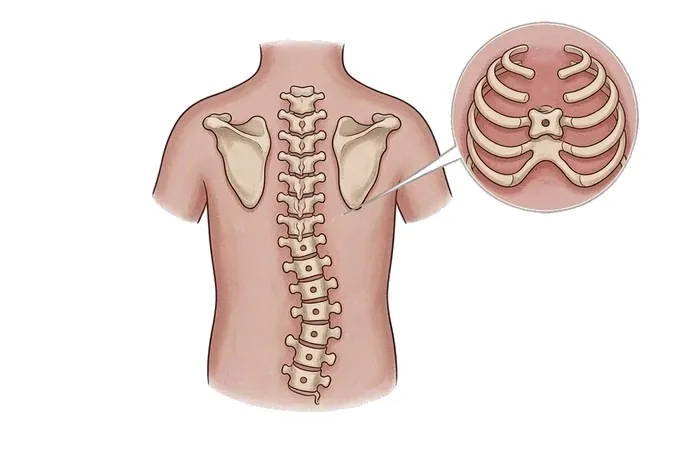
Scoliosis in a child is a sideways, rotating curve of the spine, measured on an X-ray rather than judged from posture, and it is watched and treated against the clock of growth. The spine is not only bent but also turned, which is why the first signs are visible as asymmetry: one shoulder higher, one shoulder blade more prominent, a waist creased on one side, or a rib hump when the child bends forward. Most children feel nothing at all, which is why a photograph or a school check is what brings families in rather than a complaint. What makes the paediatric form different from the adult one is growth: a curve that would sit still in a finished skeleton can change quickly while the spine is growing, so the assessment measures two things together, the size of the curve and how much growth is left. The type matters as well, because idiopathic, congenital, neuromuscular and syndromic curves follow different courses. The sections below set out what families notice first, how the curve is measured, and what observation, physiotherapy, bracing and surgery each do.
-
The curve is measured, not guessed
scoliosis is defined on a standing X-ray by a Cobb angle of ten degrees or more, and every later decision refers to that measured number rather than to how the back looks
-
Growth is the clock
curves progress fastest during the years of fastest growth, so how much growth is left is assessed together with the size of the curve and decides the follow-up interval
-
Most children feel no pain
the earliest signs are asymmetry such as uneven shoulders or a rib hump on bending forward, so pain is not what the plan waits for and pain that appears is assessed in its own right
-
Most curves do not need surgery
the plan is built from the size of the curve, the remaining growth and whether it is progressing, and observation, physiotherapy and bracing are the steps that come first
What scoliosis is, and what it is not
Four things about the condition decide how the whole assessment is run:
- Scoliosis is a three-dimensional structural curve, not a posture problem. The spine bends sideways and rotates at the same time, and the rotation is why the ribs rise on one side when the child bends forward. It is defined on a standing X-ray by a Cobb angle of ten degrees or more, which means the word has a measured definition rather than a visual one.
- Growth is part of the definition, not just a background fact. A curve in a spine that is still growing can change quickly, and it is watched against the calendar of growth rather than treated as a fixed feature. The same curve in a finished skeleton is a different question with a different answer.
- Most children feel nothing. Pain is not the usual presentation, and weakness is not part of ordinary scoliosis. The condition is found because someone notices asymmetry, which is why the assessment starts with what can be seen rather than with what is felt.
- Paediatric scoliosis is an umbrella, not one disease. Idiopathic, congenital, neuromuscular and syndromic curves have different causes, different courses and different plans, which is why the type is established as part of the assessment rather than assumed.
What the diagnosis does not mean. It does not mean the spine is damaged, that sport has to stop, or that an operation is waiting at the end of the road. What it means is that the curve is measured, the remaining growth is estimated, the type is named, and the plan is written from those three things and reviewed on a schedule.
The types of paediatric scoliosis, and why the type matters
The type decides the course the curve is likely to take and what else has to be looked at, so the five groups below are kept apart on purpose:
| Type | What it means for the plan |
|---|---|
| Adolescent idiopathic scoliosis, appearing in the years from ten to maturity | The curve has no identifiable cause and the assessment focuses on its size, the remaining growth and the rate of change; the standard conservative options and, where needed, the standard operation are planned against this type |
| Infantile and juvenile idiopathic scoliosis, appearing before the age of ten | An early curve has more growth ahead of it and a longer time in which to change, so the follow-up is closer and the surgical options are planned to preserve growth rather than to end it |
| Congenital scoliosis, from vertebrae that formed differently before birth | The curve is present from early childhood and may be accompanied by anomalies of the spinal cord and of other organs, which is why the assessment includes looking for them rather than measuring the curve alone |
| Neuromuscular scoliosis, alongside a nerve or muscle condition | The curve is one part of a wider condition and tends to progress while growth continues and sometimes beyond it, so the plan is shared with the team that follows the underlying condition and includes seating, standing and respiratory questions |
| Syndromic or secondary scoliosis, part of a named wider diagnosis | The curve is followed as one feature of the syndrome; the plan takes the wider condition into account and the follow-up is co-ordinated with the specialists who manage it |
Why the type is named rather than assumed. The word scoliosis describes the shape and not the cause, and the causes behave differently: an adolescent curve is watched against a finishing skeleton, a congenital curve has companions that have to be looked for, and a neuromuscular curve does not stop at the end of growth. Naming the type is what turns a photograph of a back into a plan.
What changes the plan, and what does not
What changes the plan is measured rather than felt, and the five questions below are what the assessment answers:
| What changes the plan | What it changes |
|---|---|
| How large the curve is on the X-ray | The Cobb angle is the number the plan refers to; larger curves are watched more closely and have more options attached to them, and the angle at which a brace is offered is a defined part of the scale |
| How much growth is left | Assessed from the growth plates and from the history of the growth spurt; a curve in a child with years of growth ahead is managed differently from the same curve in an adolescent who has nearly finished |
| Whether the curve is progressing | Progression is measured by comparing the angle on films taken at different dates, which is why the first film is kept and measured rather than described |
| The type and its cause | A neuromuscular or congenital curve brings its own assessment and its own team, and an early-onset curve changes the surgical options because the spine and chest are still growing |
| Pain and neurological findings | Pain is not the usual presentation and weakness or numbness is not part of ordinary scoliosis, so either one changes what the assessment looks for and what the imaging has to show |
Why appearance alone is the wrong measure. A back that looks uneven can hold a small curve, and a straight-looking back can hide one; the photograph is what raises the question, and the film is what answers it. The plan changes when the measured numbers change, not when the picture does.
What the assessment measures
The assessment runs from observation to measurement to cause, and each step is done because its answer changes something:
| What is assessed | What it establishes |
|---|---|
| A standing examination from behind | The shoulders, shoulder blades, waist and pelvis are compared, which turns the parental impression into a documented finding and records what later visits will be compared against |
| The forward bend test | The rotation that accompanies the curve shows as a rib hump on one side, which is the sign that separates a structural scoliosis from a postural asymmetry that straightens out |
| A neurological examination of the legs | Strength, reflexes and sensation, because findings outside the ordinary point at the spinal cord and change the imaging plan before any X-ray is discussed |
| Standing X-rays with the Cobb angle measured | The angle is recorded as a number with a date, and the same films show the whole spine from the neck to the sacrum rather than the segment that looks uneven |
| Assessment of skeletal maturity | Read from the growth plates on the same films together with the history of the growth spurt, and it is what turns the angle into a timeline |
| MRI where the findings are atypical | Not part of every assessment, but the step that looks at the spinal cord and names the cause where the curve is early, unusual in shape, or accompanied by neurological findings |
Why the assessment ends in three numbers. The angle, the maturity and the type are what every later conversation refers to, and they are what make a review meaningful: a follow-up visit compares the new film with the old numbers and answers one question, whether anything has changed enough to alter the plan.
Why families come to China for this assessment
Nothing about measuring a curve is exotic, and travelling for it is usually about the way the three numbers are turned into a plan the family can act on:
- The measurement is the centre of the visit, not a formality. The angle is measured on standing films and recorded with the maturity assessment beside it, so the family leaves with numbers rather than with an impression, and the next review anywhere in the world can be compared against them.
- The conservative options are set out with their honest limits. What physiotherapy can and cannot do to the curve, what a brace holds and what it does not hold, and which of them fits the curve pattern and the years of growth left are explained against the measured numbers rather than as a general menu.
- Imaging is planned to answer questions, not to fill the schedule. Films are taken standing and measured, MRI is ordered where the findings point at it, and repeated imaging of a curve that has already been characterised is avoided on purpose.
- Bracing and school can be planned together. For families who travel, the brace schedule, the follow-up interval and the questions to ask at home are written down before the trip ends, so the plan continues where the family lives rather than stopping at the airport.
What this does not promise. An assessment does not make a curve disappear, and it does not remove the need for follow-up through the years of growth. What it does is give the curve a measured starting point, name its type, and write the schedule on which the rest of childhood is watched.










