


Ovarian Endometrioma Overview
Ovarian Endometrioma Overview
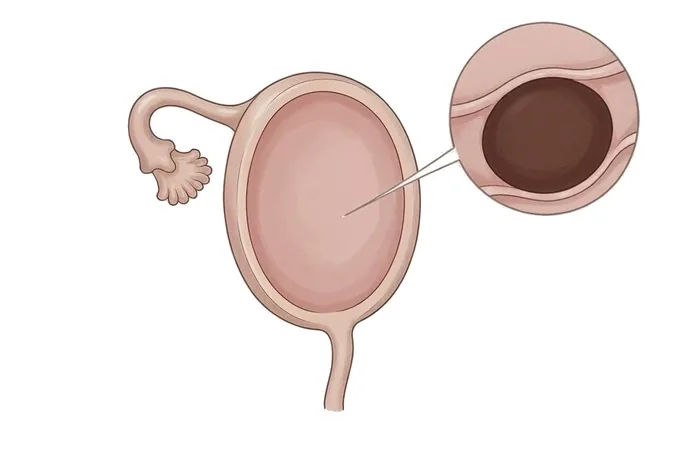
An endometrioma is a cyst of the ovary that is formed by endometriosis. Tissue like the lining of the womb settles on the ovary, and the blood it sheds each cycle collects into a cyst whose contents are old blood, which is why it is sometimes called a chocolate cyst. The name describes what it looks like rather than what it is, and the distinction matters: it is not a cyst that happens to contain blood, it is endometriosis that has taken this form, and the same disease can involve the peritoneum, the tubes and, less often, the bowel. Two things follow from this. The cyst has to be told apart from the other cysts that form on an ovary, because some of them resolve on their own and a few are tumours, and because the appearance overlaps with both. And the ovary is the organ that carries the consequences: endometriosis itself reduces ovarian reserve, an operation on the cyst reduces it further, and the decision to operate is therefore a balance rather than a straightforward answer.
-
It is endometriosis, not just a cyst
the cyst is the form this disease takes on the ovary, so removing it does not remove the disease elsewhere in the pelvis
-
It has to be told apart from other ovarian cysts
some ovarian cysts resolve on their own, and a few are tumours; an endometrioma has a characteristic appearance that usually settles which it is
-
CA-125 is not a test for ovarian cancer
it is raised by endometriosis itself, and it cannot confirm or exclude a malignancy
-
The ovary is what is being asked to pay
the disease reduces ovarian reserve and an operation reduces it further, so whether to operate is a balance rather than a given
What an endometrioma is, and what the name gets wrong
It is a cyst of the ovary that has been produced by endometriosis, and every part of that description is worth keeping separate:
- It is endometriosis, not a cyst that happens to contain blood. Tissue like the lining of the womb has settled on the ovary and sheds blood into a closed space, and over cycles that blood collects and darkens into a cyst. What is being described is therefore the form this disease has taken on the ovary, rather than an unrelated cyst that was found to be filled with something.
- The other name, chocolate cyst, describes the contents. The old blood gives the contents a dark, thick appearance, and the nickname comes from that. It is useful as a description and misleading as a diagnosis, because it says nothing about what produced it or about what else is involved.
- The disease is not confined to the cyst. Endometriosis can also involve the peritoneum, the fallopian tubes and, in some women, the bowel, and it can be present on both ovaries. That is why an operation that removes the cyst does not remove the disease, and why recurrence after that operation is expected rather than a sign that it was done badly.
- It is not cancer, and it is not the same as the other ovarian cysts. An endometrioma is benign. Some ovarian cysts resolve on their own, and a small number of ovarian cysts are tumours. An endometrioma has a characteristic appearance on ultrasound, and telling these apart is the first thing the assessment does rather than an afterthought.
- The ovary is the organ that pays for it. Endometriosis on the ovary reduces the number of eggs the ovary holds, and an operation on the cyst removes some healthy ovarian tissue along with it. The decision about treatment is therefore not simply whether the cyst can be removed, but what that costs the ovary.
What the name does not mean. It does not mean cancer, and it does not mean the ovary has to be removed. It does not mean the cyst has to come out as soon as it is found, because a cyst that causes nothing and looks typical can be watched with a defined review. It does not mean fertility is over, although both the disease and an operation on it work against ovarian reserve. What it means is that endometriosis has taken the form of a cyst on an ovary, that the pain and the fertility question are what the plan is built around, and that there is a sequence of options to work through rather than one answer.
The forms it takes, and what each one changes
What the cyst looks like, how many there are, and what else is involved decide how the plan is put together:
| The form it takes | What follows from it |
|---|---|
| A single cyst with a typical appearance | The commonest presentation, and the one where the appearance usually settles the diagnosis without an operation. Where it causes nothing, it can be watched with a defined review rather than removed |
| Cysts on both ovaries | More common than is often assumed, and it changes the plan because an operation on both ovaries removes ovarian tissue twice over. Where a pregnancy is wanted, it is the situation in which reserve matters most |
| An endometrioma alongside disease elsewhere in the pelvis | Disease on the peritoneum, the tubes or the bowel produces pain and fertility problems of its own. Removing the cyst does not address any of it, so the plan has to say what is being treated and what is not |
| An endometrioma alongside adenomyosis or fibroids | All three cause pelvic pain and heavy or painful periods, and they answer to different treatments. Where they occur together, the plan has to establish which of them is producing the symptom being treated |
| A cyst whose appearance overlaps with another kind of ovarian cyst | An appearance that is not typical is the situation that needs the most careful assessment, because a functional cyst, a benign ovarian tumour and, rarely, a malignant one can each look like something they are not |
Why the form is asked about before the treatment. The same diagnosis leads to different plans depending on whether the cyst is single or bilateral, whether the disease is elsewhere in the pelvis, and whether anything else is contributing to the pain. Establishing the form is what allows the plan to be written for the patient rather than for the diagnosis.
What changes the plan, and what does not
What changes the plan is what the disease is doing and what is wanted next, rather than how large the cyst measures:
| What changes the plan | What it changes |
|---|---|
| Whether there are symptoms at all | Where the cyst causes no pain and nothing is being planned around fertility, watching it with a defined review is a decision rather than a delay |
| Whether pain or fertility is the dominant problem | Pain is treated by measures that suppress the disease; the fertility line is assessed on its own terms. Where both are present, the plan has to establish which is being treated now |
| Whether a pregnancy is wanted now, later, or not at all | It decides whether an operation on the ovary is worth what it costs the ovary, and whether hormonal suppression can be used at all while a pregnancy is being attempted |
| What the ovarian reserve is, and whether an ovary has been operated on before | Repeat operations and previous surgery on the same ovary change how much tissue can be given up. Reserve is measured rather than assumed where a pregnancy may be wanted |
| Whether the appearance is typical, and whether it has changed | A typical appearance that is stable needs little; a solid component, internal blood flow or growth is the pattern that requires the cyst to be assessed properly rather than watched with reassurance |
Why size is the wrong first question. Patients usually arrive knowing how large the cyst is, and it is the number least able to answer what to do. What decides the plan is whether the disease is producing pain, whether a pregnancy is wanted, and how much ovarian reserve the ovary can afford to lose — none of which is read off a measurement on a scan.
What the assessment is looking for
The assessment characterises the cyst, describes the pain by its pattern, and answers the fertility question alongside them:
| What is assessed | What it establishes |
|---|---|
| The pain history, taken by its pattern | When it starts in relation to the period, how it has changed over years, whether it occurs with sex or on opening the bowels, which together point at where the disease is rather than only at whether it is present |
| A pelvic examination | How mobile the womb and the ovaries are and how tender the pelvis is, which changes both what is suspected and what can be planned |
| A transvaginal ultrasound | The appearance of the cyst, whether there are two of them, and at the same time whether there is disease elsewhere in the pelvis or adenomyosis or fibroids in the womb |
| An MRI where the appearance is not typical | Where the appearance leaves a question, where disease involving the bowel or the tubes may be present, or where an operation is being planned, used to plan rather than to make the diagnosis |
| A blood count, and what CA-125 does not tell you | The blood count measures anaemia where the periods are also heavy. CA-125 is raised by endometriosis itself, is not a test for ovarian cancer, and cannot confirm or exclude one |
| An assessment of ovarian reserve where a pregnancy is wanted | It is the number that decides how much surgery the ovary can afford, and it is taken before an operation is planned rather than after it |
Why the assessment stops when it has answered the question. Not every cyst needs an MRI, and nobody needs repeated imaging to watch a cyst whose appearance and behaviour already answer the question. The assessment is finished when the cyst has been characterised, the pain has been described by its pattern, the rest of the pelvis has been considered, the fertility question has an answer, and the other conditions that would change the plan have been excluded.
Why patients come to China for this assessment
This is a condition whose treatments differ in what they cost the ovary, and travelling for it is usually about having the cyst, the pain and the fertility question weighed together:
- The cyst is characterised rather than simply observed. Whether the appearance is typical is established, and where it is not, the question is answered with imaging and planning rather than with reassurance.
- The pain is described by its pattern rather than by how bad it was. When it starts in relation to the period, whether it occurs with sex or on opening the bowels, and how it has changed over years are recorded, because they point at where the disease is.
- The fertility question is answered before the operation rather than after it. Ovarian reserve is measured where a pregnancy may be wanted, and the plan states what the operation is expected to cost the ovary as well as what it is expected to relieve.
- Options that do not remove the cyst are set out alongside the one that does. Watching with a review date, medical suppression, removing the cyst and preserving the ovary, and removing the ovary are discussed before a plan is written, rather than one of them being presented as the answer.
- The plan and the records are prepared to travel. Results are issued with their dates and the technique used, and the written plan names what is being treated, what is being watched, when the next review is, and what would change the approach.
What this does not promise. A completed assessment does not guarantee that the pain will resolve or that the disease will not come back, and it does not promise that a pregnancy will follow. What it does is establish what the cyst is, how much of the pelvis is involved, what the ovary can afford, and which of the options are worth trying in which order. Saying which parts can be acted on and which cannot is part of the assessment rather than a caveat added afterwards.










