


Menstrual Disorders & Dysmenorrhoea Overview
Menstrual Disorders & Dysmenorrhoea Overview
Menstrual disorders and period pain are grouped together because they are read from the same information and often share a cause, but they are not the same problem: a cycle can be irregular without being painful, and pain can be severe while the cycle stays as regular as a clock. The reason the distinction matters is that each part of the pattern points somewhere different. Irregular timing usually means ovulation has become unpredictable. A flow that has become heavy usually means something in the womb has changed, or that the blood is not clotting as it should. Pain that is new, or that has worsened over years, usually means a cause that can be found and often treated. Read together as one thing, and called a period problem, they send the assessment in the wrong direction. The second half of the assessment is what the patient wants next: whether a pregnancy is being planned, whether the cycle needs to become predictable, or whether the aim is simply to stop the pain, each of which leads to a different plan.
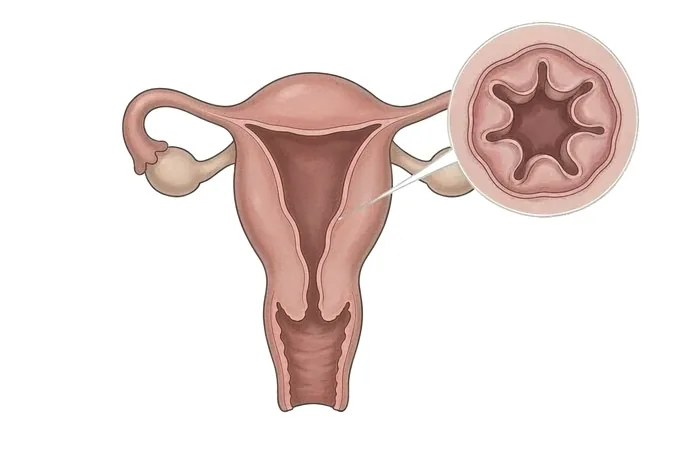
-
Normal is a range, not a point
cycle length and flow vary between women and across a lifetime, so the useful question is whether the pattern has changed for you rather than whether it matches a textbook
-
The three parts have to be read separately
an irregular cycle, a heavy flow and pain point at different causes, and treating them as one problem is how a treatable cause goes unfound for years
-
Period pain is not one condition
primary dysmenorrhoea responds to anti-inflammatory drugs and hormonal treatment; pain that is new or worsening over years usually has a cause that can be named
-
The plan follows what you want next
a pregnancy being planned, a cycle that needs to be predictable, and a pain that needs to stop lead to different choices, and the same diagnosis can give three different plans
What it covers, and what a normal cycle actually means
Two problems are grouped under this heading, and they are grouped by the way they are read rather than by what causes them:
- A menstrual disorder is a change in the pattern. It covers the interval between periods, how long the bleeding lasts, and how heavy it has become. The pattern is described in three parts because each part points somewhere different, and because the same woman can have one part disturbed while the others stay as they were.
- Dysmenorrhoea is pain around the period. It is divided into primary and secondary. Primary dysmenorrhoea is the cramping produced by the prostaglandins released when the lining of the womb sheds; it usually begins within a year or two of the first period, and it responds to anti-inflammatory drugs and to hormonal treatment. Secondary dysmenorrhoea is pain produced by something that can be named such as endometriosis, adenomyosis, fibroids, an intrauterine device or adhesions, and it typically starts later or worsens over years.
- Normal is a range, and it is a wide one. Cycle length, the duration of bleeding and the amount lost all vary between women and across a lifetime, and both ends of each range can be normal for a particular person. This is why the useful question is not whether a cycle matches a textbook figure but whether it has changed from what is normal for the woman in front of you.
- Pain is not a measure of how serious the cause is. A small area of endometriosis can produce disabling pain, and a large fibroid can produce none at all. Severity and cause are separate questions, and the pattern of the pain carries more information than how bad it feels on a particular day.
What the diagnosis does not mean. It does not mean the cycle has to be restored to a fixed interval, that pain must be endured until the menopause, or that bleeding has to be tolerated because it is only bleeding: a flow heavy enough to deplete iron produces symptoms of its own, and the deficit is treated as a problem in its own right. What it means is that the pattern is read in its three parts, a cause is looked for where there is one, and the plan is written around what the patient wants next.
The parts of the cycle that go wrong, and what each one points to
What has changed decides what is looked for, and the four patterns below are read differently on purpose:
| What has changed | What it usually points to |
|---|---|
| An irregular interval, with cycles that vary widely | Ovulation has become unpredictable or has stopped, which turns the assessment towards the hormonal causes: polycystic ovary syndrome, thyroid function, prolactin, and the years approaching the menopause |
| A flow that has become heavy, with the interval unchanged | Something in the womb has changed, or the blood is not clotting as it should. Fibroids, polyps and adenomyosis are looked for, and a clotting screen is taken where the heavy flow has been present since the periods began |
| Bleeding that lasts longer, or that trails at either end | The shedding of the lining has become less coordinated, which is common in the years around the menopause and also occurs with polyps and with a hormonal imbalance |
| Pain that is new, or that has worsened over years | Secondary dysmenorrhoea, which means a cause is looked for rather than assumed, since the conditions that produce it answer to different treatments and some of them affect fertility |
| Bleeding between periods, or bleeding after sex | A change that needs an explanation rather than observation, because the causes range from a polyp or a cervical change to something of the lining that has to be sampled |
Why the patterns are kept separate. The same word, period problem, is used for all of them, and it is the reason the assessment can stall: a heavy flow investigated with hormonal tests, or an irregular cycle investigated with repeated scans, answers a question nobody asked. Naming which part of the pattern has changed is the step that decides what to look for, and it is taken before any test is ordered.
What changes the plan, and what does not
What changes the plan is what the symptom is doing to the patient and what she wants next, rather than how the cycle compares with a normal range:
| What changes the plan | What it changes |
|---|---|
| Whether the symptom is interfering with work, study or sleep | A flow or a pain that is being organised around is a reason to treat, whether or not it looks impressive on a chart. What matters is the disruption rather than the measurement |
| Whether a pregnancy is being planned now, later, or not at all | It decides whether hormonal treatment can be used, which measures are excluded, and whether the question of fertility changes the order in which the options are tried |
| Whether the blood count shows an iron deficit | An iron deficit is treated in its own right and is not left to resolve once the flow improves, because the tiredness and the breathlessness follow from the deficit rather than from the bleeding |
| Whether the pain is new, worsening, or has been present in the same form for years | Pain that is new or worsening is the pattern that prompts a search for a cause. Pain that has been unchanged since the periods began is more often primary, and answers to measures rather than to investigation |
| Whether the cycle has stopped being predictable at all, or has stopped | Absent periods for several months are assessed in their own right rather than as the far end of irregularity, because the causes that produce them include ones that need treating for reasons other than the cycle |
Why the measurement is the wrong first question. Patients usually arrive with a figure, whether it is the length of the cycle or how many days the bleeding lasts, and the figure is the least able to say what to do. What decides the plan is what the symptom is costing in daily life, whether a pregnancy is being planned, whether the iron deficit has developed, and whether the pain has changed shape. None of those is read off a calendar or a scan, which is why they are asked about directly.
What the assessment is looking for
The assessment reads the pattern in three parts, excludes the causes that cannot be missed, and answers what the patient wants next:
| What is assessed | What it establishes |
|---|---|
| A calendar record of the cycle and the pain | The interval and how much it varies, the duration of bleeding, and how the pain relates to the bleeding, which together name which part of the pattern has changed |
| A pregnancy test | It comes first in anyone of reproductive age, because an ectopic pregnancy presents with bleeding and pain and cannot be identified any other way |
| A blood count and iron studies | The size of the iron deficit that a heavy flow has produced, which is the basis for treating the tiredness and the breathlessness as symptoms rather than as consequences |
| Thyroid function, prolactin, and a clotting screen where it is indicated | Three of the treatable causes that change the cycle from the inside, and the clotting screen where heavy bleeding has been present since the periods began or there is a family history |
| A transvaginal ultrasound | The womb, the lining, the ovaries and the pelvis looked at together rather than one at a time, which is how fibroids, polyps, adenomyosis and ovarian cysts are found or excluded |
| A sample of the lining of the womb, where the bleeding is abnormal and the risk factors are present | The lining is the one structure that has to be sampled rather than imaged, and it is the step that converts an abnormal bleeding pattern into a diagnosis or excludes the possibility |
Why the assessment stops when it has answered the question. Not every irregular cycle needs a scan, and nobody needs repeated imaging to watch a pattern that has already been explained. Laparoscopy is not part of the routine work-up of period pain and is used only where secondary dysmenorrhoea is suspected and the answer would change the plan. The assessment is finished when the pattern has been described in its three parts, the pregnancy question has been answered, the treatable causes have been excluded or identified, and what the patient wants next has been established.
Why patients come to China for this assessment
Nothing about reading a cycle is exotic, and travelling for it is usually about having the pattern, the cause and what the patient wants next weighed together rather than one at a time:
- The pattern is taken as a history rather than as a complaint. The interval, the duration, the flow and the shape of the pain are recorded separately, because they point in different directions, and the assessment is built around what has changed rather than around a diagnosis the patient arrives with.
- The pregnancy question is answered before anything else is planned. In anyone of reproductive age, a pregnancy test is the first step when bleeding and pain present together, because an ectopic pregnancy is the cause that cannot be missed and it is excluded rather than assumed.
- The iron deficit is treated as a symptom in its own right. A blood count and iron studies are part of the assessment of a heavy flow, and the tiredness that follows from the deficit is addressed directly rather than left to resolve if and when the flow improves.
- The hormonal work-up and the imaging are read together. Thyroid function, prolactin and a clotting screen where indicated, alongside an ultrasound of the womb, the lining, the ovaries and the pelvis, so that a structural explanation and a hormonal one are weighed against each other rather than pursued in sequence.
What this does not promise. A completed assessment does not guarantee that the cycle will return to a fixed interval, that the pain will resolve, or that a pregnancy will follow. What it does is establish which part of the pattern has changed, whether there is a treatable cause, what the iron deficit is, and which options are worth trying in which order.










