


Infertility Overview
Infertility Overview
Infertility is defined by time rather than by a single symptom: twelve months of regular, unprotected intercourse without a pregnancy, or six months where the woman is 35 or older. Two things follow from that definition, and both change what a couple should actually do. The first is that this is a condition of a couple, not of one person — male factors are found alone or contributing in around half of cases, which is why the semen analysis is one of the first tests and not the last. The second is that the work-up is short and structured: whether the woman is ovulating, whether the tubes are open, and whether the sperm are adequate — three lines, each with one basic test, plus the history that says whether the exposure has really happened. Treatment then follows the cause that was found, in deliberate steps from targeted care through insemination to in vitro fertilisation, each with its own indication. Age, above all the woman’s, is the one factor that cannot be treated — which is why the threshold for being assessed is deliberately low, and why waiting longer is not a neutral act.
-
It is a couple’s condition, assessed as a pair
male factors are found alone or contributing in around half of cases, so both partners start on the same day
-
12 months is a starting line, not a deadline
six months if the woman is 35 or older — the point at which testing begins, not the point at which hope ends
-
Three lines, three first tests
ovulation, tubes and sperm each have one basic test, and the semen analysis belongs at the beginning
-
Treatment follows the cause found
targeted care where there is one; otherwise a stepped path — insemination, then IVF — each step with its own indication
What infertility is, and what the time rule actually means
The definition is a matter of time and exposure, and it is worth reading precisely because both halves are usually misread:
- Twelve months of regular, unprotected intercourse without a pregnancy. “Regular” and “unprotected” are load-bearing words: the rule assumes intercourse two to three times a week around the fertile window. A couple who have been “trying” with long absences, or with contraception most months, have not yet run the clock.
- Six months where the woman is 35 or older. The threshold shortens with age because the value of time changes. This is arithmetic, not alarmism — it is the reason a couple at 38 is assessed now rather than next year.
- Primary and secondary infertility are assessed the same way. A couple who have had a pregnancy before and cannot achieve another go through the identical work-up; a previous pregnancy does not exempt either partner from testing.
- The condition belongs to the couple. It is recorded against a person in a medical record, but it is found, explained and treated at the level of the pair — which is why “whose problem is it” is the least useful question a couple can spend a year answering by waiting.
Why the definition matters more than most couples expect. Couples wait for one of two reasons: because they believe a diagnosis requires more failure than they have had, or because they hope the problem will resolve on its own. The first is not true — the threshold is the point at which testing is the appropriate response, not a gate one must feel deserving of. The second is sometimes true — but there is no way to know whether it is true for a particular couple without the tests, and the tests take weeks, not years.
Where the causes sit: a distribution across two people
The causes of infertility are conventionally grouped by where in the process conception is being blocked. The distribution matters less as a ranking than as a reminder that every line has to be checked, because none of them can be excluded from how a couple feels:
| Line | What it covers | What it means for the work-up |
|---|---|---|
| Ovulation | Whether an egg is released predictably — disrupted by polycystic ovary syndrome, thyroid or pituitary disorders, and by diminished ovarian reserve with age | Read from the menstrual history and confirmed with hormones and ultrasound; the most treatable of the female lines when the cause is found |
| Tubes | Whether sperm and egg can physically meet — blocked or scarred by pelvic infection, previous surgery or endometriosis | No symptom predicts it; it is examined directly, and a positive finding redirects the whole plan |
| Sperm | Count, movement and shape — alone or contributing in around half of cases, with or without any symptom in the male partner | Established by semen analysis, which is quick, cheap and repeatable, and therefore belongs at the beginning |
| Uterus and cervix | Fibroids that distort the cavity, polyps, adhesions, and cervical factors that impede passage | Found on ultrasound and cavity assessment; correctable in many cases and always worth excluding before stepping up treatment |
| Unexplained | The picture after all lines have been assessed and nothing has been found — a real and common category, not a failure of the work-up | Has its own treatment logic, which is why completing the assessment is what makes the plan possible |
Why the distribution is read as a set rather than a ladder. A couple can spend months treating the line that was easiest to find while another was never checked. The work-up is designed to close all the lines at once, in weeks — which is also why it is so much shorter than most couples expect.
What decides the pace of the plan
Infertility is not graded mild to severe the way a disease is graded. What varies between couples is the pace at which the plan should move, and four things set it:
| Factor | Why it changes the pace |
|---|---|
| The age of the woman | The single strongest factor and the only one that moves on its own. It decides how long waiting is a reasonable strategy and how quickly the assessment and the plan are compressed |
| How long the couple have been trying | Duration beyond the threshold is itself information: it changes what the odds of conceiving unassisted look like and how much time the plan should spend on simpler steps |
| A known diagnosis | A couple with known tubal disease, a known severe male factor or absent ovulation does not begin the same way as a couple with no findings — the plan starts further along |
| Previous pregnancies, losses and treatment | A previous pregnancy, recurrent early losses or previous fertility treatment elsewhere each reshape what the assessment needs to cover and what the plan can reasonably include |
| Findings that need treating first | Some findings change the order of the plan: a cavity that needs surgery, a hormone disorder that needs control, or a treatment elsewhere that threatens fertility and needs preservation discussed first |
Why pace is the practical question. Most couples asking “how bad is it” are really asking “how fast should we move”. The answer is set by the table above, and it is decided once the assessment is complete — which is the strongest argument for doing the assessment rather than waiting for the question to answer itself.
What the assessment has to establish
The fertility work-up is short, and most of it completes within a single cycle or two:
| Step | What it establishes |
|---|---|
| The shared history | Whether the exposure defining the condition has actually happened, and what in either partner’s history already points somewhere — cycles, infections, surgery, medicines, age |
| Semen analysis | Whether the male line is adequate — the first test of the work-up in practice, repeated where the result is abnormal because samples vary |
| Ovulation assessment | Whether the woman is ovulating predictably, read from the cycle and confirmed with a mid-luteal progesterone and the hormone panel |
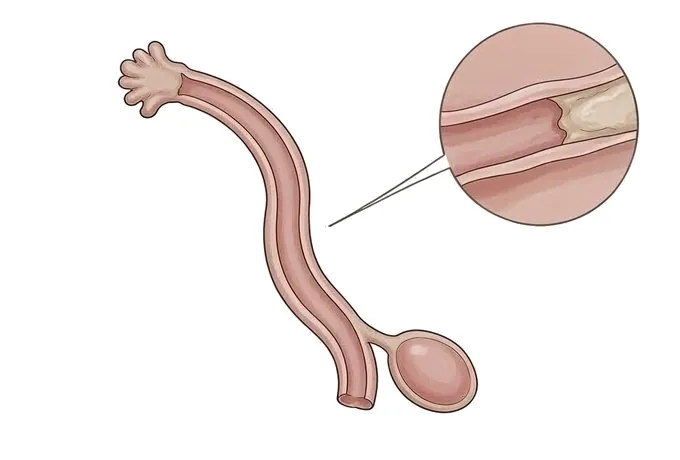
| Tubal assessment | Whether the tubes are open, established directly — usually by hysterosalpingography — because nothing short of imaging answers it |
| Ultrasound of ovaries and uterus | The anatomy of both, ovarian reserve markers counted in the same examination, and findings such as polycystic morphology, fibroids or cysts |
| Directed further tests | Cavity assessment, infection screening and genetic testing where the history or the first results point to them — added to answer a specific question, not by default |
Why the tests run in parallel rather than in sequence. The traditional order — test the woman exhaustively, then the man — wastes months and finds the male factor last. The modern order runs the three lines together, because each basic test is quick and because the combination of results is what selects the treatment.
Why patients travel to China for fertility assessment and treatment
The hard part of fertility care is rarely the tests, which are standardised everywhere. It is the plan: reading four lines of results together, choosing the step that matches them, and holding the timeline steady while the couple are far from home.
Both partners are worked up in one programme. The semen analysis, the ovulation assessment and the tubal assessment are arranged in the same cycle, so that the couple leave the first consultations with the lines already moving rather than with a sequence of referrals to schedule one after another.
The treatment ladder is applied deliberately. Ovulation induction, intrauterine insemination and in vitro fertilisation each have defined indications, and the laboratory that supports IVF sits behind the same clinic that orders it — so a plan can move from one step to the next without the care being split between institutions that do not share a record.
Male factor is treated as part of the same plan. Where the semen analysis is abnormal, the male partner is assessed and treated within the same programme — repeat analyses, hormones, urological review where indicated — rather than being referred out and lost to the timeline.
The plan is written to travel. The results — semen analyses, hormone profiles, imaging, the record of what was tried and what it produced — are provided in English, so that care can continue at home from a record rather than from memory, and so that a second opinion anywhere is a matter of handing over documents rather than repeating tests.










