


Gout and Hyperuricaemia Overview
Gout and Hyperuricaemia Overview
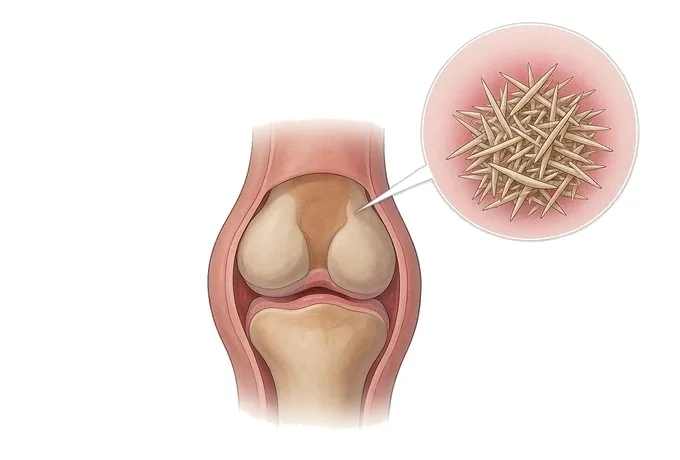
Gout is inflammatory arthritis with a single physical cause: urate that has been too concentrated in the blood for long enough settles out as crystals in a joint, and the immune system attacks them. Everything else about it follows from that. This guide takes the path patients actually walk — what those crystals do and why the number alone does not settle the diagnosis, what is raising the level, how an attack is stopped, and how the urate level is brought below its target and kept there.
-
Crystals, not the number
what actually makes the diagnosis
-
2004
the year our nephrology department was established
-
360 μmol/l
the usual urate target, lower where tophi are present
-
7–10 days
how long a first attack lasts untreated
What gout is — crystals, not a number
Urate is the end product of purine breakdown in the body, and it circulates dissolved in the blood until there is too much of it to stay dissolved. The concentration at which it can no longer do so — its saturation point, around 404 μmol/l (6.8 mg/dl) — is the line that matters. Above it, urate can come out of solution as monosodium urate crystals, and it does so preferentially in the coolest, most mechanically stressed places: the joint at the base of the big toe, the ankle, the knee, the fingers, and the tissue around them.
Crystals alone do nothing. The attack is the immune system's response to them: white blood cells attempt to engulf the crystals, fail, and release the inflammatory signals that produce the red, hot, exquisitely tender joint that brings a patient in at three in the morning. That is why the pain is as severe as it is, and why it resolves on its own — the inflammation is self-limiting, and an untreated first attack typically runs its course over seven to ten days.
One distinction shapes everything that follows, and it is the one most often blurred. Hyperuricaemia is a raised urate level. Gout is the disease the level can produce. A great many people carry a raised level for years and never form a crystal; most of them never have an attack. Conversely, and this is the trap in the other direction, the level can be normal during an acute attack, because inflammation changes how the kidney handles urate. Neither a high number nor a normal one settles the diagnosis on its own.
The other thing worth stating at the start is what gout is not. It is not a disease of eating richly, although diet moves the level. It is not a condition that resolves when the pain resolves, because crystals can still be present in a joint that feels entirely normal. And it is not only a joint disease: the same urate that crystallises in a cool toe also forms kidney stones and deposits in the kidney itself, which is why this cluster sits within internal medicine and shares a department with nephrology.
Whether the urate is coming from the body or the kidney, and why that decides the treatment
"High uric acid" has more than one cause, and the cause determines which treatment actually works. The body's urate pool is set by how much is produced and how much is cleared, and the clearance side is the one that fails in most people with gout. Classifying a patient is therefore not an academic exercise — it decides between a medicine that reduces production and one that increases excretion, and it decides whether a prescribed drug should be changed instead.
| Source | What is happening | How it usually looks | What it means for treatment |
|---|---|---|---|
| Reduced kidney clearance, primary | The kidney's urate transporters reabsorb more than they should, so the body retains urate it would otherwise excrete | The commonest pattern: normal diet, no obvious secondary cause, often a family history and a level that drifts up over years | A uricosuric agent, where kidney function allows; otherwise a production blocker titrated to target |
| Reduced clearance from kidney disease | Failing filtration leaves urate behind; the two reinforce each other | Chronic kidney disease already diagnosed; the urate rises as filtration falls | Dose adjusted to kidney function; urate and filtration tracked together rather than separately |
| Overproduction | The body makes more urate than the kidney can clear — from diet, alcohol, rapid cell turnover or a specific enzyme defect | Heavy purine intake, high alcohol intake, fructose-sweetened drinks, or a myeloproliferative or psoriatic condition | A production blocker, plus removing what is driving the excess |
| Drug-induced | A prescribed medicine raises urate, usually by changing how the tubule handles it | Thiazide or loop diuretics, low-dose aspirin, ciclosporin, pyrazinamide or ethambutol started months or years earlier | Review the list and substitute where the indication allows — often the single most productive step |
| From another disease | A condition raises urate as a bystander: psoriasis with rapid skin turnover, a blood disorder, tumour lysis during cancer treatment | Gout appearing younger than expected, or alongside a diagnosis that explains it | Treat the underlying condition; urate lowering supports it rather than replaces it |
| Mixed, with metabolic syndrome | Central weight gain, insulin resistance, raised blood pressure and lipids travel with reduced clearance | The commonest clinical picture in practice: gout as one visible part of a metabolic pattern | Urate lowering plus the cardiometabolic work; weight loss lowers urate, crash dieting raises it |
Notice the last column. In one row the treatment is a medicine, in another it is a change to a prescription written for a different problem, and in one it is the management of an entirely separate disease. That is why establishing the source is written into the assessment rather than left to inference.
The four stages of the disease, and why the quiet years are not the harmless ones
Gout has a recognisable course, and putting a patient on it changes what "treated" means. The stages are descriptive rather than administrative, and people move between them at very different speeds.
| Stage | What is present | What it means in practice |
|---|---|---|
| Asymptomatic hyperuricaemia | A raised urate level, no attack, no crystals demonstrable | Not treated with urate-lowering medicine on the number alone. It is a reason to look at kidney function, medicines and metabolic risk, and to re-measure |
| Acute attack | Crystals and the inflammatory response to them; one joint, usually, at its worst within hours | Treated as inflammation, early, with the medicine chosen for the patient — not with the urate-lowering drug, which does nothing for this attack |
| Intercritical gout | The joint is quiet, crystals are still there, and the next attack is being prepared | This is where urate-lowering therapy belongs: started between attacks, covered by prophylaxis, and titrated to a target rather than to a dose |
| Chronic tophaceous gout | Crystal deposits large enough to be felt or seen — tophi — with joint erosion and persistent symptoms | A lower target than usual, more patience, and honest expectations: tophi shrink over months to years, and bone already lost does not return |
Two consequences follow from reading the disease this way. First, the long quiet interval between attacks is not a recovery: crystals persist in a joint that feels normal, and the interval shortens as the crystal burden grows. Second, the moment to start urate-lowering therapy is between attacks rather than during one — starting it during a flare makes the flare worse, and stopping it during a flare is the commonest reason the disease comes back.
What a full gout assessment contains
The assessment is arranged so that each test answers one question, and most of it is cheap and widely available. The failure mode is not that these tests cannot be done; it is that the diagnosis was made on the number alone, which is right often enough to feel safe and wrong often enough to matter.
| Test | What it measures | What it answers |
|---|---|---|
| Serum urate, repeated when quiet | The concentration in the blood — the number that has to be driven below saturation | Whether there is a level to treat, and later, whether treatment has reached its target. Read when the joint has been quiet for weeks, not during an attack |
| Joint aspiration and polarised microscopy | Fluid taken from the swollen joint and examined for crystals | Whether this is gout, and — equally important — whether it is infection. Needle-shaped, negatively birefringent crystals are the diagnosis |
| Ultrasound of the joint | Crystal deposit on the cartilage surface — the double contour sign | Support for the diagnosis where aspiration is not possible, and a way to see deposits in a joint that is not currently inflamed |
| Dual-energy CT | Urate deposits distinguished from surrounding tissue by their composition | The answer where the diagnosis is unclear or the joint cannot be aspirated; also a way to measure tophus burden |
| Kidney function and urine studies | Filtration rate, urine urate, and whether urate is forming stones | Whether the kidney is the reason the level is high, and whether the kidney is already being affected by it |
| Metabolic panel | Blood pressure, glucose, lipids, weight and liver function | Which of the conditions that travel with gout are present, because they are treated in the same plan rather than separately |
One procedural point belongs here. A hot, red, swollen joint in a patient with fever is an infection until it is shown not to be, and the only test that shows it is aspiration. In that situation the aspiration is not an optional confirmation of gout — it is the test that decides between an anti-inflammatory and an antibiotic, and it is why the diagnosis page treats it as the central step rather than a refinement.
Why patients come to China for gout and hyperuricaemia
Our nephrology department was established in 2004 and is the leading unit of the Fosun Health Nephrology Specialty Alliance, led by Associate Professor Liu Xiaogang. It treats hyperuricaemia, gout and urate nephropathy alongside primary and secondary kidney disease, which matters here because the kidney is where urate is cleared and where it does its damage when it is not.
The department runs an outpatient clinic, inpatient wards and a haemodialysis unit with 20 specialised beds, more than 30 haemodialysis machines and 2 CRRT machines, and handles nearly 20,000 kidney outpatient visits and close to 1,000 inpatient admissions a year. For the subset of patients whose gout has already reached the kidney — stones, obstruction or reduced filtration — that work happens in the same place as the urate management rather than being referred elsewhere.
There is also an integrated pathway. The traditional Chinese medicine department runs a dedicated gout clinic, and patients who want a combined approach are managed across both: urate lowering and attack treatment on the conventional side, and an individualised Chinese medicine regimen alongside it. Where a patient asks about this, the honest framing is that it is an addition to urate-lowering therapy rather than a substitute for it — the number that has to come down is still measured in the same units.
What patients mostly come for, though, is an answer to a question that outpatient care often never reaches: why is this happening to me. A level is measured and a medicine is prescribed, and the reason the level is high — a diuretic, reduced filtration, a metabolic pattern, a medicine started years ago — is never established. The assessment described on the diagnosis page is built around closing that gap, and it is performed from records before any travel is discussed.










