


Functional Digestive Disorders Overview
Functional Digestive Disorders Overview
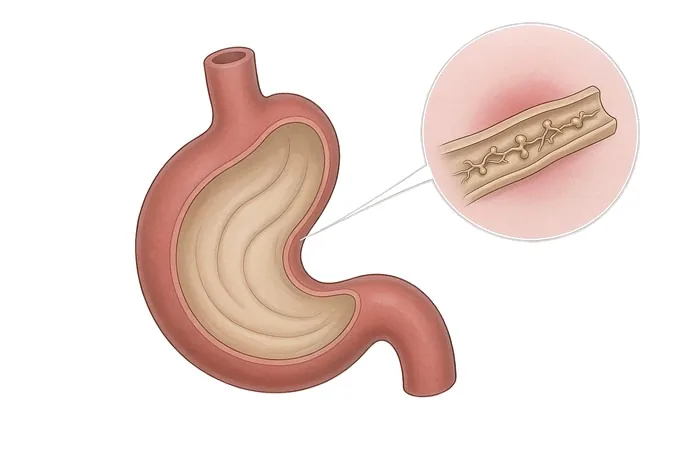
Functional digestive disorders are conditions in which the gut looks normal on the tests that can be done and the symptoms are real. They arise in the way the gut and the nervous system communicate — how the bowel moves, how much sensation the gut wall reports, and how the brain reads it. That is why the diagnosis is made from a symptom pattern rather than from a scan, and why a normal result is expected.
-
A positive diagnosis
made from the symptom pattern against agreed criteria, not from what is left after exclusions
-
Alarm features first
weight loss, blood in the stool, anaemia, fever and night symptoms are assessed first
-
Measurable, not imagined
the heightened gut sensitivity here is a measurable physiological difference
-
Two metres covering six
a two-metre small-bowel endoscope reaches the six metres standard scopes cannot
What these disorders are — a real condition, diagnosed by its pattern
Functional digestive disorders are conditions in which the gut behaves abnormally while looking normal on the tests that can be done. Irritable bowel syndrome is the best known, functional dyspepsia is the upper-gut equivalent, and bloating and constipation can each be the main problem. What they share is where the abnormality sits: not in a lesion a camera can see, but in how gut and nervous system communicate.
Four things in that conversation can be altered, each producing symptoms.
| What is altered | What it explains |
|---|---|
| How the gut moves | Diarrhoea, constipation, urgency, a stomach that stays full, and symptoms that cluster after meals |
| How much sensation the gut wall reports | Why ordinary gas, stretch or movement is felt as pain — the change is in the signal, not the tissue |
| How the lining responds to food and bacteria | Why a meal or an infection sets symptoms off, and why gut bacteria matter without being the whole story |
| How the brain reads and amplifies the signal | Why stress and poor sleep worsen symptoms, and why symptoms worsen sleep and mood in return |
The consequence is a diagnostic method that surprises people. Because nothing structural has gone wrong, the diagnosis is made from the pattern of symptoms against agreed criteria — a positive act, not a leftover. It is the same logic as a migraine: the attack has a recognisable shape, the examination between attacks is normal, and nobody concludes the headache is not real.
So the sentence most often heard here — your tests are normal, so there is nothing wrong — is wrong twice. A normal endoscopy and scan cannot detect this problem, and those normal results were needed before the diagnosis could be made. A better sentence is: the tests that look for the other explanations are normal, and that is what allows us to name what you have. A functional disorder is not the absence of a diagnosis: it is a named condition with agreed criteria and defined treatments.
The patterns, and why the pattern is what decides the treatment
These conditions are described by which symptoms predominate, so the first useful question is not what the condition is called but which of its parts is causing the trouble, because treatment here is directed at the pattern.
| Pattern | What defines it | What it changes |
|---|---|---|
| Irritable bowel syndrome, diarrhoea-predominant | Abdominal pain linked to defecation, with loose or frequent stools on most days | Points towards antidiarrhoeals, a bile-acid binder and antispasmodics, and in selected cases a gut-acting antibiotic or a low-dose neuromodulator |
| Irritable bowel syndrome, constipation-predominant | The same pain pattern, with hard or infrequent stools instead | Points towards soluble fibre, an osmotic laxative and, where those are not enough, a secretagogue or a prokinetic |
| Irritable bowel syndrome, mixed | The bowel habit alternates, sometimes within a week | Makes fixed rules unhelpful; treatment follows whichever phase is dominant and is reviewed rather than kept |
| Functional dyspepsia | Fullness after eating, being unable to finish a normal portion, or upper abdominal burning | Points towards testing and treating Helicobacter pylori, a trial of acid suppression, a prokinetic or a low-dose neuromodulator |
| Functional bloating and distension | Bloating or visible distension on most days, dominating the picture rather than accompanying it | Points towards the fermentable-carbohydrate trial, a selected antibiotic trial, and a review of what has been given up as treatment |
| Functional constipation | Straining, hard stools or fewer than three stools a week, without pain dominating | Points towards fibre type, fluid, timed toileting, an osmotic laxative and pelvic floor assessment where emptying feels obstructed |
The same person can move between these over months, and frequently does — not a change of diagnosis, but the nature of a condition defined by how the gut behaves rather than by what has happened to it, which is why a plan written once and never revised stops matching. One treatment follows the pattern rather than the label, covered on the treatment page: the choice between soluble and insoluble fibre. Handing wheat bran to someone whose main problem is bloating is a common avoidable error, because in irritable bowel syndrome it often makes the bloating worse.
The brain–gut axis — a mechanism, not a reason to doubt you
The gut has its own nervous system embedded in its wall, and it runs most of digestion without instruction. It is not autonomous, though: it reports continuously to the brain, and the brain adjusts it in return. That two-way traffic is the brain–gut axis, the mechanism behind every symptom on this page.
| Direction | What happens | What it explains |
|---|---|---|
| Gut to brain | Stretch, gas, acid and inflammation are reported upwards as sensation, and here the volume of that reporting is turned up | Why a normal amount of gas is felt as pain, and why the pain is not exaggerated but real |
| Brain to gut | Stress, poor sleep and low mood change how fast the bowel moves, how much acid is produced and how sensitive the wall becomes | Why exams, bereavement, travel and bad nights reliably worsen symptoms, without the symptoms being imagined |
| Both at once | Each direction changes the other, so a bad gut week produces bad sleep, which produces a worse gut week | Why treating only one end rarely holds, and why sleep and mood belong in the treatment plan |
The heightened sensitivity in these conditions is a measurable physiological difference: when the wall of the gut is distended in a controlled way in a laboratory, people with irritable bowel syndrome report pain at volumes and pressures that most people do not. That is a finding about the nervous system, and it settles whether the pain is real — though not whether anything dangerous is present, which the alarm-feature assessment and targeted tests are for.
It also explains two things patients are told. The first, it is only stress, treats one input among several as the whole explanation; stress acts through a physical pathway, and saying it dismissively dismisses the person. The second, you are just more sensitive than other people, is a character assessment when the accurate version is narrower: your gut reports more than most people's at the same level of stretch, and that difference in signalling is treatable — with medicines acting on the nerves of the gut and with psychological treatments designed for the gut.
Alarm features come first — a diagnosis you establish, not one you fall back on
The functional diagnosis has a precondition, and it is not negotiable: the features that make organic disease more likely have to be looked for deliberately and found to be absent. The most frequent error in this field is reaching the functional conclusion because it is the comfortable one, and those who pay for that error are the small minority who had something else.
| Alarm feature | What it raises | What it changes |
|---|---|---|
| Unintentional weight loss | Malabsorption, coeliac disease, inflammatory bowel disease, cancer, or a thyroid or diabetic cause | Blood work, coeliac serology and imaging become required, and endoscopy is arranged rather than deferred |
| Blood in the stool, or bleeding | Haemorrhoids and fissures are common and benign; polyps, inflammation and tumours are why not to assume it | Colonoscopy becomes the next step, at a lower age threshold |
| Anaemia, or iron deficiency | Chronic blood loss from the gut, coeliac disease, or impaired absorption | Endoscopy of the upper and lower gut, and coeliac serology, however typical the pattern looks |
| Symptoms that wake you from sleep | Inflammation, infection, or a biliary or pancreatic cause rather than a functional one | Overnight symptoms are treated as a reason to investigate rather than to adjust treatment |
| Fever, or night sweats | Infection, inflammatory bowel disease, or an abscess | Inflammatory markers, imaging and stool testing are prioritised over dietary work |
| A new onset after the age of fifty | A structural or inflammatory cause presenting for the first time | Lowers the threshold for colonoscopy and cross-sectional imaging |
| Family history of bowel or stomach cancer, coeliac disease or inflammatory bowel disease | An inherited or familial predisposition the symptom pattern alone will not detect | Screening is brought forward, and coeliac testing is done even where the pattern is typical |
Read the other way, the same list is what makes the functional diagnosis worth having. When none of these is present, when the blood work and inflammatory markers are normal, and when the pattern matches the criteria, the diagnosis is well supported — and most people there never develop anything else.
What an honest consultation adds is the reasoning, written down. A diagnosis recorded as irritable bowel syndrome, criteria met, no alarm features, coeliac serology negative, faecal calprotectin normal can be re-examined later; one recorded as nothing found cannot. It also sets a rule: a person with a confirmed functional diagnosis who later develops an alarm feature has a new problem until shown otherwise, and both the symptoms page and the long-term page come back to this.
What an assessment contains when the diagnosis is functional
An assessment has three jobs: establish the pattern against the criteria, look for the conditions that mimic it, and confirm that no alarm feature is present. A consultation that produces a diagnosis and a prescription without those three has skipped what makes the diagnosis safe.
| Step | The question it answers |
|---|---|
| A symptom diary, recorded against the criteria | Does the pattern match? Which symptoms predominate, how often, and what makes them better or worse? This is the diagnostic instrument, not a preliminary |
| Full blood count, ferritin and coeliac serology | Is there anaemia or iron deficiency, and is coeliac disease present? Coeliac disease produces this pattern and is repeatedly missed |
| C-reactive protein and faecal calprotectin | Is there inflammation in the gut? Calprotectin is the most useful single test for separating irritable bowel syndrome from inflammatory bowel disease |
| Thyroid function and calcium | Is something outside the gut producing the same symptoms? Both are treatable and both change bowel habit |
| Stool testing where the history suggests it | Is there an infection, a parasite, or a bile-acid problem rather than a functional one? |
| Gastroscopy or colonoscopy where age, alarm features or screening policy calls for it | Is the lining normal, and is there anything to remove? A normal endoscopy is a result, not the end of the consultation |
| Breath testing for lactose or fructose, and where appropriate for bacterial overgrowth | Is a specific, treatable intolerance producing part of the picture? |
| Abdominal ultrasound and, where the pattern suggests it, cross-sectional imaging | Is the source biliary or pancreatic? Gallstones, pancreatic inflammation and bile duct problems produce upper abdominal symptoms that are mistaken for functional ones |
Where imaging or endoscopy is arranged, the point is to establish the premise of the functional diagnosis rather than to search indefinitely, and our gastroenterology department's published capabilities cover where a structural cause is most likely to hide: a two-metre electronic small bowel endoscope reaching the six metres ordinary scopes cannot see; magnetically controlled capsule endoscopy — a capsule 11 × 26 mm, with an 8K, 140° field of view, a twelve-hour battery covering stomach and small bowel in one examination, steered externally through 360° — where a tube cannot be passed; and high-definition magnifying endoscopy on the Fujifilm 7000 platform, with 4K-level imaging and 140× optical magnification, for early cancer detection. Biliary and pancreatic disease is a mimic worth naming separately: it produces upper abdominal pain, bloating and intolerance of fatty food, and our department carries out ERCP, EUS-FNA to sample deep structures, and stent placement into narrowed bile and pancreatic ducts. Finding one of these in a patient labelled functional is not a failure of the diagnosis — it is the diagnosis done properly. What can be settled before travel is on the practical questions page.
Why patients come to China for these symptoms
International patients do not come for a medicine unavailable at home; the drugs used here are the same everywhere. They come for the assembly, where the outcome is usually decided: an explicit check for alarm features, recorded rather than assumed; a positive diagnosis written down with the criteria it met; the right tests done and the tests with no role explained rather than simply not ordered; a treatment plan matched to the symptom pattern with a date for review; and dietary work done in phases with an end point rather than as a permanent list of forbidden foods.
Our gastroenterology department is the part of the hospital that does this work. Its published scope covers functional gastrointestinal disorders alongside reflux disease, dyspepsia, Helicobacter pylori infection, peptic ulcer, polyps, pancreatitis, fatty liver and inflammatory bowel disease, and its lead specialist is Wu Ji, chief physician, whose published areas of interest include functional gastrointestinal disorders. The equipment matters for what it is for: endoscopy, magnifying endoscopy and the small bowel endoscope exclude organic disease, because excluding it is the premise on which the functional diagnosis rests, and endoscopic ultrasound and ERCP deal with biliary and pancreatic sources of upper abdominal symptoms otherwise attributed to function. The department's published equipment list also includes a gastrointestinal function therapy device and a colonic irrigation machine, listed as equipment rather than as treatment claims.
What a visit can add is a diagnosis documented well enough to be trusted and a plan specific enough to be followed: the criteria the pattern met, the alarm features that were absent, the tests done with their results, the tests deliberately not done and why, and the date the treatment will be judged on. Where the assessment is already complete and the plan is working, a visit rarely changes anything, and the written opinion says so. Most of it can be established before travel — a fortnight of symptom records, blood work and inflammatory markers with dates, coeliac serology, any endoscopy or imaging reports, and a note of what has been tried — which together let a clinician say whether the diagnosis is properly established and which single test would add most where you live.










