


Colorectal Cancer Overview
Colorectal Cancer Overview
Colorectal cancer grows slowly, starts as a polyp that is not yet cancer, and spreads most often to the liver — three facts that shape everything about how it is found and treated. This page explains what the disease is, then opens into six full guides.
-
1.9M+
new colorectal cancer cases worldwide each year (WHO)
-
550,000
new cases a year in China — nearly 30% of the world total
-
17,000+
TACE procedures at Guangzhou Fosun Hospital, 2023–2025
-
48 hrs
from complete records to a personalized MDT plan
What colorectal cancer is
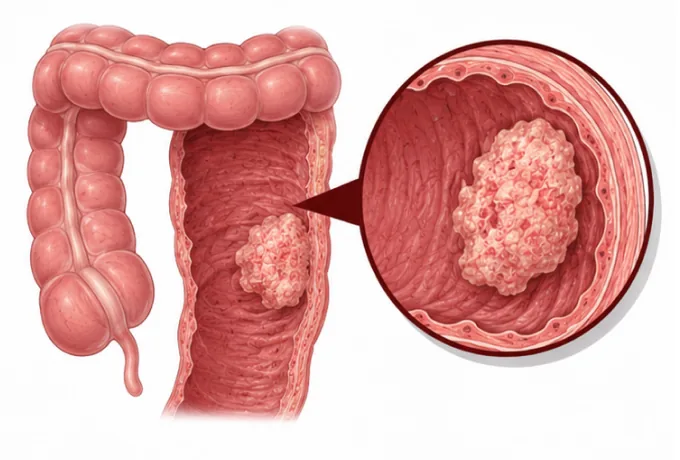
Colorectal cancer begins in the lining of the colon or the rectum. Nearly all of these cancers start as an adenomatous polyp — a small growth on the inner surface that is not cancer at the outset and takes years to become one. That slow transition is the single most important fact about this disease: it creates a long window in which a polyp can be found and removed before it ever turns malignant, which is why screening works here better than for almost any other cancer.
It is one of the most common cancers worldwide, with more than 1.9 million new cases diagnosed globally each year. China reports approximately 550,000 new cases a year — nearly 30% of the global total. Because early colorectal cancer produces almost nothing noticeable, a large share of patients are already at an advanced stage when first diagnosed; the disease is nevertheless highly treatable when it is caught earlier, and in metastatic disease the liver-directed options covered on this page have changed what long-term control looks like.
Two features distinguish treatment here from many other cancers. The first is anatomy: the rectum sits in a narrow, nerve-dense space between the bladder, the reproductive organs and the pelvic sidewall, so the technical quality of the operation determines continence, urinary and sexual function as much as it determines cure. The second is pattern of spread: colorectal cancer most often travels to the liver, and in selected patients those liver deposits can be removed, ablated or starved of their blood supply with curative intent. Both are covered in full on the treatment page.
As with other cancers, three questions decide the plan. How far has it gone? That is the stage. What is driving it? That is the molecular profile — MSI status, RAS, BRAF and HER2. What matters to you about how you live during and after treatment? In colorectal cancer that third question is unusually concrete: it is usually about bowel function and the avoidance of a permanent stoma.
Colon and rectal cancer, and what the right side does differently
The first division is anatomical. Colon cancer and rectal cancer share a biology but not a treatment pathway: rectal cancer sits in the pelvis, requires a different operation, usually needs radiotherapy or drug treatment before surgery, and carries a distinct risk to bowel, urinary and sexual function. From here on, the two are discussed separately wherever the difference matters.
The second division is by molecular pathway, and it has real consequences. Roughly one in five colorectal cancers is mismatch repair deficient (dMMR) or microsatellite instability-high (MSI-H) — a group that responds unusually well to immunotherapy. Two in five carry a RAS mutation; a smaller proportion carry BRAF V600E; a minority are HER2-amplified. Each of these determines which drugs are worth giving and which are not.
| Right-sided (proximal) colon | Left-sided colon | Rectum | |
|---|---|---|---|
| Where it sits | Caecum and ascending colon | Descending and sigmoid colon | Final segment before the anal canal |
| How it usually presents | Anaemia, fatigue, vague pain — often found late | Altered bowel habit, visible blood, obstruction | Bleeding, tenesmus, urgency, narrow stools |
| Typical operation | Right hemicolectomy | Left colectomy or sigmoid colectomy | Total mesorectal excision, sometimes ultra-low resection |
| Main functional risk after surgery | Generally well tolerated; bowel habit usually adapts | Altered stool frequency, which lessens over months | Low anterior resection syndrome; risk to sphincter function |
| Treatment before surgery | Rarely used outside specific situations | Used in locally advanced disease | Common in locally advanced disease |
One further distinction affects drug choice rather than surgery. Right-sided tumours are less likely to respond to anti-EGFR antibodies, even when RAS is wild-type, because their biology differs. The side of the colon is therefore read as part of the molecular picture, not merely as a location.
What the stage means
Staging combines how deeply the tumour has grown through the bowel wall, whether lymph nodes contain cancer and whether distant organs are involved. In colorectal cancer the depth of invasion matters more than the size, which is why the stage is not simply a measure of how big the tumour is.
| Stage | In plain terms | How it is usually approached |
|---|---|---|
| 0 | Cancer confined to the innermost layer, not yet invasive | Removal through the colonoscope in many cases; surgery if the lesion cannot be cleared endoscopically |
| I | Tumour in the bowel wall, no lymph node involvement | Surgery alone in most cases; drug treatment generally not needed |
| II | Tumour through the wall, nodes clear | Surgery, with drug treatment considered only where other risk features are present |
| III | Regional lymph nodes involved | Surgery plus chemotherapy; radiotherapy added for rectal cancer in defined situations |
| IV | Distant spread, most often to the liver, sometimes the lungs or peritoneum | Systemic therapy, with surgery or local ablation of liver deposits in selected patients |
| Recurrence | Return at the site of the previous operation, in pelvic nodes, or at distant sites | Depends on site and number; isolated sites can be treated without re-opening the abdomen |
Why the molecular report decides the drugs
Colorectal cancer was for years treated by a sequence of regimens chosen by stage. That has changed. Four molecular questions now determine which drugs are worth using, and in metastatic disease the answers matter more than the order of the regimen.
MSI status
Tumours that are mismatch repair deficient or microsatellite instability-high respond to PD-1 blockade to a degree rarely seen in solid tumours. In China this is an approved first-line standard of care, not an experimental option. It is therefore the first test to perform, because a positive result changes the entire plan.
RAS and BRAF
RAS mutations predict that anti-EGFR antibodies will not work, and giving them anyway costs toxicity without benefit. BRAF V600E mutations are associated with a poorer prognosis and are treated with a specific combination of BRAF and EGFR inhibition. Both are read before the first line is chosen.
HER2 amplification
A minority of colorectal cancers carry HER2 amplification, and these respond to anti-HER2 therapy including antibody-drug conjugates. The finding is uncommon, which is exactly why testing for it matters in tumours that have stopped responding to standard treatment.
Other actionable findings
KRAS G12C mutations now have specific inhibitors; NTRK fusions and other rare alterations have corresponding drugs. A tumour sequenced at progression frequently yields a target that was not visible at diagnosis, which is why re-testing is a clinical decision rather than a repeat of a test already done.
The practical consequence is that the molecular report is not supplementary information. It is the document that determines whether a patient receives immunotherapy first, which chemotherapy backbone is used, and whether an anti-EGFR antibody has any role at all. This is set out in how colorectal cancer is diagnosed.
Why patients come to China for colorectal cancer care
Three things draw international patients to our colorectal programme. Which of them applies to you is worth establishing specifically.
Volume in exactly the operation that is hardest to do well
With around 550,000 colorectal cancers diagnosed in China each year — nearly 30% of the global burden — our teams perform large numbers of low anterior resections, ultra-low rectal operations and multi-organ resections. Sphincter preservation in a low rectal tumour is a technically demanding operation, and the difference between centres is measured in bowel function, not only in survival. It is one of the areas where case volume translates most directly into what the patient's life is like afterwards.
Liver metastases treated as a curable problem
Up to half of patients with colorectal cancer develop liver metastases, and for many of them the deposits can be ablated, treated through the hepatic artery at concentrations 50 to 100 times those achieved by intravenous chemotherapy, or controlled with precision radiosurgery — including in locations that would be difficult to operate on. Our Guangzhou hospital alone has performed more than 17,000 TACE procedures between 2023 and 2025, with international patients making up over 10% of the total.
Current drugs at a different cost
Immunotherapy for MSI-H disease, anti-EGFR antibodies, BRAF-directed combinations and HER2 agents are all available in China. Because they sit within China's own pharmaceutical ecosystem, comprehensive treatment costs are typically 30%–50% of what the same course would cost in Europe or the United States — and metastatic colorectal cancer is a disease in which the number of lines of treatment that can be afforded often determines how long control lasts.
If the treatment you need is available and affordable at home, having it at home is the better answer, and our team will say so. For the practical side of treatment here, including cost structure and length of stay, see the practical questions page.










