


Benign Prostatic Hyperplasia Overview
Benign Prostatic Hyperplasia Overview
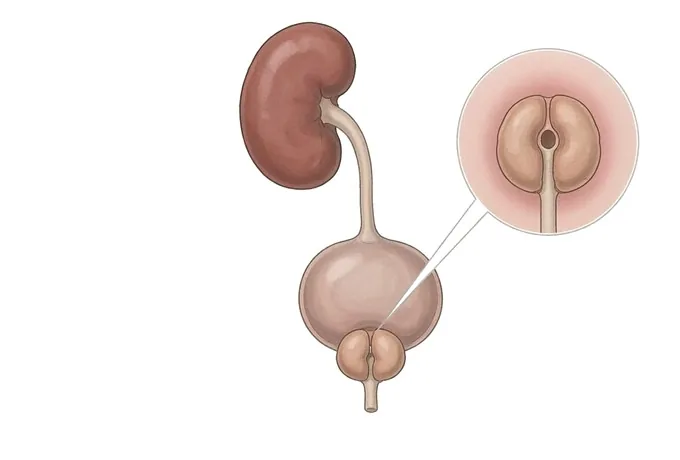
Benign prostatic hyperplasia is the non-cancerous growth of the prostate — a gland the size of a walnut that sits directly beneath the bladder and wraps around the urethra like a fist around a straw. Because of where it sits, what happens to the prostate is felt first in urination: a stream that takes longer to start, runs weaker, and leaves the bladder feeling not quite empty. It is emphatically not cancer, it does not turn into cancer, and it is not something a man did or failed to do; it is the commonest change of the ageing male urinary tract, present in the majority of men by the time they are in their sixties. What makes it worth taking seriously is quieter than the symptoms. An obstruction left alone does not stay still: the bladder muscle thickens against it, then tires; urine that is never fully emptied becomes a place where infection and stones form; and behind a long-standing blockage, pressure can travel back up to the kidneys. Against that, the fact that matters most is that almost nothing here requires an open operation. Medication relaxes or shrinks the gland for years at a time, and for those who need more, the modern endoscopic operations clear the channel through the natural passage — and the right moment for that conversation is decided by the patient together with the urologist, using measurements rather than guesswork.
-
Not cancer, and not a precursor to it
BPH grows in the transition zone; prostate cancer usually starts in the outer zone, and the two only coexist
-
Nocturia is usually the first complaint
getting up at night is often the change that brings men to a urologist
-
Medication buys most men years
alpha-1 blockers work within days; 5-alpha reductase inhibitors shrink larger glands over months
-
48 hrs
from complete records to a personalised MDT plan
The prostate: what grows, and what it blocks
The prostate sits at the base of the bladder and the urethra passes through it. That single anatomical fact explains almost everything about this condition. When the gland enlarges, it does not simply sit there getting bigger — it compresses the channel that urine has to travel through.
Two mechanisms narrow that channel at once. The first is mechanical: hyperplastic tissue grows in the part of the gland nearest the urethra — the transition zone — and the channel is squeezed into a slit. The second is dynamic: the smooth muscle within the prostate and at the bladder neck is under sympathetic nervous control, and its tone adds a further constriction that varies from moment to moment. This is why the same man can pass urine reasonably well in the morning and barely at all in the evening, and it is why a drug that relaxes that muscle can help within days of the first tablet.
Behind the obstruction stands the bladder, and the bladder pays for it. To push urine through a narrowed outlet, the detrusor muscle works harder, thickens, and becomes more irritable — which produces the frequency and urgency that patients often find more disabling than the weak stream itself. Over years the muscle can tire and fail to empty the bladder completely, leaving residual urine. Residual urine is the quiet problem in this disease: it is the pool in which infection and bladder stones form, and the pressure behind it is what eventually reaches the kidneys.
And one reassurance belongs here, stated plainly, because it is the fear that brings many men to the consultation in the first place: benign prostatic hyperplasia is not prostate cancer and does not become it. The two conditions are common in the same age group and can exist in the same gland, which is why assessment includes a PSA test and a rectal examination — not because enlargement is dangerous, but because the question of cancer deserves an answer rather than an assumption.
Two axes of description: the tissue, and how the symptoms behave
BPH is described in two independent ways, and both are useful when a treatment decision is being made. The first describes what the tissue is doing; the second describes how the patient experiences it.
| Pattern | What it means | Why it matters for the plan |
|---|---|---|
| Glandular hyperplasia | New glandular tissue forms the bulk of the enlargement | The prostate tends to be larger and PSA higher for the same age; volume influences which medication is worth using |
| Stromal hyperplasia | Fibromuscular tissue dominates, so a gland of modest size can obstruct firmly | The dynamic component is prominent — relaxant medication often helps more than size alone would predict |
| Mixed hyperplasia | Glandular and stromal elements together — by far the commonest finding | Both components are treated: relaxed first, and shrunk when the gland is large |
| The symptom axis | Voiding-predominant, storage-predominant, or mixed lower urinary tract symptoms | Storage symptoms — urgency, frequency and nocturia — may reflect an overactive bladder, and need their own assessment rather than being attributed to the obstruction |
The second axis deserves its own sentence, because it is the one that most often changes management. Two men with glands of identical size can describe completely different illnesses: one is troubled mainly by a weak stream and straining, the other mainly by urgency and getting up at night. The first picture points at obstruction; the second may point at the bladder itself, and mistaking the second for the first is how patients end up on the wrong treatment for years.
The symptom score, and what the obstruction is doing to the bladder
Severity in BPH is read on two axes. The first is the symptom score, which grades how much the condition is troubling the patient. The second is the state of the bladder and kidneys, which says how much damage the obstruction is doing. The score decides how much treatment a patient wants; the second axis decides how much treatment a patient needs.
| Category | Typical picture | What it asks for |
|---|---|---|
| Mild (score 0–7) | Symptoms noticed but not intrusive; sleep and daily life largely unaffected | Lifestyle measures, review of contributing medicines, and periodic reassessment rather than immediate drug treatment |
| Moderate (score 8–19) | Nocturia, frequency or a weak stream interfering with sleep, work or travel | Medication, chosen according to prostate size and symptom pattern, with the response measured against the baseline score |
| Severe (score 20–35) | Symptoms dominating daily life; the patient is often already limiting fluids or avoiding journeys | Medication, or a direct conversation about surgical and minimally invasive options if relief is inadequate or unwanted |
| Complicated BPH | Retention, recurrent infection, bladder stones, blood in the urine, or back-pressure with residual urine and impaired kidney function | Surgery is indicated on the complication itself, whatever the symptom score says — and where retention or kidney impairment is present, the obstruction is relieved first |
One honest note belongs here: a low symptom score is not a clean bill of health. Men adapt — they stop drinking before journeys, they know where every toilet is — and a score can stay modest while residual urine and kidney function quietly worsen. That is why measurement, and not the score alone, frames the decision, and why a rising creatinine or a large residual volume can move a patient to treatment while he still feels reasonably well.
How BPH is assessed: score, examination, PSA, ultrasound and flow
The assessment answers four questions in one visit: how much are the symptoms troubling the patient, is the obstruction significant, is there anything that is not BPH, and has the obstruction already affected the bladder or kidneys?
| Step | What it answers |
|---|---|
| Symptom score (IPSS) | How severe the symptoms are and how much they bother the patient — the baseline every later decision is measured against |
| Digital rectal examination | The size and consistency of the gland, and any nodule or hardness that would point away from a benign explanation |
| PSA blood test | The question that always travels with an enlarged prostate: whether cancer risk needs its own assessment |
| Ultrasound with residual urine | Prostate volume, and how much urine is left in the bladder after voiding — the measurement that reveals silent decompensation |
| Uroflowmetry | The peak flow rate, recorded painlessly while the patient voids into a machine — objective evidence of obstruction before surgery |
| Urine, blood and bladder function | Urinalysis and culture for infection or blood, creatinine for kidney function, and urodynamics or cystoscopy when the picture is unclear or surgery is planned |
What the assessment should produce is not merely a diagnosis of enlargement but a plan: whether this is a condition to watch, to treat with tablets, or to relieve surgically — and, if it is being watched, what will be measured at the next visit to show that watching is still the right decision.
Why patients travel to China for prostate surgery
Prostate surgery rewards operative volume. Units that perform endoscopic enucleation and resection regularly work through the natural channel with shorter operating times, more complete removal of obstructing tissue and shorter catheter time — and for a patient choosing where to be treated, that experience is the most relevant credential there is. The urology departments in our network work with a full endoscopic armamentarium, including bipolar transurethral resection, holmium laser enucleation and laser vaporisation of the prostate, alongside the minimally invasive office procedures for men who wish to preserve ejaculation. Around that sits a system built for patients who travel: records reviewed before departure, imaging and urodynamic assessment completed quickly, and a written multidisciplinary plan within about 48 hours of complete records arriving.
Cost is part of the honesty of the offer: complete treatment here is typically 30%–50% of comparable care in Europe or the US, with more than 30 international insurers working with us on direct billing, and patients from 124 countries and regions. What patients most often mention afterwards, though, is not the operating theatre but the way the decision was made — that the options, including doing nothing for now, were laid out with their trade-offs, that the effect on sexual function was discussed before rather than after, and that the choice about timing was theirs to make with the measurements in front of them.










