


What is Siemens ABVS?
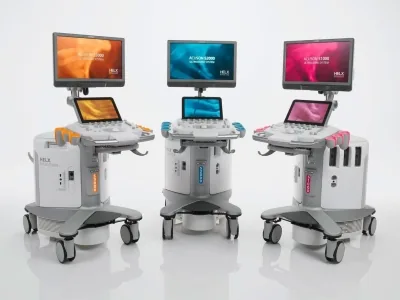
The Siemens ABVS (Automated Breast Volume Scanner) is a fully automated breast volume scanning system developed by Siemens Healthineers. It utilizes a wide high-frequency transducer to perform automated scans, generating three-dimensional volumetric images of the breast. This provides comprehensive, multi-angle visualization of lesions, aiding in improving the detection and prevention of breast cancer.
What are the advantages of Siemens ABVS?
The main features and advantages of the ABVS include:
· Fully Automated, Full-Volume Scanning: The ABVS automatically scans the entire breast, generating volumetric images that provide comprehensive information about breast tissue, reducing the possibility of missed diagnoses.
· Stereoscopic, Intuitive Lesion Display: Through multi-planar, multi-angle image presentation, the ABVS can display lesions more clearly, helping physicians better assess the nature and extent of lesions.
· Safe, Non-Invasive, and Radiation-Free: The ABVS is an ultrasound examination. Compared to traditional X-ray mammography, it involves no radiation, is safer, and is suitable for a broader population, including pregnant and lactating women.
· Wide Applicability: The ABVS is not limited by age and is suitable for women of all age groups, including those with dense breast tissue.
· Comfortable Examination Experience: Compared to X-ray mammography, patients experience less pressure during an ABVS examination, allowing them to relax and improving patient tolerance.
· Superior to Traditional Ultrasound: The ABVS represents an upgrade over traditional handheld ultrasound, offering unparalleled advantages in precision.
Siemens ABVS vs. Traditional Examination Methods
| Comparison Item | Siemens ABVS | X-ray Mammography | Magnetic Resonance Imaging (MRI) |
| Technology Principle | Automated ultrasound volume scanning, generates 3D images | X-ray 2D imaging | Magnetic field and radiofrequency pulse imaging, requires contrast agent injection |
| Radiation Risk | No radiation, safe | Involves radiation, requires controlled frequency | No radiation, but requires contrast agent, potential allergic reactions |
| Target Population | Women of all ages, incl. dense breasts, pregnant/lactating | Generally recommended for women >40, less effective for dense breasts | High-risk individuals or those needing further diagnosis; not suitable for claustrophobia |
| Examination Comfort | No compression, high comfort level | Requires breast compression, may cause discomfort | Long duration (~30-60 min), requires stillness, some patients find it uncomfortable |
| Lesion Display Capability | Multi-angle 3D imaging, clear display of lesion extent/structure | Sensitive to microcalcifications, poor penetration in dense breasts | High sensitivity for detecting small lesions, but lower specificity (higher false positives) |
| Examination Time | Approx. 10-15 minutes | Approx. 10-15 minutes | 30-60 minutes |
| Cost | Moderate, lower than MRI | Relatively Low | High |
| Advantages | Safe, non-invasive, wide applicability, suitable for dense breasts | Gold standard for diagnosing microcalcifications | High sensitivity, suitable for high-risk groups or pre-surgical evaluation |
| Limitations | Slightly less sensitive than mammography for microcalcifications | Radiation risk, lower detection rate in dense breasts | High cost, time-consuming, requires contrast agent, contraindicated for some patients |
Fosun Health International has introduced the globally leading Siemens ABVS automated breast ultrasound system, providing powerful support for the precise diagnosis and treatment of breast cancer. Utilizing three-dimensional volumetric imaging technology, this equipment clearly displays the morphology and location of breast lesions. It is particularly suitable for examining dense breasts, significantly improving the detection rate of early-stage breast cancer.
In the area of breast cancer treatment, our hospital's breast-conserving surgery reaches internationally advanced levels. Assisted by the high-precision imaging of the ABVS system, doctors can accurately delineate tumor boundaries, thoroughly removing the lesion while maximizing the preservation of breast appearance. Currently, in developed countries such as those in Europe and America, breast-conserving surgery accounts for over half of all breast surgeries, whereas in Indonesia it comprises only about 10%. Our hospital's success rate for breast-conserving surgery is on par with that of developed countries, allowing more patients to avoid the distress of total mastectomy.
We integrate advanced examination equipment, a professional multidisciplinary team, and personalized treatment plans to provide patients with high-quality, full-process services from screening and diagnosis to treatment. Supported by high-end equipment like the Siemens ABVS, Fosun Health is continuously advancing breast cancer diagnosis and treatment technologies, bringing an international standard of medical care to more patients.