
2026-01-17
Xiaoqing, 36, has faced menstrual issues since adolescence, diagnosed with Polycystic Ovary Syndrome (PCOS) at two different hospitals. In recent years, under intense work stress, her body showed concerning changes: while her cycle shortened to 30 days, her period lengthened to 10-15 days with prolonged spotting.
After two years of unsuccessful attempts to conceive, she visited the Reproductive Medicine Department at Shenzhen Hengsheng Hospital. Tests revealed an AMH of only 1.48 ng/ml and an Antral Follicle Count (AFC) of 9 (4 left, 5 right)—indicators pointing toward Diminished Ovarian Reserve (DOR). Her body was transitioning from classic PCOS to DOR, a shift increasingly seen in high-stress professional women. Additionally, she faced metabolic syndrome: weight 75kg (BMI 29.3), elevated blood pressure, and a fasting glucose of 6.7 mmol/L, diagnosed with Stage 1 Hypertension and Prediabetes. Reproductive findings were also concerning: endometrial polyps, partially blocked fallopian tubes, coupled with her husband's mild asthenospermia, creating a classic case of multifactorial infertility.

1. A New Functional Medicine Perspective: From "Treating Disease" to "Restoring Function"
Faced with this complexity, the medical team led by Director Hu Xiuyu adopted a functional medicine approach. Unlike conventional medicine's focus on disease labels, functional medicine seeks the root causes of systemic imbalance.
Functional medicine views the body as an integrated ecosystem. For reproductive health, it focuses on:
Endocrine Disruption: Impact of stress and insulin resistance on ovulation.
Immune-Inflammatory Imbalance: How chronic inflammation damages egg quality and the endometrial environment.
Metabolic & Detoxification Dysfunction: Effects of toxin accumulation and impaired mitochondrial function on reproductive cell energy.
Gut Microbiome Dysbiosis: Systemic immune reactions triggered by leaky gut and microbial imbalance.
Nutritional & Energy Metabolism Imbalance: How deficiencies in key nutrients affect hormone synthesis.
2. Identifying Root Causes: The Transition from PCOS to DOR
PCOS is characterized by arrested follicular development and elevated androgens, but typically with preserved ovarian reserve. DOR involves reduced follicle quantity and quality. Director Hu explained how functional medicine clarifies the transition:
·Chronic Stress: Sustained high cortisol triggers "pregnenolone steal," diverting this hormone precursor away from sex hormone production.
·Insulin Resistance: Worsens inflammation and oxidative stress, accelerating follicular atresia.
·Mitochondrial Dysfunction: Leads to insufficient cellular energy, directly impairing oocyte maturation and quality.
·Chronic Inflammation: Persistent immune activation depletes antioxidants and damages the follicular microenvironment.
This transition was not accidental but the result of prolonged systemic imbalance.
3. Systematic Intervention: An Integrated Functional Medicine Plan
Instead of rushing to assisted reproduction, Director Hu designed a 2-month functional medicine intervention:
·Phase 1 – Remove Triggers: Implemented a low-sugar, low-inflammation diet and established regular sleep/work rhythms.
·Phase 2 – Replenish & Support: Added targeted supplements (e.g., Vitamin D) and medications like metformin to improve insulin sensitivity and nifedipine for blood pressure control.
·Phase 3 – Rebalance: Introduced stress management (counseling, sleep hygiene) and a tailored exercise plan combining aerobic and resistance training.
After two months, her weight dropped to 68kg, blood pressure and glucose normalized, her menstrual cycle regulated, and her overall well-being transformed.
4. From IVF to a Natural Surprise: When the Body Finds Its Own Wisdom
Subsequent treatment included 3 planned IUI cycles (2 canceled due to follicular atrophy) and an IVF cycle that yielded 4 viable embryos (2 top-quality + 2 blastocysts). The true breakthrough came as she prepared for a frozen embryo transfer (FET). By releasing stress and allowing her body to regain balance, her Hypothalamic-Pituitary-Ovarian (HPO) axis resumed its natural rhythm. Just before the planned FET, she discovered she was naturally pregnant. On October 6, 2025, she successfully passed her NT scan, completing the first trimester.
This outcome, surpassing all expectations, perfectly illustrates the core belief of functional medicine: when the body's internal environment is restored to balance, life finds its own path.
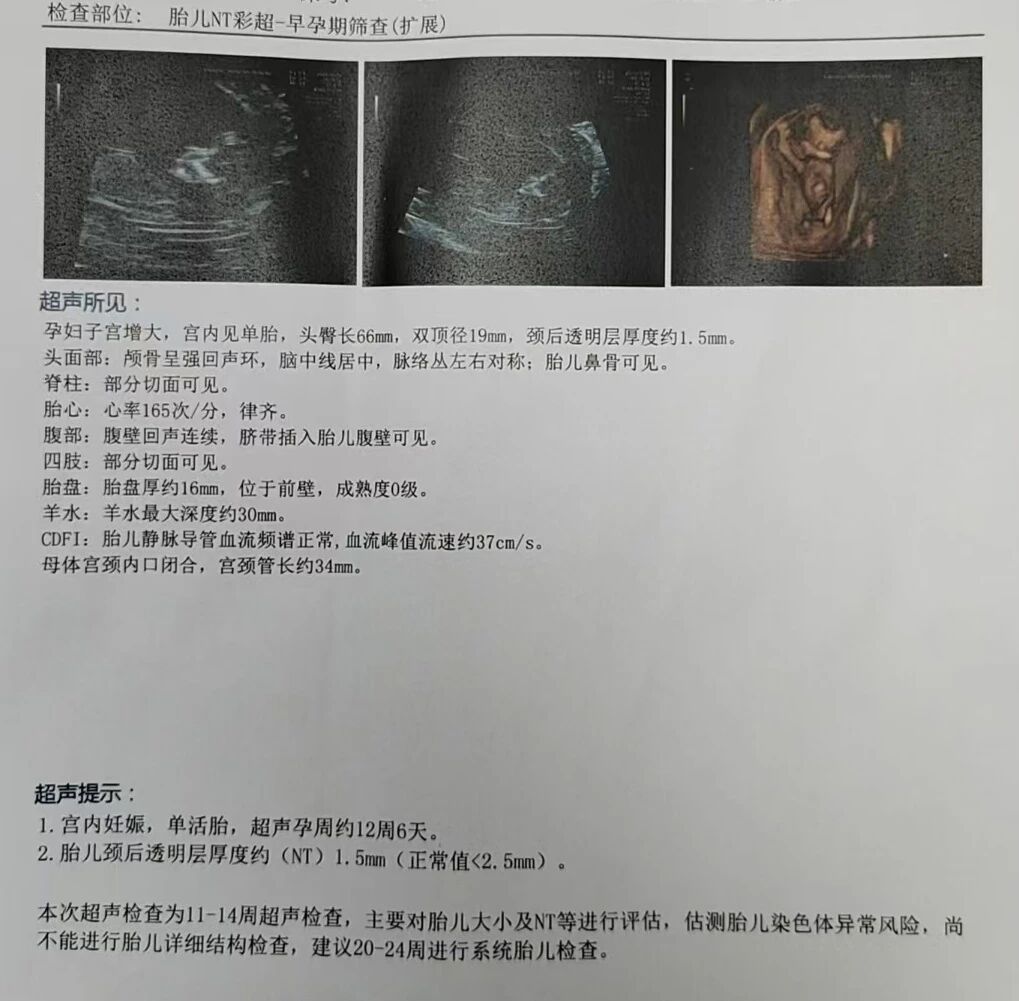
Xiaoqing's NTB report