
2026-02-13
Sometimes, life writes the most incredible stories—far beyond what fiction can imagine.
Recently, a remarkable tale of love, cancer, and hope unfolded at Hengsheng Reproductive Medicine Center...
At the end of 2025, Ms. Huang, 40, was diagnosed with lymphoma at a tertiary hospital. Facing chemotherapy that could potentially destroy her fertility forever, she and her boyfriend of ten years made a decision without hesitation: they would race against time. In just 12 days, they accomplished what would normally take months—they registered their marriage, initiated ovarian stimulation, and successfully cryopreserved two embryos. This is not merely a story of steadfast love; it is a testament to how modern medicine, combined with personal determination, can create miracles: fighting a life-threatening disease while preserving the precious hope of becoming parents.
1. An "Unconventional" Decision Following a Cancer Diagnosis
It all began with a small lump discovered incidentally on her neck.
In October last year, Ms. Huang was diagnosed with non-Hodgkin lymphoma (Stage II) at a tertiary hospital—a malignancy of the lymphatic and hematopoietic system. Although her doctors reassured her that the five-year survival rate exceeds 70%, the 4-6 cycles of chemotherapy that followed would likely permanently rob her of the chance to become a mother.
"If we want to have a child, is there still time?" In the consultation room, Ms. Huang asked a question even more heart-wrenching than the cancer itself. The hematologist immediately recognized the urgency: before chemotherapy begins, there exists only a narrow 10-20 day "golden window" —the sole opportunity to preserve fertility. An urgent cross-hospital collaboration was swiftly initiated. The hematologist promptly convened an online multidisciplinary consultation with Dr. Zhang Chahui, a member of Chief Physician Deng Weifen's team at Shenzhen Hengsheng Hospital's Reproductive Medicine Center. After preliminary evaluation, Dr. Zhang confirmed that Ms. Huang was eligible for embryo or oocyte cryopreservation and advised her to visit the Reproductive Medicine Center promptly for further assessment if she wished to preserve her fertility.
2. A 12-Day Sprint Against Time: Cryopreserving Two "Seeds of Life"
Time was of the essence.
On the very afternoon of her discharge from the hematology department, Ms. Huang and her boyfriend arrived at the clinic of Chief Physician Deng Weifen at Shenzhen Hengsheng Hospital's Reproductive Medicine Center. Dr. Zhang Chahui had already briefed Dr. Deng on Ms. Huang's case. Further evaluation brought mixed news: due to her age, Ms. Huang's ovarian reserve was significantly diminished—her AMH level was only 0.59 ng/ml (generally, AMH levels between 2-6.8 ng/ml are considered normal). Fortunately, however, the day of her visit coincided with the first day of her menstrual cycle, meaning ovarian stimulation could begin immediately.
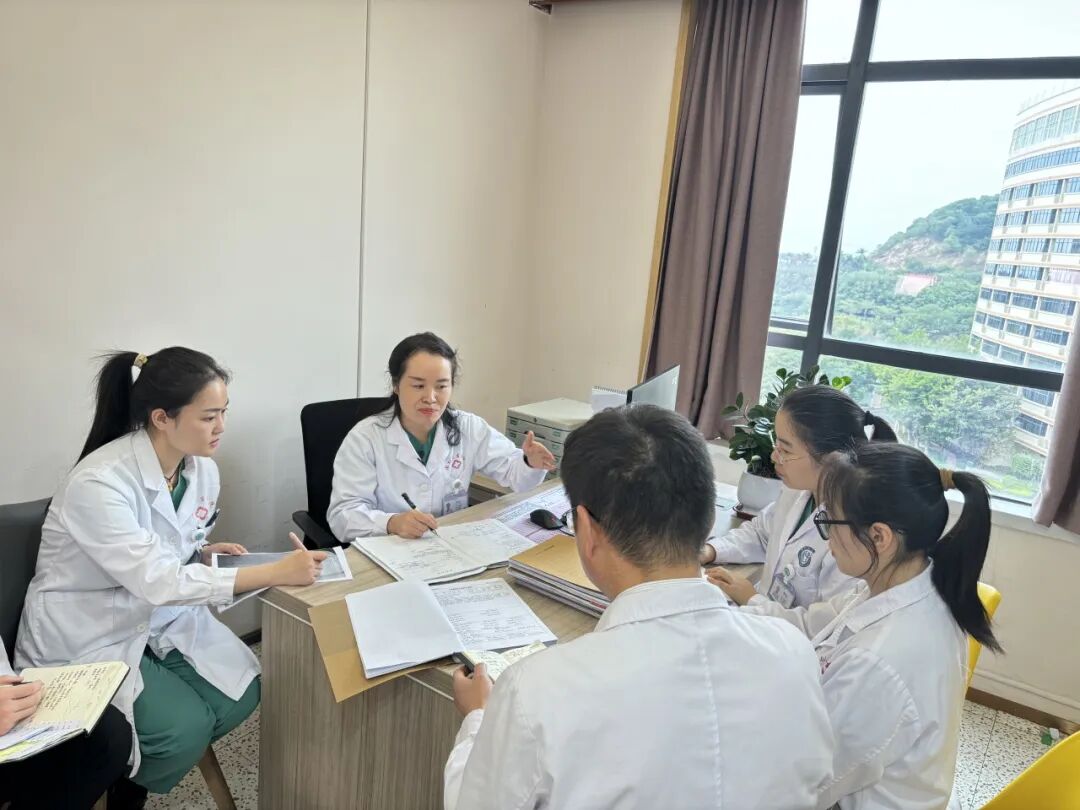
Dr. Deng Weifen and her team discussing the treatment plan
"Let's start right away. We'll use a mild stimulation protocol that has minimal impact on the body and a short medication course. We need to outrun the chemotherapy schedule." Dr. Deng's decisive response injected the couple with their first surge of hope and determination.
Simultaneously, the couple accelerated their commitment to each other through action. To legally preserve their future child in the form of frozen embryos, they wasted no time, rushing back to their hometown to register their marriage. "I don't want my illness to take away his right to become a father," Ms. Huang said simply but resolutely. "Her health comes first. But as long as there is a glimmer of hope, we will fight for it together," her husband replied, providing a warm and steady anchor as they navigated this storm together.
Guided by the efficient team at Shenzhen Hengsheng Hospital's Reproductive Medicine Center, every step—ovarian stimulation, monitoring, egg retrieval—was seamlessly coordinated. Ultimately, doctors successfully retrieved 4 oocytes, from which 2 high-quality embryos were cultivated in the embryology laboratory.
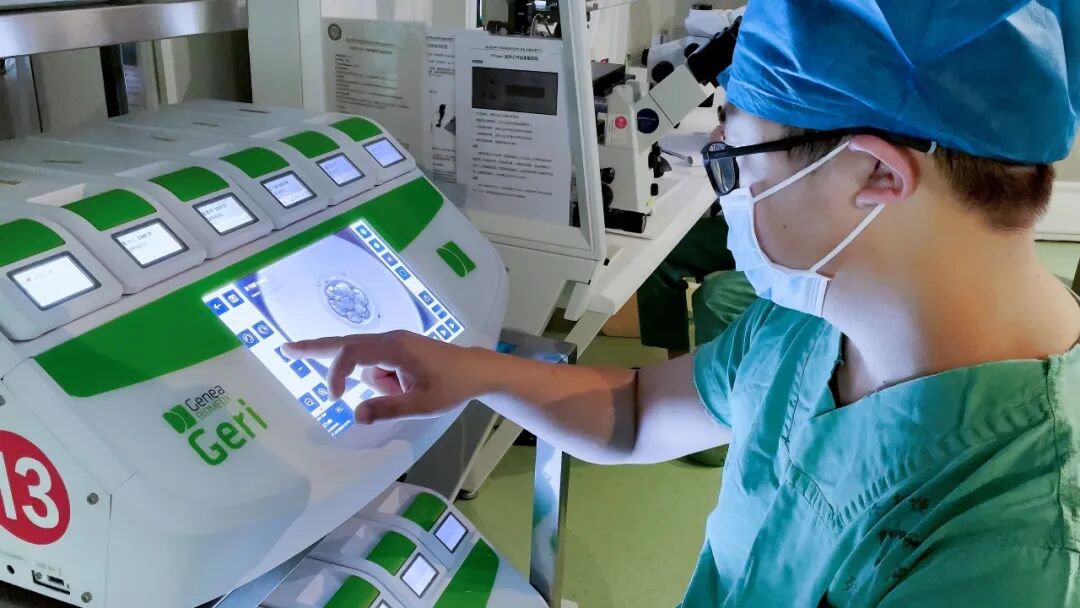
Embryos being cultured in a time-lapse incubator
From the initiation of fertility preservation to the completion of embryo cryopreservation, the entire process took just 12 days. In those 12 days, they outran the chemotherapy schedule and secured two invaluable "seeds of life" for their future dream of parenthood. This victory in the "relay race for hope" would not have been possible without the support of a state-of-the-art embryology laboratory.
The embryology laboratory at Shenzhen Hengsheng Hospital's Reproductive Medicine Center features an international standard, Class 1,000 laminar flow purification environment and a range of cutting-edge equipment. The facility employs vitrification technology, which efficiently preserves cell viability, providing each preserved "hope" with a near-perfect "sleeping sanctuary."
3. Seizing the "Golden Window": Proactively Safeguarding Fertility
Reflecting on this race-against-time relay, Dr. Deng Weifen emphasized the critical importance of raising awareness about fertility preservation. "Many young people delay childbearing while pursuing their careers, but age—and diseases like cancer—silently erode fertility. For patients about to undergo chemotherapy or radiotherapy, this 'window' is fleeting; decisions must be made before treatment begins."
She advises that the following groups should actively consider fertility preservation:
· Patients with malignant tumors about to undergo chemotherapy or radiotherapy;
· Individuals requiring hematopoietic stem cell transplantation or those with severe autoimmune diseases;
· Those at risk of premature ovarian insufficiency (e.g., severe ovarian endometriosis).
"The goal of modern oncology is not merely to cure disease, but to enable patients to live high-quality lives. Preserving fertility means preserving their hope for a complete family in the future," Dr. Deng stated. She explained that the Reproductive Medicine Center at Shenzhen Hengsheng Hospital is committed to providing comprehensive fertility assessment and preservation services: under the guidance of the Bao'an District Medical Association, the center has taken the lead in establishing the Bao'an District Medical Association Reproductive Health Professional Committee, serving as the chairing institution. It has also established close collaborative consultation mechanisms with oncology and hematology departments both within and outside the hospital, proactively offering eligible patients the opportunity to "bank their seeds of life." Additionally, the center has established a specialized Fertility Assessment and Preservation Clinic, offering embryo cryopreservation for eligible couples and oocyte or sperm cryopreservation for single individuals.
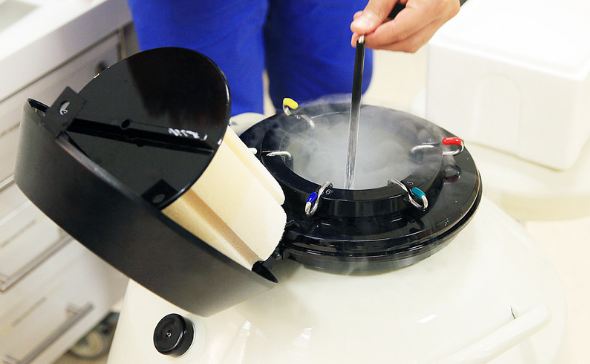
Liquid nitrogen tanks for cryopreserving oocytes, sperm, or embryos
Ms. Huang has now commenced her lymphoma chemotherapy according to the planned protocol. Though her body experiences discomfort, her heart carries a newfound sense of stability and strength. "We have done everything we could to pave the way for the future. Now we must focus entirely on treatment—for ourselves, and for the day we can finally welcome our child into the world."
This couple's story began in the shadow of disease, but through love, courage, and advanced medicine, it has ultimately led to a path filled with hope. It is a profound testament that true love not only endures through hardship but also transcends time, co-creating the very possibility of life.