
2025-11-14
"My spirits are so much better now, thanks to Dr. Han Liangfu's team at the Fosun Health Foshan Chancheng Hospital Oncology Center!" said Maya (a pseudonym), a 60-year-old patient, on April 21, coinciding with National Cancer Prevention and Treatment Awareness Week. She shared the story of her fight against cancer.
From the initial accidental discovery of the disease, through various stages of tests like surgery, chemotherapy, radiotherapy, and endocrine therapy, Maya successfully overcame them all thanks to the comprehensive and continuous support from the medical team. She not only managed to defeat the deadly disease but also underwent a remarkable transformation from a recipient of help into someone who helps others—inspiring many with her story of struggle and her faith in fighting cancer.
In early 2023, Maya missed her routine annual health check-up due to the pandemic. By chance, her husband felt a lump in her breast. At the time, however, the lump was mistaken for just ordinary tissue enlargement, so she did not seek medical attention immediately. A few months later, the lump slowly grew larger, and Maya was eventually diagnosed with "Stage IIA invasive breast cancer". This sudden diagnosis hit like a sledgehammer, plunging her into despair.
Yet, within just 24 hours, she resolutely chose to face this bitter reality. She immediately began searching for information related to breast cancer online and actively sought treatment methods.
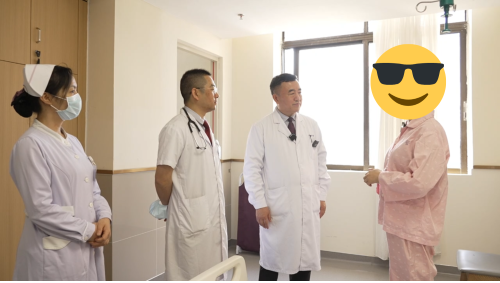
Director Han Liangfu, Chief Medical Expert at Fosun Health Oncology Center (second from right), Director Zheng Dengrui (second from left), and Head Nurse Cai Yueying (first from left) during a patient ward round.
"Surgery is just the beginning of the journey against cancer. Breast cancer is a long-term battle that must be faced for a lifetime," Maya said with deep emotion. After undergoing breast-conserving surgery, she suffered from persistent lymphedema, which caused her great distress. "Even combing my hair became extremely difficult," she said. The swollen and painful arm felt terribly tormenting, as if "wearing a heavy iron glove".
Upon a friend's recommendation, she moved between three different hospitals, before finally deciding to undergo follow-up treatment at the Fosun Chancheng Hospital Oncology Center in Foshan (abbreviated as "Fosun").
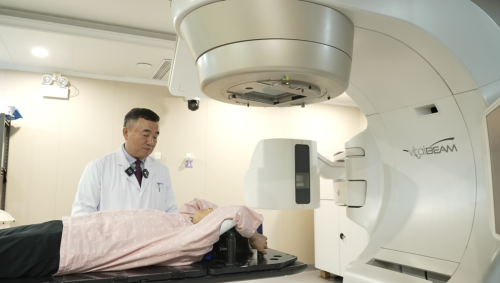
At this oncology center, the team led by Director Han Liangfu designed a comprehensive treatment plan tailored specifically for Maya: 4 cycles of TC chemotherapy + 19 radiotherapy sessions + 5-10 years of endocrine therapy.
The surgery, chemotherapy, radiotherapy, nutrition, and rehabilitation teams worked closely together, forming a professional "special project team"—like an elite unit always on standby, responding to every patient need in real-time.
"The doctor's words, 'Don't be afraid,' were more strengthening than a thousand words of comfort," Maya recalled, feeling grateful for every moment during her treatment.
After chemotherapy, she was thankful not to experience vomiting as a side effect; during radiotherapy, she also avoided the awkward situation of having to undress. Furthermore, the medical team provided a 24-hour active online discussion group, answering her various questions and helping to alleviate her anxiety.
As her physical condition recovered, and driven by deep gratitude towards the medical team, Maya decided to join the "Light of Life Charity Association" as a compassionate volunteer. Using her own experience, she continuously encourages every patient still fighting: "Cancer isn't something to be terrified of. As long as we find the right hospital and a professional team, we can definitely gain a new life."
Now, Maya undergoes regular check-ups, maintains an orderly lifestyle, and appears full of vitality—so much so that people around her are amazed: "She really doesn't look like someone who once had a serious illness."
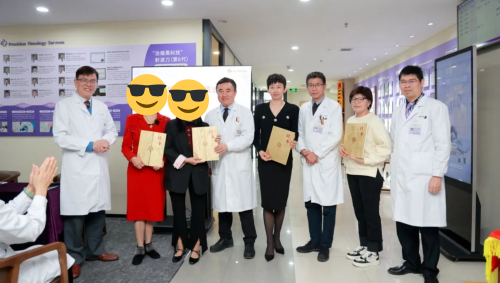
Maya, dressed in red, appears in excellent condition, not looking at all like someone who was once a breast cancer patient.
As one of the most common cancers in women, breast cancer still carries a risk of recurrence after surgery, especially in the breast area, chest wall, or lymphatic drainage regions. Therefore, postoperative radiotherapy is crucial for breast cancer patients.
Director Han Liangfu, Chief Medical Expert at the Foshan Fosun Chancheng Hospital Oncology Center, explained that the oncology center possesses various internationally advanced technologies, including DIBH (Deep Inspiration Breath Hold) technology, image-guided radiotherapy, and hypofractionated radiotherapy. These technologies enable a reduction in the number of radiotherapy sessions from the original 30 down to just 19. This not only improves treatment efficiency but also significantly reduces the risk of radiotherapy-induced damage to the heart and lungs.
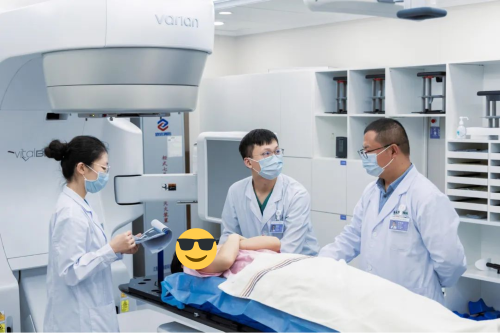
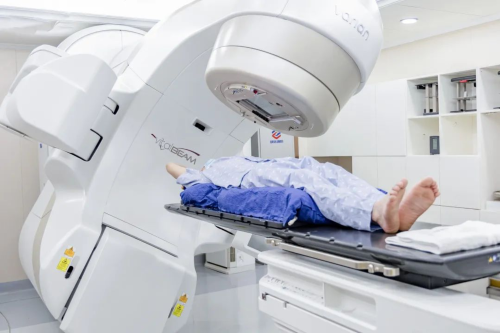
Director Yang Jun of the Foshan Fosun Chancheng Hospital Oncology Center added that precision radiotherapy technology can significantly lower the recurrence rate, "from 30% to 5%". He also conveyed that modern technology is continuously evolving towards "fewer sessions, fewer side effects", thus bringing a new ray of hope for patients who cannot undergo surgery or are at an advanced stage.
*"We are also pioneers in developing SCART (Stereotactic Central Ablative Radiotherapy) technology, a three-dimensional targeted ablative radiotherapy capable of focusing high radiation doses precisely to the center of the tumor with sub-millimeter precision. Treatment requires only 3 sessions (each lasting 15 minutes), the tumor can shrink rapidly, and patient pain is significantly reduced. This technology is not only used for breast tumors but is also suitable for large solid tumors in the head and neck, lungs, liver, pancreas, and retroperitoneal lymph nodes, and is highly effective for sarcomas that are typically less responsive to radiotherapy,"* explained Yang Jun.
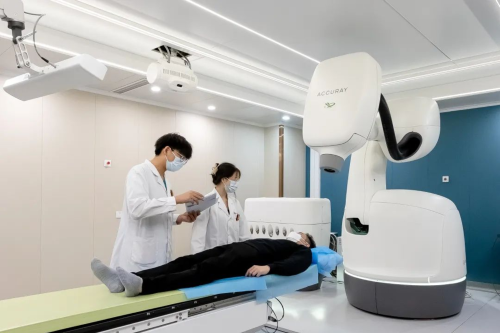
Meanwhile, Han Liangfu, Chief Medical Expert at the Foshan Fosun Chancheng Hospital Oncology Center, emphasized that early screening, early treatment, and comprehensive management are the main keys to fighting cancer. Women over 40 are advised to undergo breast ultrasound or mammography annually. If the ultrasound results show a BIRADS category 4 or higher, they must promptly seek further examination by a specialist.
Additionally, the public is encouraged to maintain an ideal body weight, quit smoking and drinking, and be cautious about using hormone replacement therapy.
Perimenopausal women need to be more vigilant about cancer risks.