
2025-11-14
Usually feeling no pain or itch, this indicator quietly rose. A check-up revealed it was a tumor! Mr. Gu (pseudonym) from Xinjiang was diagnosed with the "lazy cancer": Prostate Cancer.
A Small Check-up Revealed Prostate Cancer
In April 2022, Mr. Gu traveled over 4,200 kilometers from Xinjiang to Foshan, seeking the treatment plan most suitable for him.
It turned out that a year earlier, during a physical examination, Mr. Gu was found to have an elevated Prostate-Specific Antigen (PSA) level, initially suspected to be prostate cancer. The doctor recommended prompt re-examination and confirmation, suggesting a radical prostatectomy.
Considering the sensitive location of the disease, his extreme fear of surgery, and heightened concern about damage to male dignity, he somewhat avoided the issue, shunned discussions about it, and did not proceed with further confirmation or treatment at the hospital.
After a year of unease and hesitation, until symptoms of urination difficulty appeared, he became anxious. By chance, he learned about a relative's experience with cancer treatment in Foshan and their high praise for the treatment team, which greatly appealed to him. Through a friend's connection, Mr. Gu tried contacting the Foshan Chancheng Hospital (Foshan Zen Hosp?) Tumor Center.
After initial understanding and weighing the pros and cons, he preferred non-surgical treatment methods over surgical intervention. Thus, he decided to try the Foshan Chancheng Hospital (Foshan Zen Hosp?) Tumor Precision Diagnosis and Treatment Center, which benchmarks itself against international first-class authoritative oncology institutions.
Coming Specifically for the Non-Surgical Treatment Option
"Don't worry too much, let's do the examinations first and see the results. Prostate cancer isn't as scary as we might think; there are many effective treatment methods," said Director Han Liangfu of the Foshan Chancheng Hospital (Foshan Zen Hosp?) Tumor Center's Prostate Cancer Specialty, moved by Mr. Gu's determination to travel thousands of kilometers for treatment. Seeing Mr. Gu's furrowed brow, he patiently explained.
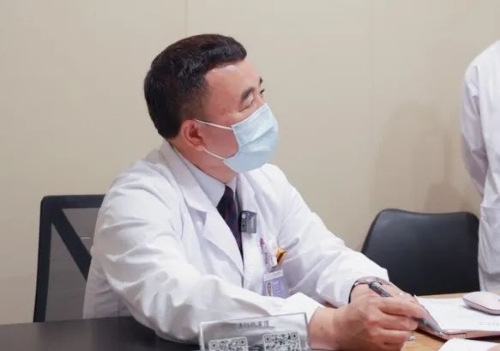
After examinations, Mr. Gu was diagnosed with prostate adenocarcinoma cT2bN0M0, PSA 29.6ng/ml, Gleason score 4+3=7, categorizing him as high-risk; positive biopsy rate was 6/11 (54.54%), pelvic MRI and enhanced CT showed no enlarged lymph nodes, and a whole-body bone scan was negative.
Based on the MSKCC Preoperative Nomograms for prostate cancer prediction, Director Han estimated that Mr. Gu had a 36% chance of seminal vesicle invasion, a 49% chance of pelvic lymph node metastasis, and an 87% chance of extracapsular extension.
Following international treatment guidelines, Director Han initially provided two treatment options:
Option 1: Radical prostatectomy + pelvic lymph node dissection, followed by close postoperative monitoring of PSA levels, with salvage radiotherapy if necessary.
Option 2: Radical radiotherapy for prostate cancer combined with long-term (2-3 years) ADT (Androgen Deprivation Therapy).
To perfect the treatment plan, Director Han promptly organized an International Multidisciplinary Team (MDT) consultation. Considering the patient's strong preference, the experts concluded that radiotherapy combined with ADT was equivalent in efficacy to radical surgery, with fewer side effects regarding erectile dysfunction and urinary continence.
The renowned prostate cancer expert Professor Dian Wang, Professor of Radiation Oncology at Rush University Medical Center, USA, and Chairman of the Sino-American Radiation Oncology Society, provided detailed guidance on the ADT combination approach, radiotherapy fields, and dosage.
The prostate's location is sensitive and particular, surrounded by nerves and close to the rectum and bladder. Precise target delineation and radiotherapy planning are required, guided by imaging, to deliver accurate radiation doses only to the tumor without harming other normal organs. This places extremely high demands on the proficiency of the Tumor Center's prostate cancer specialty team in precision radiotherapy techniques.
Lying Down, Successfully "Defusing the Bomb"
Mr. Gu firmly chose the non-invasive precision radiotherapy plan. Using Intensity-Modulated Radiotherapy (IMRT) for the prostate + seminal vesicles, and the bilateral common iliac, internal/external iliac, obturator, and presacral lymph nodes, the radiation dose was 70Gy in 28 fractions to the primary prostate lesion and 45Gy in 25 fractions to the pelvic lymphatic drainage area.
He only needed to lie on the linear accelerator's treatment couch. Without surgery or anesthesia, he easily completed the entire course. "I felt nothing at all, and it was over," Mr. Gu found it incredible, experiencing no discomfort throughout the treatment.
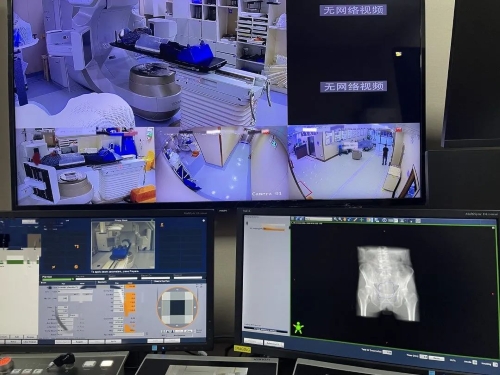
As Mr. Gu lived in Xinjiang and travel was inconvenient due to the pandemic, the comprehensive cancer management service ensured his subsequent drug therapy wasn't delayed. Upon discharge, Director Han provided him with a detailed subsequent treatment plan, precautions, and follow-up schedule, allowing him to undergo ADT therapy at a local hospital. During the treatment period, Director Han provided timely medication guidance to Mr. Gu remotely via online channels.
After persisting with treatment for one year, Mr. Gu returned to Director Han's outpatient clinic for a follow-up. The results this time satisfied him greatly. "After falling ill, the most correct decision I made was coming to Foshan for treatment. I am so grateful to this team......" In Director Han Liangfu's clinic at the Foshan Chancheng Hospital (Foshan Zen Hosp?) Tumor Precision Diagnosis and Treatment Center, Mr. Gu expressed his sincere thanks.
Radiotherapy Can Replace Surgery, Without Affecting Sexual Function
In the NCCN guidelines, apart from very low-risk and some low-risk cases recommending active surveillance with no immediate intervention, for non-metastatic low-risk, intermediate-risk, and high-risk patients, the outcomes of choosing surgery, radiotherapy, or androgen deprivation therapy are comparable, with no clear superiority. Under suitable conditions, radiotherapy can replace surgery as the preferred choice for prostate cancer patients.
Invasive surgery can cause psychological pressure and subconscious resistance in patients. Conversely, radical radiotherapy for prostate cancer avoids the awkwardness of postoperative recovery issues such as urinary incontinence, sexual dysfunction, diarrhea, hot flashes, etc.
Using the Varian VitalBeam linear accelerator or the Accuray CyberKnife system, patients only need to lie comfortably on the treatment couch. This allows tumor treatment without surgery, anesthesia, or bleeding, enabling them to leave immediately after treatment without affecting normal life.
About the Tumor Precision Diagnosis and Treatment Center
The Tumor Precision Diagnosis and Treatment Center is a key department of the Foshan Chancheng Hospital (Foshan Zen Hosp?), a nationally accredited Grade A, Level III hospital. It adopts clinical diagnosis, treatment standards, and quality control from world-authoritative institutions. Equipped with the US Varian Vital Beam linear accelerator and the Accuray CyberKnife radiosurgery system, it conducts "Sino-American Multidisciplinary Multi-Center Consultations (MDT)" every Tuesday in collaboration with international oncology experts. This allows patients to access domestic and international technology and expert team resources without leaving the country, enjoying world-class medical care.