
2025-11-13
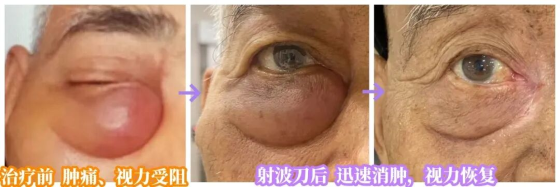
The eye gradually became terribly swollen and painful, and slowly, vision blurred. Upon examination, it turned out to be a tumor causing the trouble!
Three years ago, Mr. Zhang (a pseudonym) was diagnosed with nasopharyngeal carcinoma (NPC). Despite undergoing chemotherapy and radiotherapy, unfortunately, the cancer recurred. In May '24, misfortune struck again – Mr. Zhang's eyelid became swollen and painful, like a signal of the demon's renewed challenge. Doctors identified this as a nasopharyngeal metastasis and promptly performed surgical resection.
Post-operative pathology revealed it was undifferentiated non-keratinizing carcinoma, with immunohistochemical markers CK+, EGFR (95%+), p40+, confirming the frightening diagnosis of metastatic nasopharyngeal carcinoma. After surgery, Mr. Zhang opted to forgo adjuvant therapy, a decision that, in hindsight, seemed to sow the seeds of future trouble.
The respite was short-lived. By August, the familiar eyelid swelling and pain returned, more ferociously than before. Mr. Zhang's vision was severely impaired, as if his life was being swallowed by darkness. The re-examination results were like a bucket of cold water, mercilessly dousing the last glimmer of hope in Mr. Zhang's heart – the tumor had recurred.
Facing this challenge, Mr. Zhang did not yield. Instead, he bravely chose the treatment plan recommended by Professor Wang Enmin: CyberKnife SBRT radiotherapy, PGTV 20Gy/5f, grasping at this last lifeline in the darkness.

A miracle occurred at this seemingly hopeless moment. After just 5 precise radiotherapy sessions, like a magic brush, it rapidly reduced the eye mass, and his symptoms significantly alleviated. The dawn of life once again pierced through the gloom, illuminating Mr. Zhang's path forward. Now, with his condition stabilized, Mr. Zhang has embarked on a new chapter of chemotherapy, carrying the hope of rebirth.
Data shows that 80% of global nasopharyngeal carcinoma cases occur in China, particularly in Southern China and the Guangdong-Guangxi region, where the annual incidence is as high as 30-80 per 100,000 people. The incidence rate is even 100 times higher than in most other countries and regions, hence NPC is also known as the "Guangdong Tumor."
In its early stages, NPC may not cause any symptoms. As the disease progresses, patients may experience a series of symptoms such as nasal congestion, tinnitus, blood-stained post-nasal drip, hearing loss, headache, facial numbness, double vision, as well as related signs like neck masses and cranial nerve palsy. The appearance of these symptoms often indicates the disease has reached a progressive or advanced stage.
Nasopharyngeal Carcinoma is Relatively Sensitive to Radiotherapy
The main treatment modalities for NPC are radiotherapy, chemotherapy, and immunotherapy. These approaches require different combination strategies depending on the disease stage.
It is important to note that follow-up examinations after comprehensive NPC treatment are also crucial. Timely follow-up can detect tumor recurrence or metastasis early, allowing for prompt intervention.
Early-Stage NPC: Primarily Treated with Radiotherapy
NPC is sensitive to radiotherapy. Furthermore, the nasopharynx has a complex structure, located at the skull base near the brainstem, allowing for upward spread into the cranial cavity or downward spread to neck lymph nodes, making surgical resection difficult. Therefore, radiotherapy is the primary treatment for newly diagnosed NPC without distant metastasis, and it is the main curative treatment method for NPC.
For early-stage NPC treated with radiotherapy alone, the 5-year survival rate exceeds 90%.
Locally Advanced Tumors: Comprehensive Treatment is Preferable
For locally advanced tumors, radiotherapy alone is less effective, with a 5-year survival rate of only about 60%. Therefore, chemotherapy is added to radiotherapy for comprehensive treatment.
Metastatic (Late-Stage) NPC: Systemic Therapy is Primary
The treatment for metastatic NPC is primarily systemic therapy. Currently, chemotherapy combined with immunotherapy is recommended. Of course, the treatment plan adopted will vary from person to person depending on the NPC patient's specific circumstances and stage.
Precision radiotherapy is the most crucial curative method in NPC treatment. However, regrettably, about 10% to 20% of patients still experience local recurrence after radiotherapy. Among these recurrent NPC patients, they can be further subdivided into operable and inoperable categories. Those unsuitable for surgery account for up to 70%; for them, "re-irradiation" becomes the treatment hope.
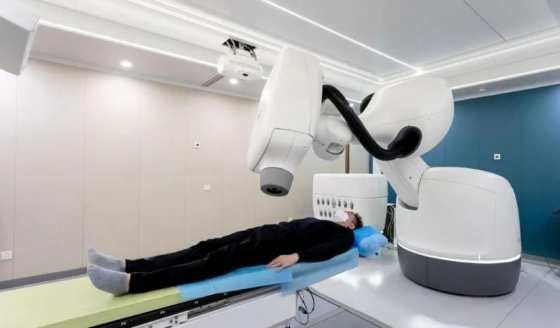
Foshan CyberKnife treats tumors without incision, bleeding, or anesthesia.
CyberKnife, leveraging its exceptional control over dose and position accuracy and utilizing advanced Stereotactic Body Radiotherapy (SBRT) technology, delivers re-irradiation for recurrent vertebral metastases, head and neck tumors, and pelvic tumors. This approach not only significantly improves the local control rate of lesions and effectively alleviates patient symptoms but also substantially reduces the risk of damage to normal tissues.