
2026-06-17
"Mommy, I Can Walk!"
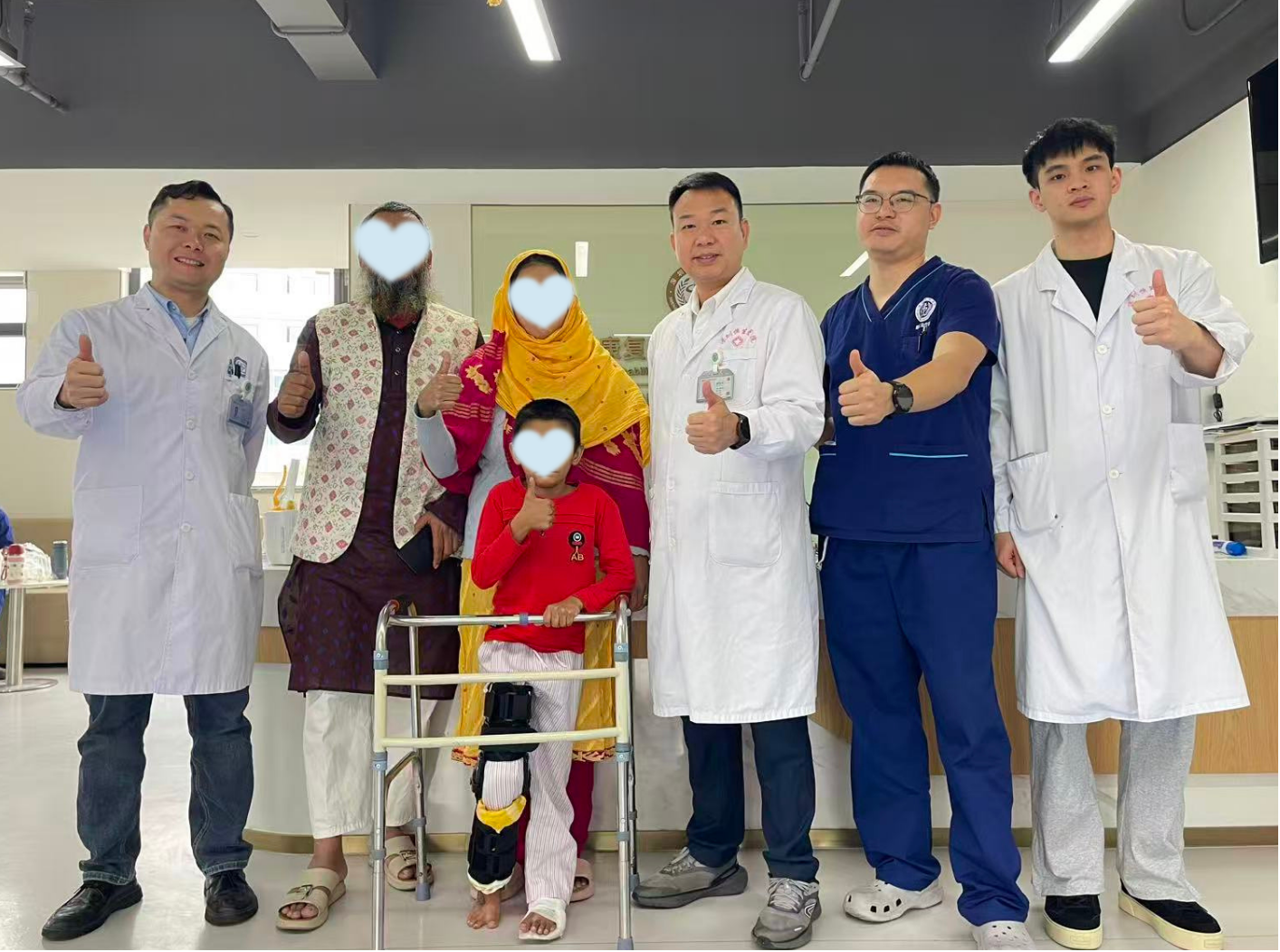
In the rehabilitation hall of Shenzhen Hengsheng Hospital, six-year-old Bangladeshi boy Ali (pseudonym) let go of the parallel bars and, encouraged by the medical staff, took his first trembling steps in six months. His mother Rashida (pseudonym) stood beside him, tears streaming down her face — she once again saw a glimmer of hope.
PART 01 | One Accident, Four Surgeries, Still Unable to Stand
Half a year ago, Ali suffered a serious accident in his home country of Bangladesh. The train he was traveling on collided with a car and overturned, the violent impact leaving him with multiple fractures in both legs and severe damage to the nerves and blood vessels.
Despite undergoing four surgeries in Bangladesh, Ali's recovery remained deeply unsatisfactory. Gradually, he lost the ability to walk entirely, confined to a wheelchair.
"Watching other children run and play in the street while Ali could only sit in his wheelchair staring blankly — there was nothing we could do," Rashida said, her voice breaking. "That sense of helplessness was harder to bear than anything."
PART 02 | Crossing Mountains and Seas for One Last Thread of Hope
Just as the family had nearly given up hope, they received a piece of news: the International Medical Center of Shenzhen Hengsheng Hospital would be conducting a free medical outreach clinic in Bangladesh, and among the team was Deputy Director Guo Hua, a specialist in hand and foot microsurgery. Refusing to let any hope slip away, they sought out Dr. Guo.
After carefully reviewing Ali's condition, Dr. Guo developed a comprehensive treatment plan for him. Taking into account Shenzhen Hengsheng Hospital's combined strengths in pediatric orthopedics and rehabilitation, Ali's parents made up their minds to bring their son thousands of miles to China.
PART 03 | Meticulous Treatment, Slow but Steadfast Progress
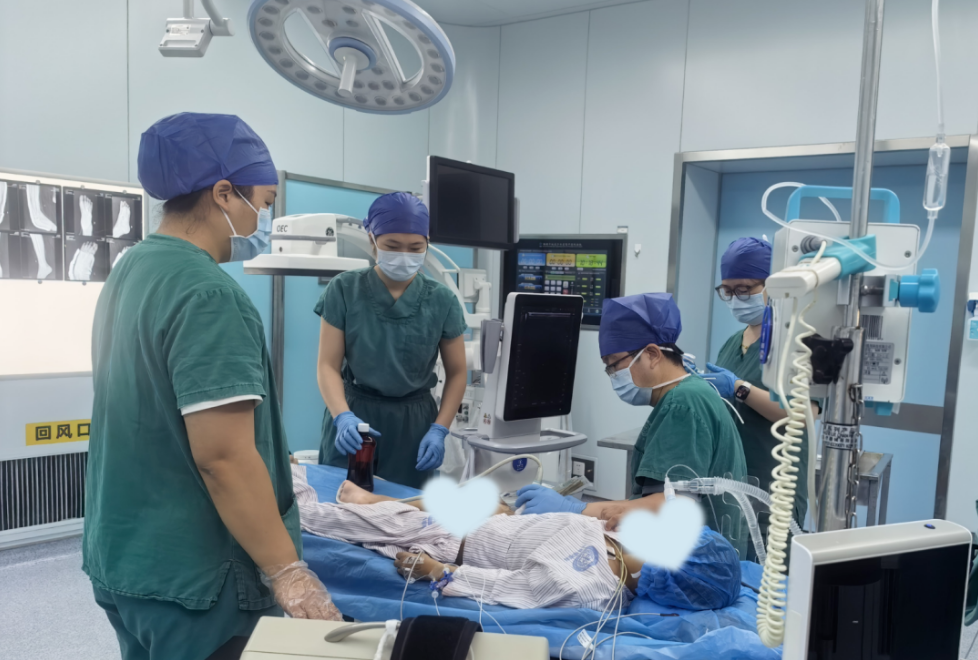
When Ali was admitted, significant muscle atrophy had already set in across both legs, and his joint mobility was severely restricted. Dr. Guo promptly organized a multidisciplinary consultation, bringing together experts from the International Medical Center, Anesthesiology, Orthopedics, Rehabilitation Medicine, Neurology, and Pediatrics to formulate a personalized treatment plan: precision surgery to repair the damaged tissue, followed by systematic rehabilitation training, and finally functional reconstruction and gait training.
Dr. Guo led the operation, with Chief Anesthesiologist Luo Tieshan overseeing anesthesia. The surgery lasted over two hours and successfully addressed the principal problems in Ali's legs. The rehabilitation phase, even more critical, began right away: from the second day post-operation, the rehabilitation team stepped in, employing a combination of physical therapy, cryotherapy, and intelligent rehabilitation robotics to help Ali progressively rebuild muscle strength and joint mobility.
Dr. Kan, head of the Rehabilitation Medicine Department, emphasized: "A child's body has remarkable plasticity — the key lies in scientifically guided, sustained training." Ali underwent six hours of intensive rehabilitation six days a week. It was grueling, but he never gave up.
PART 04 | The First Step — and the Beginning of a New Life
After half a month of effort, Ali finally had his moment of glory. In the rehabilitation hall, he rose from the parallel bars and tentatively moved his feet forward. One step. Two steps. Three steps. His gait was unsteady, but filled with resolve.
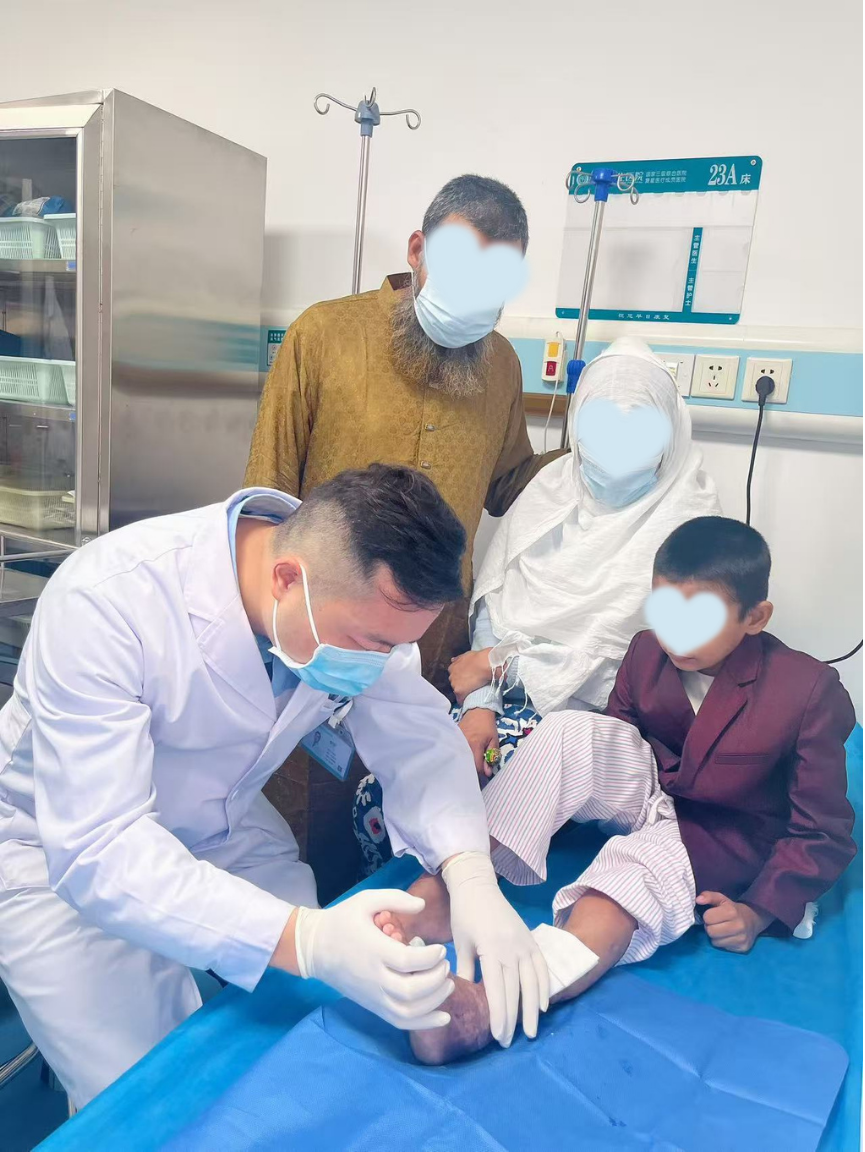
"I can walk! I really can walk!" Ali cried out joyfully in Bangla. His mother, standing beside him, was already too choked with tears to speak.
Today, Ali is able to walk short distances in the hospital's small garden. His smile shines brighter than the Shenzhen sunshine. The boy who was once confined to a wheelchair has finally reclaimed the right to run.