
2026-02-10
In the field of recurrent implantation failure or repeated failed implantations, we often study endometrial receptivity, maternal immune and coagulation factors, and even endocrine factors. However, one factor has long been underestimated—adenomyosis. According to an observational study from Sweden, among women undergoing assisted reproductive technology, one in ten is affected.
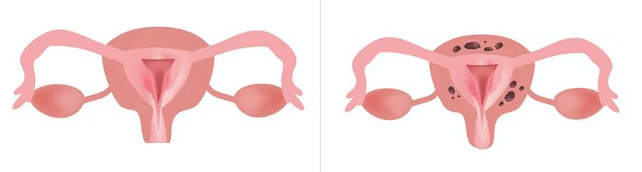
Normal Uterus Adenomyosis
Adenomyosis is the "sister disease" of endometriosis—both are caused by endometrial tissue "migrating" from its normal location. It is a specific form of endometriosis where endometrial tissue invades the myometrium (the muscular layer of the uterus).
Many people know that adenomyosis affects pregnancy, but the extent to which it impacts IVF success rates—particularly the live birth rate—has remained uncertain in the academic community. Until May 2025, a study published in the globally renowned reproductive medicine journal Human Reproduction provided an answer to this question.
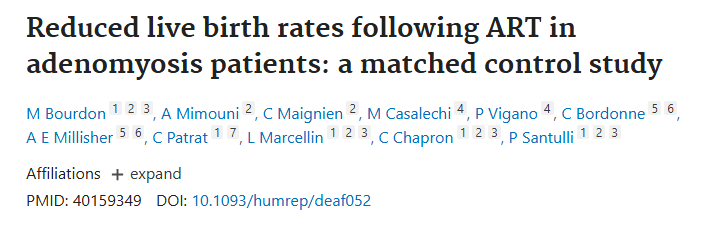
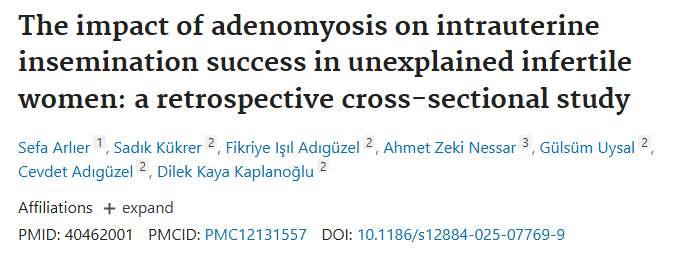
The study found that in the group with adenomyosis, the pregnancy rate after the first transfer was 53.3% (with 41.4% of patients ultimately achieving a live birth), while in the control group without adenomyosis, the pregnancy rate after the first transfer was 63.9% (with 51.9% of patients ultimately achieving a live birth). Through multivariate regression analysis, the researchers concluded that adenomyosis itself is an independent risk factor for reduced success rates, primarily affecting embryo implantation. Additionally, another study focusing on intrauterine insemination cycles in patients with unexplained infertility found that compared to patients without adenomyosis (with a pregnancy rate of 20.81% per cycle), patients with adenomyosis had a pregnancy rate of only 12.23% per cycle.
Regarding how adenomyosis affects fertility, various theories exist in the academic community. Some studies suggest that changes in the uterine cavity morphology in patients with adenomyosis may impede sperm migration and embryo transport. Other research proposes that alterations in the direction, rhythm, and amplitude of myometrial contractions interfere with sperm transport and embryo implantation. Regardless of the mechanism, adenomyosis acts as a formidable barrier to embryo implantation—one that is difficult to circumvent even with intrauterine insemination or IVF.
Shenzhen Hengsheng Hospital's "Secret Weapon": Microwave Ablation Combined with Lauromacrogol Sclerotherapy
Through a minimally invasive interventional approach, this technique achieves relatively short procedure times to ablate lesions, reduce lesion volume, and improve the uterine environment to facilitate embryo implantation. This is supplemented by local injection of lauromacrogol to destroy lesion blood vessels and inhibit lesion regeneration, thereby consolidating the therapeutic effect. Compared with conventional treatments for adenomyosis, this innovative technique (microwave ablation combined with lauromacrogol sclerotherapy) offers advantages including shorter procedure time, minimal trauma, rapid recovery, and fertility-friendliness. For adenomyosis patients with fertility aspirations, this undoubtedly represents an ideal treatment option. However, it is worth noting that the microwave ablation combined with lauromacrogol sclerotherapy technique places high demands on the operator's technical skill and the coordination between the ablation specialist and the reproductive medicine physician.
Most conventional treatment methods are not particularly suitable for patients with fertility aspirations. Among these, radiofrequency ablation and high-intensity focused ultrasound carry a risk of "off-target" effects—meaning difficulty in precisely focusing on the lesion itself, potentially affecting surrounding tissue and subsequently creating sinus tracts (which can be imagined as an unintended "tunnel" forming in the uterine wall). If a sinus tract develops, it poses significant risks for embryo transfer and implantation, including uterine rupture and massive hemorrhage.
A Successful Case: A 40-Year-Old Patient with a Giant Adenomyoma Realizes Her Dream of a Second Child
Axia, a Shenzhen resident, had been trying to conceive a second child since giving birth to her first child eight years ago, but without success. In 2022, she was diagnosed with bilateral tubal obstruction and adenomyosis. The following year, she underwent IVF at a major reproductive center in Shenzhen. After one egg retrieval, she obtained three embryos, but after two transfer attempts—both unsuccessful—she had no remaining embryos. Meanwhile, Axia was also suffering from progressively worsening dysmenorrhea, growing increasingly exhausted on her journey toward motherhood. At nearly 40 years old, she was on the verge of giving up.
By chance, Axia heard that Shenzhen Hengsheng Hospital had developed a strong reputation for managing recurrent IVF failure and adenomyosis. With nothing to lose, she knocked on the door of Chief Physician Deng Weifen's clinic at the Reproductive Medicine Center. After reviewing Axia's medical history, Dr. Deng preliminarily concluded that her two IVF failures were likely "caused by" her adenomyosis. At that time, Axia had not received any specialized treatment for her adenomyosis. A pelvic MRI at Hengsheng revealed that her adenomyoma (a focal form of adenomyosis) measured 47×47×49 mm—larger than a ping-pong ball—and her entire uterus was enlarged to 110×90×82 mm, equivalent to the size of a four-month pregnancy. Such uterine morphology posed an enormous challenge for both embryo implantation and subsequent fetal development.
Dr. Deng explained to Axia that to realize her dream of a second child, she must first "address" her adenomyosis. This would not only facilitate a successful pregnancy and safe delivery but also alleviate her severe dysmenorrhea and improve her quality of life. Dr. Deng then formulated a treatment plan for Axia:
·Step 1: "Stockpile Ammunition" – Considering her advanced age, initiate an ovarian stimulation cycle as soon as possible to retrieve eggs and cryopreserve a batch of high-quality embryos. (Given Axia's age, multiple stimulation cycles might be necessary to accumulate sufficient high-quality embryos.)
·Step 2: "Clear the Ambush" – Perform microwave ablation combined with lauromacrogol sclerotherapy to treat the adenomyosis.
·Step 3: "Regroup the Troops" – Utilize integrated traditional Chinese and Western medicine to regulate her system, promoting metabolic absorption of the "necrotic" lesion tissue.
·Step 4: "Precision Strike" – After assessing hormonal levels and uterine environment factors (including adenomyosis lesion status, endometrial thickness, blood flow, and uterine peristalsis), select the "optimal" timing for frozen-thawed embryo transfer.
Dr. Deng's explanation reignited Axia's confidence, and she promptly began following the recommended treatment. In June 2024, Axia underwent ovarian stimulation using an GnRH antagonist protocol, cryopreserving two Grade I cleavage-stage embryos. In July, Dr. Deng adjusted her stimulation protocol for a second cycle, cryopreserving an additional two Grade I cleavage-stage embryos and one Grade 3BC blastocyst. With four Grade I cleavage-stage embryos and one blastocyst now in storage, Axia was ready to proceed to the next phase.
In September, a preoperative consultation was convened, involving specially invited expert Dr. Tang Changjiang (who collaborates with Dr. Deng on research into microwave ablation combined with lauromacrogol sclerotherapy), Gynecology Director Dr. Han Fang, Ultrasound Department Director Dr. Li Youfang, and Reproductive Surgery Lead Dr. Wang Hualing. The goal was to ensure Axia's best possible chance of conception and relief from her chronic dysmenorrhea.
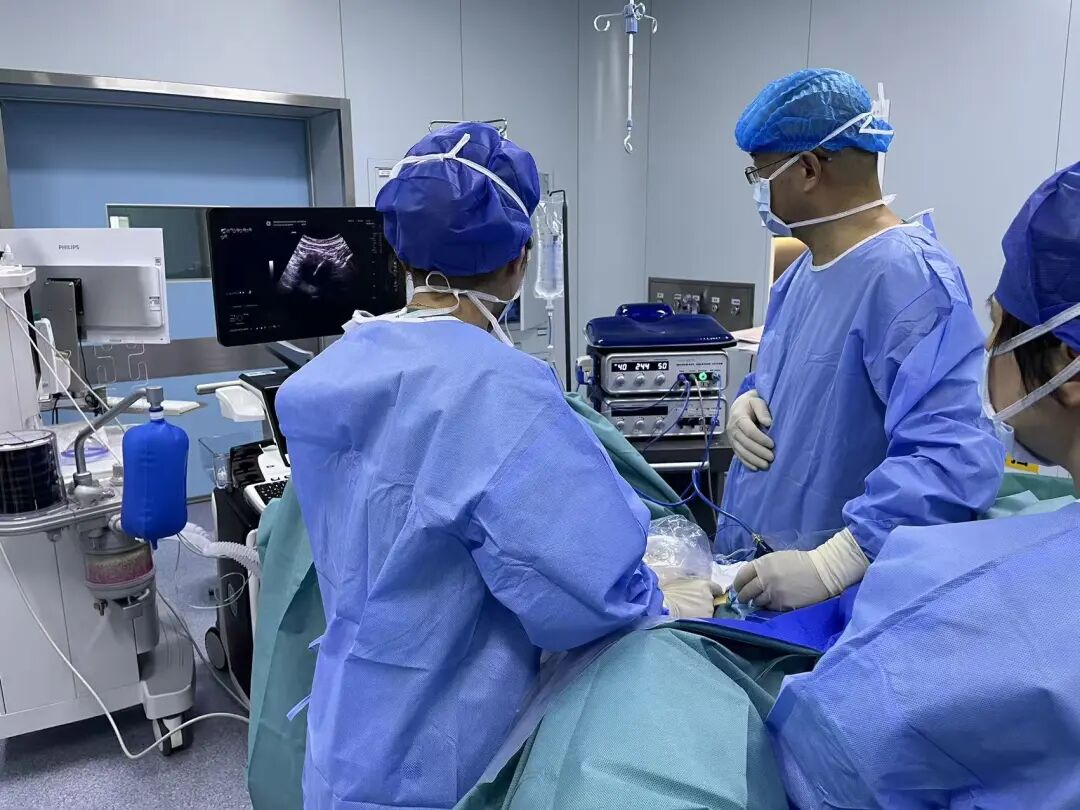
During the procedure, Dr. Tang created a 2 mm puncture in Axia's right lower abdomen, inserted the microwave ablation needle into the lesion, and delivered microwave energy for ablation—a process lasting a total of 7 minutes and 20 seconds. Subsequently, 5 mL of lauromacrogol injection was delivered into the lesion area via the puncture needle to consolidate the treatment outcome. Axia's total hospital stay, encompassing preoperative preparation and postoperative recovery, was five days. After discharge, her dysmenorrhea significantly improved. Dr. Deng prescribed medications to consolidate the treatment effect and instructed Axia to return for regular follow-up monitoring of lesion absorption.
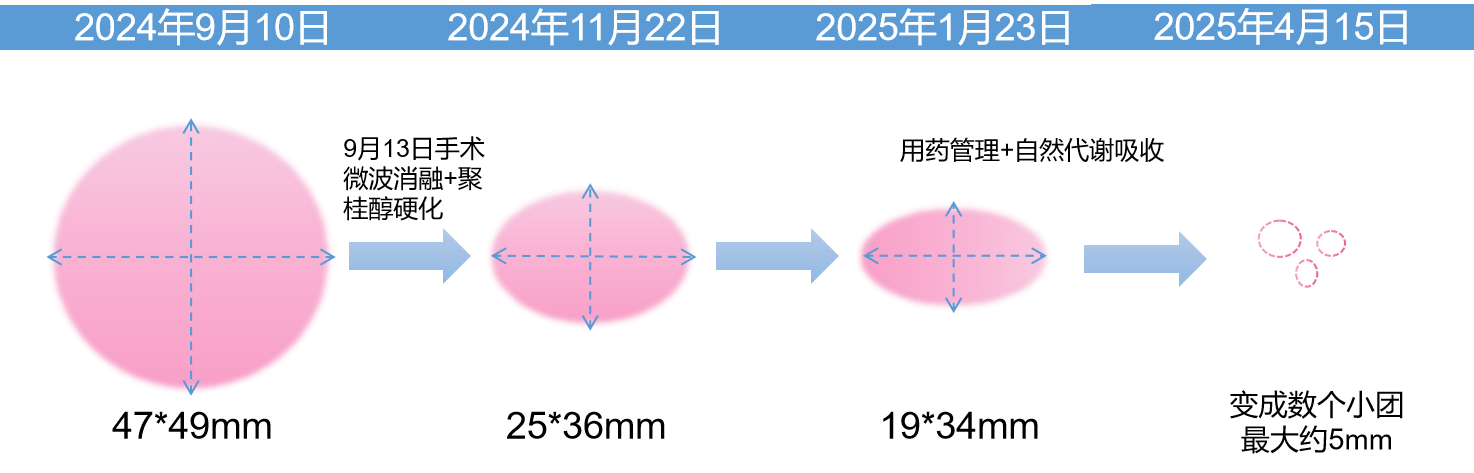
Preoperative to Postoperative Changes in the Patient's Adenomyosis Lesion
In April 2025, follow-up examinations revealed that the previously nearly 5 cm lesion had now transformed into several small foci. After a comprehensive evaluation of endometrial receptivity, Dr. Deng determined that Axia could proceed to the next stage—embryo transfer.
Axia underwent transfer of two Grade I cleavage-stage embryos in mid-April, but unfortunately, this attempt did not result in pregnancy. In May, Dr. Deng adjusted the endometrial preparation protocol and performed another transfer of two Grade I cleavage-stage embryos. Twelve days after transfer, a pregnancy test revealed a serum hCG level of 408 mIU/mL—Axia had finally achieved her long-awaited pregnancy. Given Axia's status as an advanced maternal age patient, Dr. Deng's team provided regular remote consultations and pregnancy support guidance until 33 weeks of gestation. On January 19, 2026, Axia delivered a healthy baby girl weighing 2.6 kg via cesarean section. Both mother and baby are doing well.