2025-10-16
When people think of thyroid cancer, they often associate it with “high cure rates” and “favorable prognosis”. However, Medullary Thyroid Carcinoma (MTC) is a different story. Originating from the thyroid’s C-cells, its biological behavior is entirely distinct from the more common papillary thyroid carcinoma.
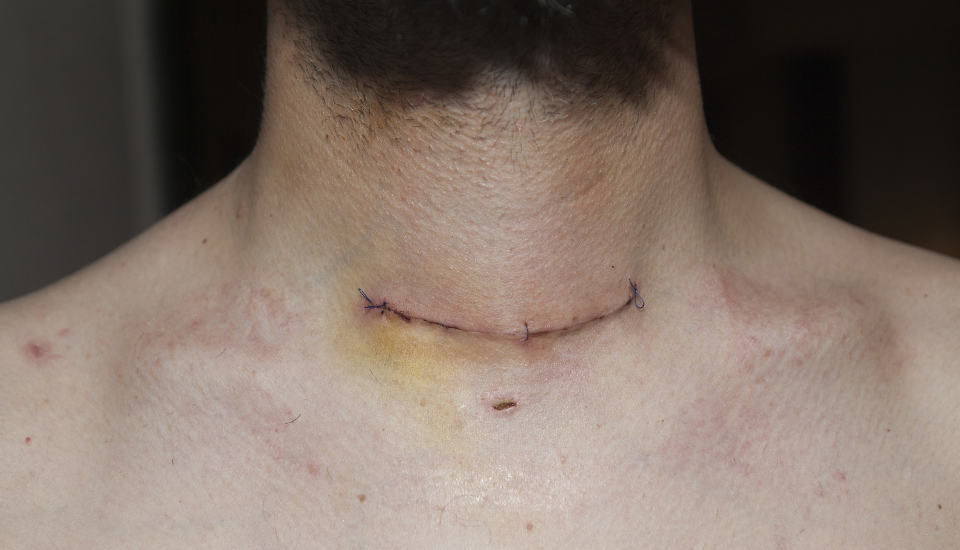
Though relatively rare, MTC is often diagnosed at a moderate or advanced stage, and it does not respond to conventional radioactive iodine therapy. Once local lesions invade the neck’s trachea, esophagus, or major blood vessels, treatment becomes significantly more challenging. At this stage, patients’ concerns often shift from “can it be cured?” to:
Can the local tumor be effectively controlled?
Can I maintain normal breathing and swallowing?
Are there less invasive treatments with fewer side effects?
In recent years, CyberKnife has provided a new option for MTC patients, especially those with locally advanced or inoperable lesions.
MTC accounts for approximately 3%–5% of all thyroid cancers. Unlike other types, it has several distinguishing features:
Insidious progression: Early symptoms are mild and often go unnoticed until a neck mass or hoarseness appears.
Surgical complexity: Tumors tend to infiltrate nerves and blood vessels, making removal difficult and recurrence likely.
Not suitable for standard iodine therapy: Unlike papillary thyroid carcinoma, MTC does not respond to radioactive iodine.
High risk of metastasis: Cervical lymph nodes, mediastinum, and even the liver, lungs, and bones can be affected.
Therefore, controlling local lesions is crucial for both quality of life and overall survival.
CyberKnife is a robotic radiosurgery system that delivers high-energy radiation to tumors with 0.1 mm precision. For locally advanced MTC, its benefits include:
Non-invasive precision: No surgery is required, and systemic function is unaffected, making it ideal for patients who cannot tolerate repeat operations.
Organ protection: The neck contains complex anatomy. CyberKnife can intelligently avoid the trachea, esophagus, and nerves, reducing complications such as breathing difficulty or swallowing impairment.
Suitable for recurrent lesions: Local recurrence is common after surgery. CyberKnife can safely retreat these lesions without significant additional side effects.
Short treatment course and rapid effect: Typically completed in 1–5 sessions, some patients experience symptom relief in a short time.
Long-term control: While not curative, it can significantly inhibit tumor progression and delay complications.
For patients with locally advanced or recurrent MTC, CyberKnife does not guarantee a cure, but it can:
Relieve symptoms: Improve breathing difficulties, swallowing problems, and neck compression.
Slow progression: Control local tumor growth and reduce the risk of bleeding or airway obstruction.
Enhance quality of life: Allow patients to continue speaking, eating, and communicating with loved ones.
At Foshan Fosun Chancheng Hospital, MTC patients receive comprehensive, multidisciplinary care:
International expert team: Led by renowned specialists including Dr. Yang Jun, focusing on precise CyberKnife treatment and individualized plans.
Multidisciplinary treatment (MDT): Radiation oncology, surgery, endocrinology, imaging, and pathology work together to ensure scientific and comprehensive treatment.
Advanced technology platform: Sixth-generation CyberKnife M6 combined with PET/CT, CAR-T therapy, and Tumor Treating Fields offers patients more options.
Full-cycle support: From diagnosis and treatment to rehabilitation and psychological care, the hospital provides warm, continuous guidance.
Although medullary thyroid carcinoma is rare, it poses significant challenges for patients. With the continuous advancement of precise radiotherapy technologies such as CyberKnife, effective control of locally advanced lesions has become achievable.
At Foshan Fosun Chancheng Hospital, our international team and state-of-the-art equipment work together to provide individualized treatment plans, helping patients face their disease with confidence, hope, and dignity.