2026-07-15
Introduction
Radiation therapy is an essential component of multidisciplinary breast cancer treatment. Whether after breast-conserving surgery, mastectomy, local recurrence, or in selected cases of metastatic disease, many breast cancer patients may require radiation therapy as part of their comprehensive treatment plan.
During clinical consultations, many patients have questions about the differences between a linear accelerator (LINAC) and CyberKnife:
What re the diferences between these two radiation therapy technologies? Does a more advanced or more precise device always provide better treatment outcomes?
In reality, for the majority of brest cancer patients, modern linear accelerators (LINACs) remain the standard radiation therapy equipment recommended by international clinical guidelines and are currently the most widely used tchnology in clinical practice.
Although CyberKnife provides submillimeter targeting accuracy and offers advantages in stereotactic body radiation therapy (SBRT), it is primarily designed for treating small, well-defined, localized lesions. In breast cancer treatment, its application is limited to selected situations, such as isolated metastatic lesions involving the brain, lung, bone, or other specific sites.
Both technologies use high-energy X-rays to damage the DNA of cancer cells, thereby inhibiting tumor growth or eliminating cancer cells. However, they differ significantly in their treatment principles, target volumes, clinical applications, and therapeutic goals.
Understanding these differences can help patients choose the most appropriate radiation therapy approach based on their individual condition, rather than simply pursuing newer or more expensive technologies.
1. What Are the Differences Between a Linear Accelerator and CyberKnife?
Although both are radiation therapy technologies, they differ significantly in their operating principles, treatment indications, and clinical applications.
Comparison | Linear Accelerator (LINAC) | CyberKnife |
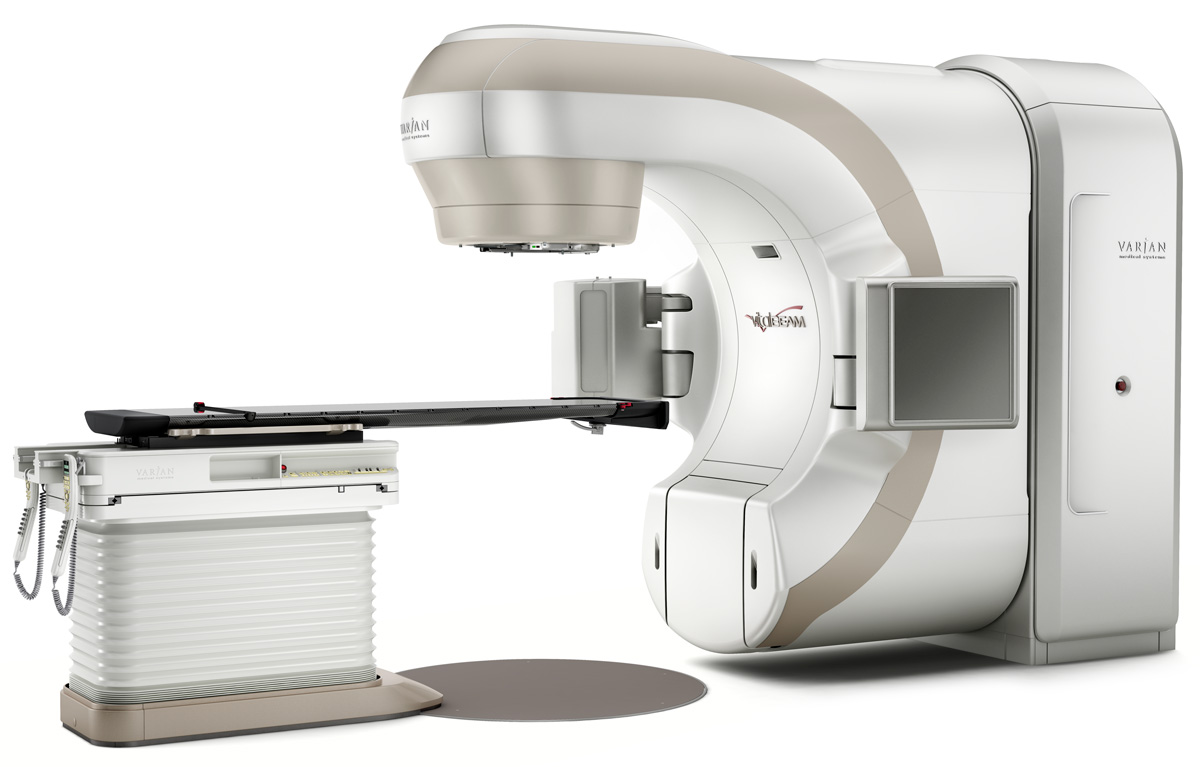 | 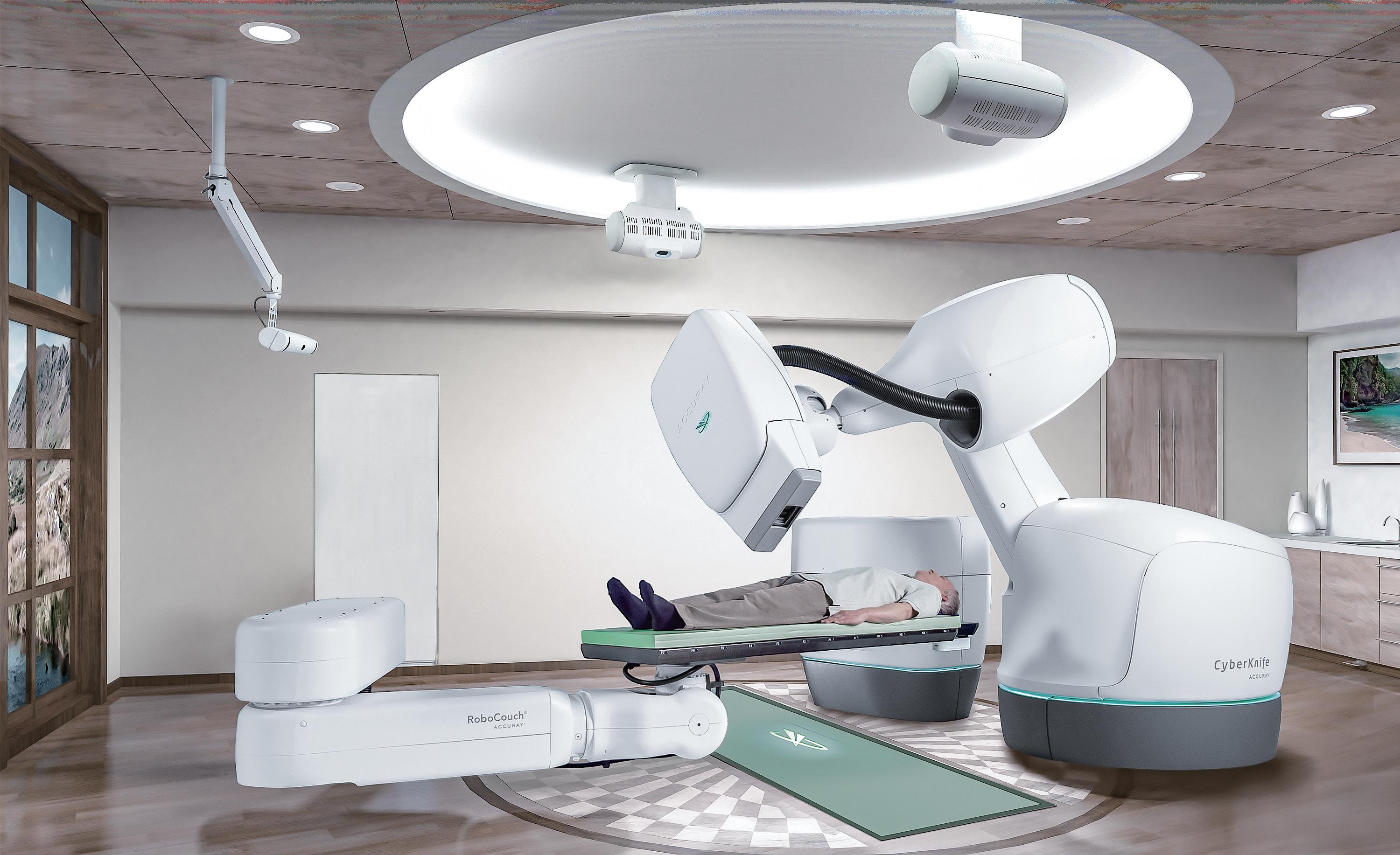 | |
Working Principle | A LINAC accelerates electrons to generate high-energy X-rays. The treatment gantry rotates around the patient and delivers radiation from multiple angles. It can be combined with advanced techniques such as intensity-modulated radiation therapy (IMRT), volumetric modulated arc therapy (VMAT), and image-guided radiation therapy (IGRT) to achieve precise treatment delivery. | CyberKnife uses a compact linear accelerator mounted on a robotic arm with six degrees of freedom. It delivers radiation beams from multiple non-coplanar angles to achieve highly precise stereotactic radiation treatment. |
Clinical Applications | Suitable for the treatment of most malignant tumors, including breast cancer, lung cancer, head and neck cancers, gastrointestinal cancers, and many other cancers. It is the most commonly used radiation therapy platform in clinical practice. | Mainly used for small, well-defined lesions requiring stereotactic body radiation therapy (SBRT) or stereotactic radiosurgery (SRS), such as selected tumors in the brain, lung, spine, and liver. |
Treatment Volume | Capable of covering large and irregular target volumes, including the entire breast, chest wall, and regional lymph node areas. | More suitable for small-volume lesions and is not routinely used for large treatment areas such as the whole breast, chest wall, or regional lymph nodes. |
Treatment Accuracy | Provides millimeter-level positioning accuracy. Combined with daily image-guided radiation therapy (IGRT), it can meet the precision requirements of most radiation treatments. | Provides submillimeter-level targeting accuracy. Dynamic tracking technologies can further improve accuracy when treating moving targets. |
Treatment Techniques | Includes conventional fractionated radiation therapy, intensity-modulated radiation therapy (IMRT), volumetric modulated arc therapy (VMAT), and other modern external beam radiation techniques. | Primarily uses stereotactic body radiation therapy (SBRT) or stereotactic radiosurgery (SRS), delivering higher radiation doses per session over fewer treatment fractions. |
Treatment Duration | Conventional fractionation usually requires approximately 3–6 weeks, with treatment delivered once daily. | SBRT typically requires only 1–5 treatment sessions. |
Radiation Type | Can deliver high-energy X-rays and may also use electron beams for selected superficial lesions. | Primarily uses high-energy X-rays for treatment. |
In simple terms, if these two technologies are compared to different types of tools:
A linear accelerator is like a comprehensive treatment platform designed for precise treatment of large and complex target areas, making it particularly suitable for breast cancer radiation therapy.
CyberKnife, in contrast, is more like a specialized precision tool designed to deliver highly focused radiation to small, localized lesions while minimizing radiation exposure to surrounding normal tissues.
Neither technology is universally superior. The key is selecting the technology that best matches the patient's specific clinical situation.
2. Why Is a Linear Accelerator Usually the Preferred Choice for Breast Cancer Radiation Therapy?
The goals of radiation therapy for breast cancer are not only to eliminate residual cancer cells that may remain after surgery but also to reduce the risk of local recurrence while protecting important normal organs, especially the heart and lungs.
Because postoperative breast cancer radiation usually involves large and anatomically complex treatment areas, modern linear accelerators (LINACs) are better suited to meet these clinical requirements.
1. Ability to Cover Large and Complex Target Volumes
For patients undergoing breast-conserving surgery or mastectomy, radiation therapy typically needs to cover the entire breast or chest wall. When clinically indicated, treatment may also include regional lymphatic drainage areas, such as:
• The supraclavicular lymph node region
• The infraclavicular lymph node region
• The axillary lymph node region
• The internal mammary lymph node region
These treatment areas are relatively large and often irregular in shape. Therefore, radiation therapy must achieve a uniform and stable dose distribution while minimizing radiation exposure to surrounding healthy tissues.
Modern linear accelerators combined with volumetric modulated arc therapy (VMAT) or intensity-modulated radiation therapy (IMRT) can provide highly conformal radiation dose distributions across complex target areas. At the same time, they can effectively protect nearby normal organs, making them the most commonly used approach for breast cancer radiation therapy.
2. More Uniform Dose Distribution and Better Protection of Normal Organs
During breast cancer radiation therapy, an important goal is to minimize unnecessary radiation exposure to critical organs, particularly the heart and lungs.
Currently, many advanced radiation oncology centers combine LINAC technology with several modern techniques to further improve treatment safety and precision:
Image-guided radiation therapy (IGRT):
Uses daily imaging verification to improve treatment positioning accuracy and ensure that radiation is delivered precisely to the intended target.
Intensity-modulated radiation therapy (IMRT):
Adjusts radiation intensity across different areas of the treatment field to optimize dose distribution and reduce exposure to surrounding normal tissues.
Volumetric modulated arc therapy (VMAT):
Delivers radiation while the treatment machine rotates around the patient, improving dose conformity and shortening treatment time.
Deep inspiration breath hold (DIBH):
Particularly beneficial for patients with left-sided breast cancer. By increasing the distance between the heart and the chest wall during deep inspiration, DIBH can significantly reduce the radiation dose received by the heart.
These advanced techniques have become important components of modern breast cancer radiation therapy and represent one of the major reasons why LINAC remains the standard radiation platform for breast cancer treatment.
3. LINAC Better Matches the Goals of Postoperative Breast Cancer Radiation Therapy
The primary purpose of postoperative breast cancer radiation therapy is to eliminate potential microscopic residual cancer cells and reduce the risk of local recurrence.
It is not designed to target and destroy only one visible tumor mass.
Therefore, treatment requires a uniform and continuous radiation dose distribution throughout the entire treatment area, rather than delivering an extremely high dose to a single small point.
Although CyberKnife provides excellent targeting precision, its major advantage lies in treating small, well-defined localized lesions.
If CyberKnife were used to treat large areas such as the entire breast or chest wall, it would be less efficient and would not be ideal for achieving the broad and uniform dose distribution required for routine postoperative breast cancer radiation therapy.
Therefore, CyberKnife is not considered a routine first-line option for postoperative breast cancer radiation therapy.
3. Clinical Applications of CyberKnife in Breast Cancer Treatment
Although CyberKnife is not a standard treatment platform for routine postoperative breast cancer radiation therapy, it can still play an important role in selected clinical situations.
1. Isolated Distant Metastatic Lesions
For some patients with breast cancer, systemic disease may remain well controlled while only a small number of distant metastatic lesions develop. This condition is known as oligometastatic disease.
Oligometastatic disease generally refers to a limited number of metastatic lesions, often involving approximately one to five sites.
Examples include: Brain metastases Lung metastases Spine metastases Bone metastases Liver metastases
For these small, well-defined lesions, CyberKnife can deliver stereotactic body radiation therapy (SBRT), providing high-dose radiation in a limited number of treatment sessions, usually one to five fractions.
Because SBRT delivers highly focused radiation while reducing exposure to surrounding normal tissues, CyberKnife can be an important local treatment option for selected patients with oligometastatic breast cancer.
However, whether a patient is suitable for SBRT requires comprehensive evaluation by a multidisciplinary team.
Important factors include: The number of metastatic lesions, Tumor size, Tumor location, The relationship between the lesion and nearby critical organs, Overall disease control, The patient's general health condition
2. Partial Breast Irradiation in a Small Group of Selected Patients
For a very small number of patients with early-stage, low-risk breast cancer, radiation therapy may focus only on the area where the tumor was removed after breast-conserving surgery. This approach is known as:
Accelerated Partial Breast Irradiation (APBI).
Unlike whole-breast irradiation, APBI targets the tumor bed, which is the area surrounding the surgical cavity where local recurrence is most likely to occur.
Currently, APBI can be performed using several radiation techniques, including:
• Modern linear accelerators
• Brachytherapy
• Selected stereotactic radiation techniques
Some specialized cancer centers have explored the use of CyberKnife for APBI.
However, CyberKnife-based APBI has not yet become a standard treatment approach recommended by international guidelines, and its clinical application remains limited.
Whether CyberKnife is appropriate should be determined by an experienced radiation oncologist after considering the patient's tumor characteristics, recurrence risk, and overall treatment goals.
4. Differences Between LINAC and CyberKnife in Treatment Duration, Side Effects, and Cost
In addition to differences in treatment techniques, many patients are also concerned about practical issues such as treatment duration, possible side effects, and treatment costs.
Overall, both technologies have their own advantages. However, treatment decisions should always be based on the patient’s specific medical condition rather than simply comparing which option is faster or more expensive.
1. Treatment Duration and Session Time
Modern linear accelerators can provide different radiation therapy schedules according to each patient’s clinical condition.
Currently, postoperative breast cancer radiation therapy mainly includes conventional fractionation and hypofractionation.
With advances in clinical research, an increasing number of eligible patients can receive shorter hypofractionated treatment schedules. Therefore, the overall treatment course usually ranges from 1 to 5 weeks, with treatment delivered once daily on treatment days.
The actual radiation delivery time is generally only about 5 to 15 minutes per session.
CyberKnife mainly uses the stereotactic body radiation therapy (SBRT) approach. Treatment is usually completed in 1 to 5 sessions, with each session lasting approximately 30 to 60 minutes.
Because CyberKnife treatment requires highly accurate patient positioning, image verification, and motion tracking, each treatment session is usually longer than conventional radiation therapy.
For breast cancer patients, however, a shorter treatment course does not necessarily mean a better treatment outcome.
The most important factor is whether the treatment approach is appropriate for the patient’s disease characteristics and therapeutic goals.
2. Differences in Side Effects
The side effects of radiation therapy are influenced not only by the treatment equipment but also by factors such as:
• The size of the radiation field
• The radiation dose
• The treatment location
• Individual patient characteristics
For patients receiving postoperative breast cancer radiation therapy, modern LINAC-based treatment combined with:
• Intensity-modulated radiation therapy (IMRT)
• Volumetric modulated arc therapy (VMAT)
• Image-guided radiation therapy (IGRT)
• Deep inspiration breath hold (DIBH)
is generally well tolerated.
Common side effects include: Redness or irritation of the skin in the treated area, Skin pigmentation changes or mild peeling, Increased fatigue, Mild swelling or tightness of the breast or chest wall.
Most of these symptoms gradually improve within several weeks after treatment completion.
For patients receiving CyberKnife treatment for appropriately selected small-volume lesions, the treated area is usually smaller. Therefore, the amount of radiation received by surrounding normal tissues is often lower, and the radiation dose decreases rapidly outside the target area.
This allows better protection of nearby healthy tissues in selected cases.
However, SBRT delivers a relatively high radiation dose per treatment session. If the target lesion is located close to critical structures, such as: The brainstem, The spinal cord, Major blood vessels.
strict dose evaluation and careful treatment planning are required to ensure safety.
Therefore, it is not accurate to say that one technology always has fewer side effects than the other.
The risk of complications depends primarily on the disease being treated, the location of the target, and the individual treatment plan.
3. Differences in Cost and Availability
Modern linear accelerators have become standard equipment in most tertiary hospitals and radiation oncology centers in China and worldwide. They have extensive clinical experience, mature treatment workflows, and broad availability. For patients covered by medical insurance, radiation therapy costs may be partially reimbursed according to local healthcare policies, reducing the overall financial burden.
In contrast, CyberKnife systems are available in a relatively limited number of specialized cancer centers. Because of higher equipment acquisition, maintenance, and operational costs, CyberKnife treatment is generally more expensive than conventional LINAC-based radiation therapy.
Actual costs and insurance coverage vary depending on:
• Geographic region
• Healthcare system
• Hospital policies
• Individual treatment plans
Patients should not judge treatment effectiveness solely based on cost.
A more expensive treatment does not necessarily provide better outcomes. The most appropriate treatment should be selected based on:
• The characteristics of the cancer
• The goals of treatment
• The recommendations of the radiation oncology team
5. Common Misconceptions About Radiation Therapy Equipment
Misconception 1: More Advanced Equipment Always Leads to Better Treatment Outcomes
This is one of the most common misunderstandings among patients. In reality, there is no single radiation therapy system that is universally "the best." The most appropriate technology depends on whether it matches the patient’s specific clinical situation. For example, CyberKnife provides extremely high targeting precision and is well suited for selected localized lesions, such as certain brain metastases or small lung tumors. However, postoperative breast cancer radiation therapy usually requires treatment of: the entire breast,the chest wall, regional lymph node areas when indicated. In this situation, modern LINAC technology can provide more uniform and stable dose distribution across large treatment volumes, making it better aligned with the clinical requirements of breast cancer radiation therapy. For most breast cancer patients, modern linear accelerators already provide high-quality, standardized, and guideline-based radiation therapy.
Higher targeting precision alone does not automatically mean better treatment outcomes.
Misconception 2: CyberKnife Is Better for Breast Cancer Because It Requires Fewer Treatment Sessions
A shorter treatment schedule does not necessarily mean that a treatment is more suitable. CyberKnife uses stereotactic body radiation therapy (SBRT), which is mainly designed for: small lesions, clearly defined targets, localized disease sites. However, the purpose of postoperative breast cancer radiation therapy is different.
The goal is to eliminate potential microscopic residual cancer cells throughout the breast, chest wall, and regional lymphatic areas when necessary. This requires a broad and homogeneous radiation dose distribution rather than highly concentrated radiation delivered to a single point. Therefore, these two treatment approaches address different clinical needs and should not simply be compared as one being more advanced than the other.
Misconception 3: Treatment Outcomes Depend Mainly on the Radiation Equipment
In reality, the quality of radiation therapy depends on much more than the machine itself. A high-quality radiation therapy program requires:
• Accurate imaging evaluation
• Precise target delineation
• Appropriate dose prescription
• Careful treatment planning and optimization
• Accurate patient positioning and image verification
• Strict quality assurance throughout treatment
The equipment is only one component of the entire treatment process. Even when the same type of linear accelerator is used, treatment quality may vary between hospitals and radiation oncology teams due to differences in clinical experience, planning expertise, and treatment protocols.
Therefore, an experienced radiation oncology team, standardized treatment procedures, and evidence-based treatment planning are often more important than simply choosing a particular machine.
6. How Should Breast Cancer Patients Choose the Most Appropriate Radiation Therapy?
Based on current international breast cancer treatment guidelines and clinical practice, different groups of patients may require different radiation therapy approaches.
The choice of radiation technology should be based on the patient’s disease characteristics, treatment goals, tumor location, and overall health condition rather than simply selecting the most advanced or expensive equipment.
1. Patients Requiring Routine Postoperative Radiation Therapy for Primary Breast Cancer
Recommended option: Modern Linear Accelerator (LINAC)
For patients with primary breast cancer who require postoperative adjuvant radiation therapy, modern LINAC-based radiation therapy remains the standard treatment approach recommended by current clinical guidelines.
LINAC can provide comprehensive coverage of: the whole breast, the chest wall.
Regional lymph node areas when clinically indicated. By integrating advanced technologies such as:
• Intensity-modulated radiation therapy (IMRT)
• Volumetric modulated arc therapy (VMAT)
• Image-guided radiation therapy (IGRT)
• Deep inspiration breath hold (DIBH)
LINAC-based treatment can achieve effective tumor control while minimizing radiation exposure to surrounding normal tissues. For the majority of breast cancer patients requiring postoperative radiation therapy, modern LINAC remains the most established, evidence-based, and widely applicable treatment option.
2. Patients with Isolated Distant Metastatic Lesions from Breast Cancer
Potential option: CyberKnife or Other Stereotactic Radiation Therapy Platforms
For selected breast cancer patients who develop a limited number of isolated metastatic lesions, stereotactic body radiation therapy (SBRT) may be considered as a local treatment approach.Examples include isolated metastases in: the brain, the lung, the spine, the bone, the liver.
When patients meet appropriate criteria, SBRT can deliver highly focused radiation to metastatic lesions while limiting exposure to surrounding normal tissues. CyberKnife is one of the technologies capable of delivering stereotactic radiation therapy.
However, whether CyberKnife is suitable should be determined through a multidisciplinary evaluation involving radiation oncologists and other specialists.
The assessment should consider: the number of metastatic lesions, tumor size, tumor location, the relationship between the lesion and critical organs, the level of systemic disease control, the patient’s overall health. condition
3. Selected Patients Eligible for Accelerated Partial Breast Irradiation (APBI)
For a small group of patients with early-stage, low-risk breast cancer, accelerated partial breast irradiation (APBI) may be considered after breast-conserving surgery.
APBI focuses on treating the tumor bed, rather than the entire breast.
The appropriate radiation technique may include: Modern LINAC-based radiation therapy, Brachytherapy, Selected stereotactic radiation techniques
The choice of technique depends on:
• Patient characteristics
• Tumor features
• Recurrence risk
• Available medical expertise and technology
For patients who may benefit from APBI, the treatment plan should be carefully evaluated by an experienced radiation oncologist.
Conclusion
Both linear accelerators (LINACs) and CyberKnife are important technologies in modern radiation oncology. However, they serve different clinical purposes and are designed for different treatment situations.
For the majority of breast cancer patients, modern LINAC remains the standard radiation therapy platform recommended by international guidelines.
It is capable of delivering precise radiation to large and complex treatment areas, including:
• The whole breast
• The chest wall
• Regional lymph node areas
while protecting surrounding normal organs through advanced techniques such as IMRT, VMAT, IGRT, and DIBH.
CyberKnife, on the other hand, is mainly designed for treating small, well-defined, localized lesions.
It may provide important benefits for selected patients with isolated metastatic lesions, such as metastases involving:
• The brain
• The lung
• The spine
• The bone
through highly precise stereotactic radiation therapy.
However, CyberKnife is not considered the routine first-choice treatment platform for postoperative breast cancer radiation therapy.
It is important for patients to understand that the effectiveness of radiation therapy depends on much more than the treatment equipment itself.
High-quality radiation therapy requires:
• Accurate diagnosis and imaging evaluation
• Precise target volume delineation
• Individualized treatment planning
• Appropriate dose optimization
• Accurate treatment delivery
• Strict quality control
• An experienced multidisciplinary radiation oncology team
Therefore, patients should not choose radiation therapy simply because a device is newer, more expensive, or appears technologically superior.
The best treatment approach is the one that is most appropriate for the patient’s specific condition.
Under the guidance of a professional radiation oncology team, patients should make treatment decisions based on:
• Cancer stage
• Tumor characteristics
• Treatment objectives
• Overall health status
• Individual medical needs
Choosing the right treatment strategy—not simply the most advanced equipment—is the key to achieving the best possible treatment outcome.