2026-07-13
Breaking news: In June 2026, the National Medical Products Administration (NMPA) approved the marketing of Suricabtagene Autoleucel Injection (Kailimei®), an autologous CAR-T cell therapy targeting the CLDN18.2 biomarker. It marks the world's first CAR-T cell therapy approved for solid tumors, breaking the long-standing industry landscape where more than a dozen global CAR-T products were only indicated for hematological malignancies.
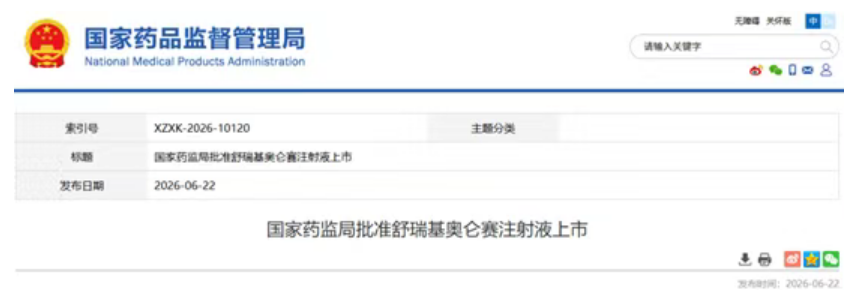
Recently, this novel drug has been officially introduced to the Precision Oncology Center of Foshan Fosun Chancheng Hospital. Our hospital is among the first batch of nationally certified medical institutions authorized to administer the therapy. Patients with CLDN18.2-positive advanced gastric cancer in the Guangdong-Hong Kong-Macao Greater Bay Area can now access this world-leading cellular immunotherapy locally without traveling far.
CAR-T Therapy Makes Breakthrough in Solid Gastric Tumors
For a long time, CAR-T therapies have only achieved remarkable efficacy against blood cancers. Technical bottlenecks related to tumor biomarkers and the tumor microenvironment have hindered their application in solid tumors. Suricabtagene Autoleucel, an original domestic CAR-T product, is the world's first approved CAR-T drug for solid tumors. It targets CLDN18.2, a biomarker specific to gastric cancer, and is intended exclusively for patients with CLDN18.2-positive advanced gastric or gastroesophageal junction adenocarcinoma who have progressed after at least two lines of systemic therapy.
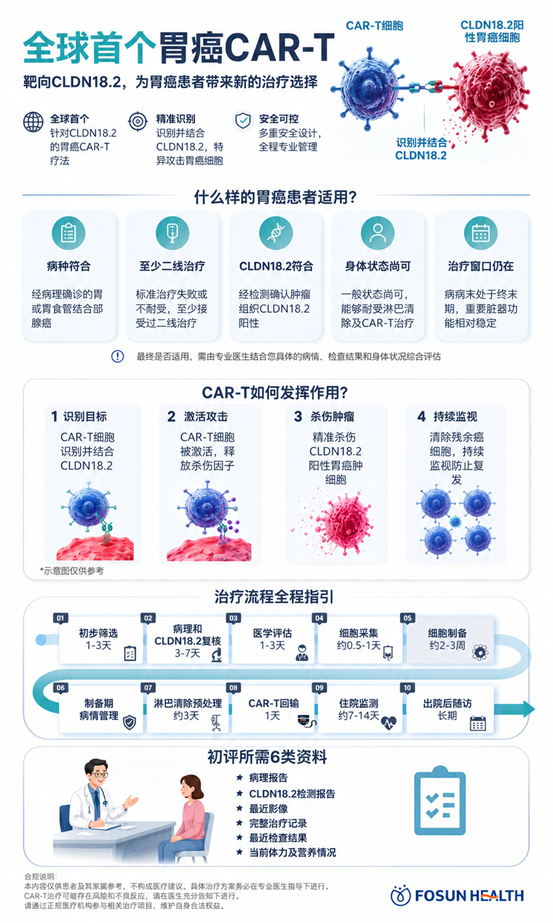
Eligibility Criteria for Patients
• Diagnosed with advanced gastric adenocarcinoma or gastroesophageal junction adenocarcinoma
• Disease progression following a minimum of two prior lines of systemic treatment
• Meeting the required CLDN18.2 expression level
• Physically fit to tolerate the therapy
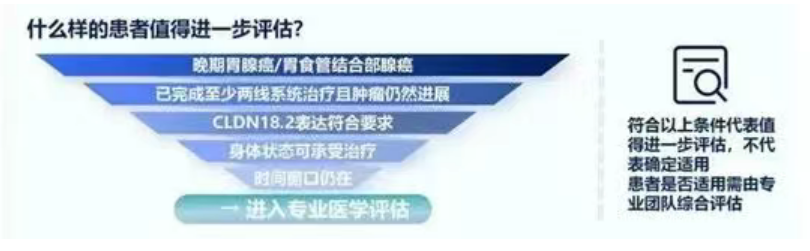
CLDN18.2 is a key biomarker associated with gastric cancer, yet it is not expressed in all gastric cancer patients. Prior to treatment initiation, specialized physicians will conduct a comprehensive evaluation incorporating pathological findings, molecular test results, previous treatment history and overall physical condition.
What Is CAR-T Therapy?
CAR-T therapy is a form of cellular immunotherapy. Simply put, clinicians first harvest the patient's own T cells, genetically modify and expand these cells ex vivo, then infuse the engineered cells back into the patient's body. The modified cells can specifically recognize and attack tumor cells.
Compared with conventional chemotherapy and certain targeted therapies, CAR-T features more defined targeting and highly individualized treatment regimens. It is not a conventional pharmaceutical drug; instead, the patient's own immune cells are “reprogrammed” to fight cancer.
Full-Chain Standardized CAR-T Diagnosis and Treatment System
Autologous CAR-T products carry high clinical risks. National regulatory authorities and pharmaceutical manufacturers mandate that medical institutions must complete specialized systematic training and obtain official manufacturer certification before delivering the full-course treatment with Suricabtagene Autoleucel Injection.
As one of the first medical institutions nationwide qualified to deliver standardized Suricabtagene Autoleucel therapy, Foshan Chancheng Hospital offers a complete end-to-end service workflow: patient assessment → leukapheresis collection → bridging therapy → lymphodepletion conditioning → cell infusion → long-term follow-up. The hospital adheres strictly to full standard operating procedures, staffs a dedicated CAR-T medical team, and is fully equipped with emergency devices and intervention protocols to rigorously manage risks including Cytokine Release Syndrome (CRS) and neurotoxicity.
The launch of this innovative drug has diversified treatment pathways for patients with gastric and gastroesophageal junction adenocarcinoma, highlighting the growing importance of precise biomarker testing and personalized clinical assessment. Patients diagnosed with advanced gastric cancer who wish to assess eligibility for CLDN18.2-targeted CAR-T therapy may visit the Precision Oncology Center at Foshan Chancheng Hospital for standardized clinical evaluation.
Disclaimer
This article serves solely for health science popularization and hospital news updates and does not constitute medical advice for diagnosis or treatment.
All specific indications, treatment regimens and risk management measures shall be subject to the official drug instructions and clinical evaluation by attending physicians.