2026-07-08
Pituitary neuroendocrine tumors (PitNETs) account for approximately 15% of all intracranial neoplasms, ranking among common intracranial lesions. The vast majority of these tumors are benign, yet they exhibit a broad spectrum of biological and pathological profiles. With the exception of prolactinomas, for which dopamine agonists constitute first-line pharmacotherapy, surgical resection serves as the primary treatment modality for most pituitary adenomas.
The transsphenoidal approach represents the standard surgical corridor for pituitary surgery, while craniotomy is reserved for highly selected complex cases, such as lesions with extensive subfrontal extension, lateral invasion into the temporal fossa, or complete encasement of major blood vessels. Microsurgical transsphenoidal techniques were pioneered by Cushing, then progressively refined by Dott, Guiot, Hardy and other scholars, before being largely superseded by endoscopic approaches by the late 1990s. At present, the endoscopic transnasal transsphenoidal approach has become the mainstream procedure at medical centers worldwide, attributable to its superior operative visualization, improved gross total resection rates, favorable endocrine outcomes, reduced sinus-related complications and shortened hospital length of stay.
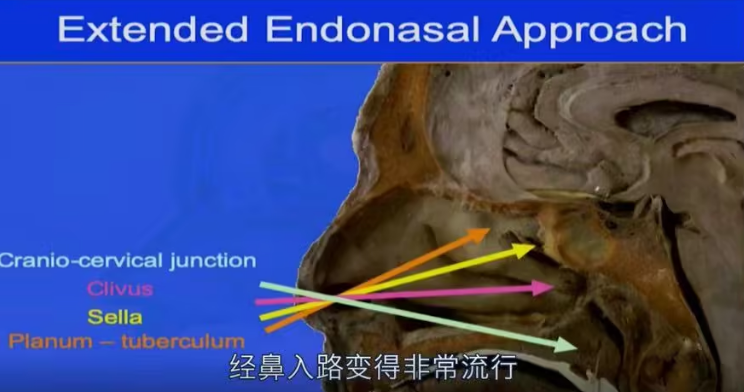
Skull Base Reconstruction: A Critical Determinant of Surgical Success
While pituitary adenoma surgery has entered the minimally invasive era, the quality of skull base reconstruction remains the core factor dictating postoperative outcomes. A retrospective cohort study enrolling 3,015 adult patients with pituitary adenomas identified independent risk factors for reconstruction failure: body mass index (BMI) > 40, sellar floor bony erosion, more than two prior pituitary surgeries, extensive circumferential skull base bone destruction, and previous cranial radiotherapy.
Clinical Case Illustration: Successful Resection of a High-Risk Giant Pituitary Adenoma
A 35-year-old male patient presented with persistent headache accompanied by fatigue, anorexia, impaired concentration and unsteady gait. Neuroimaging demonstrated a giant sellar and suprasellar pituitary adenoma complicated by obstructive hydrocephalus, with mass compression of the brainstem, third ventricle and cerebral aqueduct. Despite the substantial perioperative risk, the patient opted for surgical intervention.
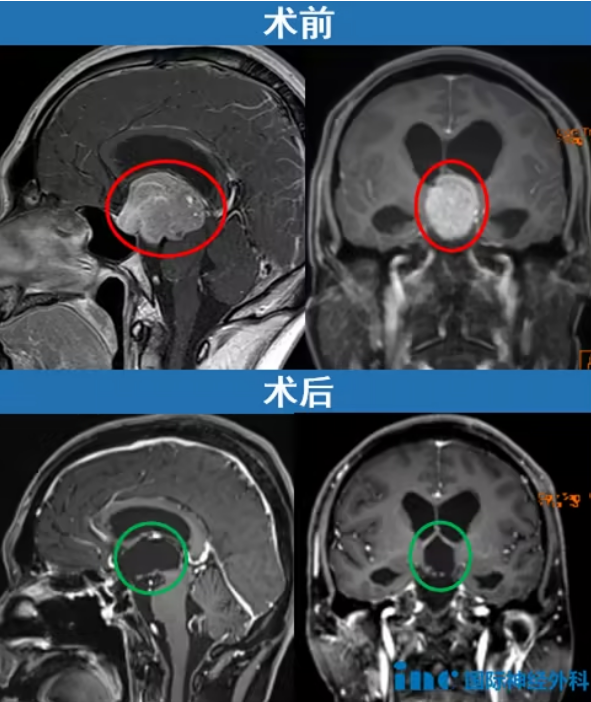
The giant adenoma was completely resected via endoscopic transnasal surgery performed by Professor Florian Fahlbusch of the International Neurosurgical Center (INC). The patient achieved smooth postoperative recovery. Professor Fahlbusch commented: “This was an extremely challenging operation, and I am pleased we achieved successful resection for you.” Addressing cerebrospinal fluid (CSF) rhinorrhea, one of the most prevalent postoperative complications, he noted: “Historically, the CSF leak rate following endoscopic transnasal surgery for chordomas stood at approximately 50%; advances in reconstructive techniques have lowered this figure to roughly 10% in recent years.”
Prevention of Surgical Complications and Optimized Reconstruction Algorithms
Postoperative CSF rhinorrhea constitutes the most common adverse event after endoscopic transsphenoidal surgery, often necessitating secondary reconstructive repair. Around 5% of affected patients develop secondary meningitis, which prolongs hospitalization. Preoperative planning must incorporate individualized skull base defect closure strategies and rigorous risk stratification for CSF leakage; key risk variables include BMI > 30, multiple prior surgeries, tumor size, pattern of suprasellar/parasellar extension, invasive histological features, and a history of radiotherapy.
The clinical research Closure strategy for endoscopic pituitary surgery: Experience from 3015 patients analyzed 3,015 adult patients who underwent single-nostril endoscopic transnasal pituitary resection performed by a specialized high-volume neurosurgical team between January 2006 and March 2022. Intraoperative CSF leaks requiring targeted reconstructive management occurred in 10.6% of the cohort (319 patients). Reconstructive protocols were personalized according to preoperative risk profiles: Foley balloon catheter-assisted closure was deployed for patients with sellar floor bony defects or BMI > 40, while multilayer repair using vascularized nasoseptal flaps was implemented for all other cases.
Surgical Efficacy and Statistical Outcomes
The study cohort comprised a female predominance (female-to-male ratio = 1.4), with a median age of 50 years (range 18–89 years). The overall postoperative CSF leak rate was 1% (29 patients), and meningitis developed in 0.8% (24 patients). Among cases complicated by intraoperative CSF leak, the long-term reconstruction failure rate was 3.4% (11 patients). This large-scale series of over 3,000 patients validates the reliability and reproducibility of standardized endoscopic skull base reconstruction for pituitary adenoma surgery.
Stepwise, algorithm-based reconstructive techniques satisfy individualized patient anatomical requirements while maintaining low closure failure rates. Although multiple protocols have been proposed to mitigate postoperative CSF rhinorrhea, no universal consensus exists regarding the optimal closure strategy for endoscopic pituitary surgery, with marked heterogeneity in reported complication rates across published studies.