2026-07-08
Prolactinomas rank among the most prevalent functional pituitary adenomas and occur far more frequently in women. As benign neoplasms originating from the anterior pituitary gland, their core pathological feature is excessive prolactin (PRL) secretion, which triggers systemic endocrine dysfunction. Typical manifestations in female patients include amenorrhea and irregular menstrual cycles. Some patients develop headache and visual deterioration secondary to tumor mass effect. Progressive tumor enlargement compresses adjacent cerebral tissue, triggering neurological manifestations such as headache and visual field defects; in severe cases, hypopituitarism may develop, presenting with hypothyroidism and adrenal insufficiency.
In general, pharmacotherapy effectively reduces serum prolactin concentrations, shrinks tumor volume and relieves clinical symptoms, achieving satisfactory long-term disease control in 80%–90% of patients. Nevertheless, a subset of patients ultimately require transnasal endoscopic surgery due to drug intolerance, suboptimal therapeutic response, or acute neurological compromise (e.g., rapid visual loss) from tumor compression.
Case 1: Complete Tumor Resolution After Eight Years of Medical Therapy
A 13-year-old girl (Patient A) presented with progressive visual loss. Cranial magnetic resonance imaging (MRI) revealed a giant sellar mass extending upward from the skull base deep into the intracranial cavity, with highly concerning radiological features. On Professor Schroeder’s recommendation, supplementary hormonal testing identified markedly elevated prolactin, confirming a diagnosis of prolactinoma.
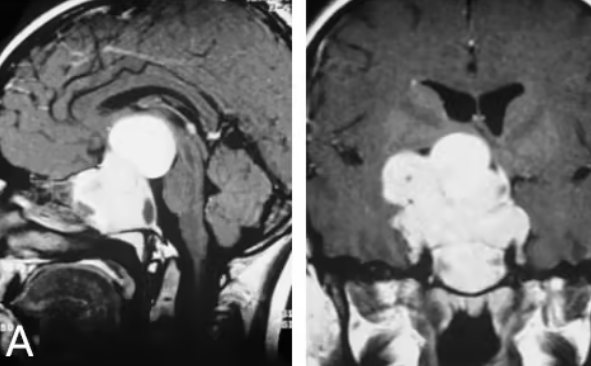
Her family was extremely anxious and feared that craniotomy would be mandatory. However, Professor Schroeder proposed an alternative therapeutic strategy: “Direct surgical resection carries high risks given the massive tumor size. We may initiate pharmacotherapy first and adjust subsequent plans based on treatment response.” The family consented to this regimen with relief. Under close serial surveillance by Professor Schroeder, the patient commenced treatment with the dopamine agonist pergolide.
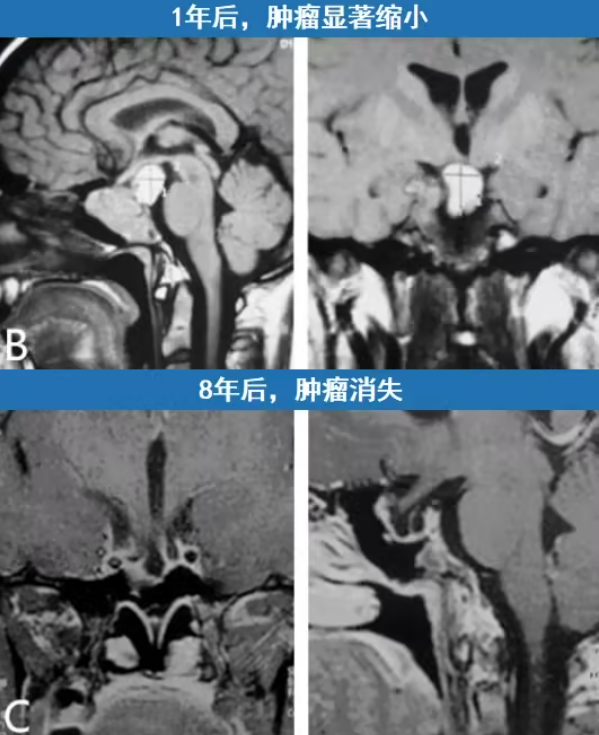
Fortunately, the medication yielded dramatic therapeutic benefits. The lesion shrank rapidly shortly after treatment initiation. Follow-up MRI one year later demonstrated profound tumor regression, and her visual impairment resolved entirely. After eight consecutive years of drug therapy, repeat imaging confirmed complete disappearance of the pituitary mass, with no adverse perturbations to other hormonal axes.
Case 2: Complete Endoscopic Resection for Medically Refractory Prolactinoma
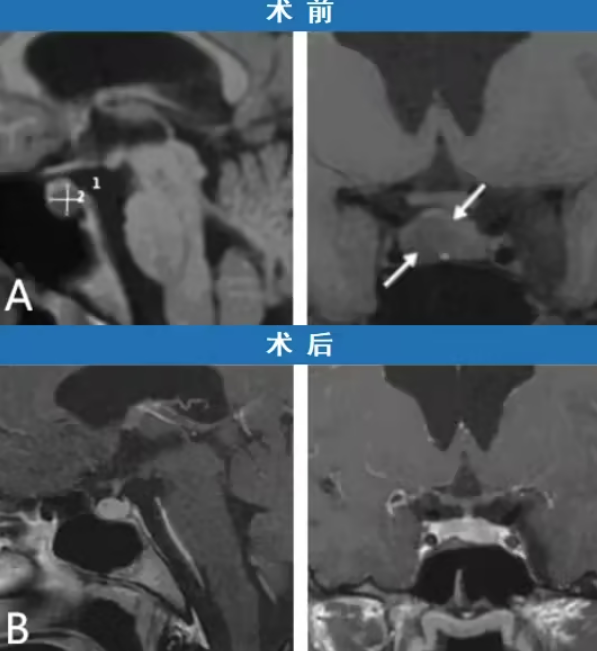
Patient B, who presented with amenorrhea, also received a prolactinoma diagnosis. Imaging showed the adenoma displaced normal pituitary parenchyma to the left. Professor Schroeder initially prescribed pergolide, a dopamine agonist, for medical management. Serial follow-up scans revealed no tumor shrinkage; instead, the lesion continued to expand progressively.
Given progressive tumor growth threatening the patient’s neurological function, her family declined continued watchful waiting. Professor Schroeder revised the treatment plan, discontinuing medical therapy in favor of transnasal endoscopic resection. The operation proceeded uneventfully, achieving gross total resection of the prolactinoma. One-year postoperative surveillance confirmed complete tumor extirpation with preserved intact pituitary function. Endocrine testing showed normalized serum prolactin and unremarkable secondary hormonal markers, eliminating the need for exogenous hormone replacement.
Clinical Treatment Guidelines for Prolactinomas
The core therapeutic goals for pituitary prolactinomas are to reduce serum PRL levels, restore normal gonadal axis function, induce tumor shrinkage or complete resolution, and prevent disease recurrence. Current mainstream interventions include pharmacotherapy, surgical resection and radiotherapy.
Dopamine receptor agonists serve as first-line agents for prolactinomas, with bromocriptine and cabergoline as the most widely prescribed options. This drug class effectively lowers serum PRL, reduces adenoma volume and rehabilitates gonadal endocrine function.
Surgical modalities are divided into transsphenoidal approaches and craniotomy. Endoscopic transsphenoidal surgery has become the standard surgical pathway for the vast majority of pituitary adenomas.
Professor Schroeder emphasizes the vital role of medical therapy for hormone-secreting pituitary adenomas (including prolactinomas and growth hormone-secreting adenomas). In particular, dopamine agonists and growth hormone antagonists normalize aberrant hormone levels and shrink tumor lesions, delaying or eliminating the need for surgery entirely.
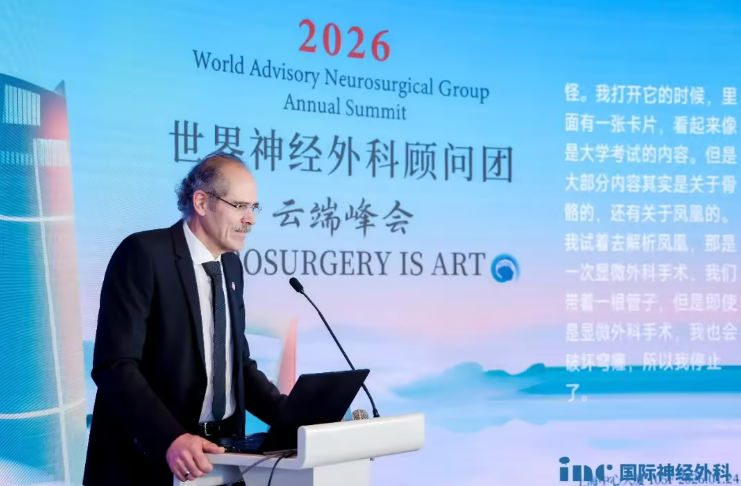
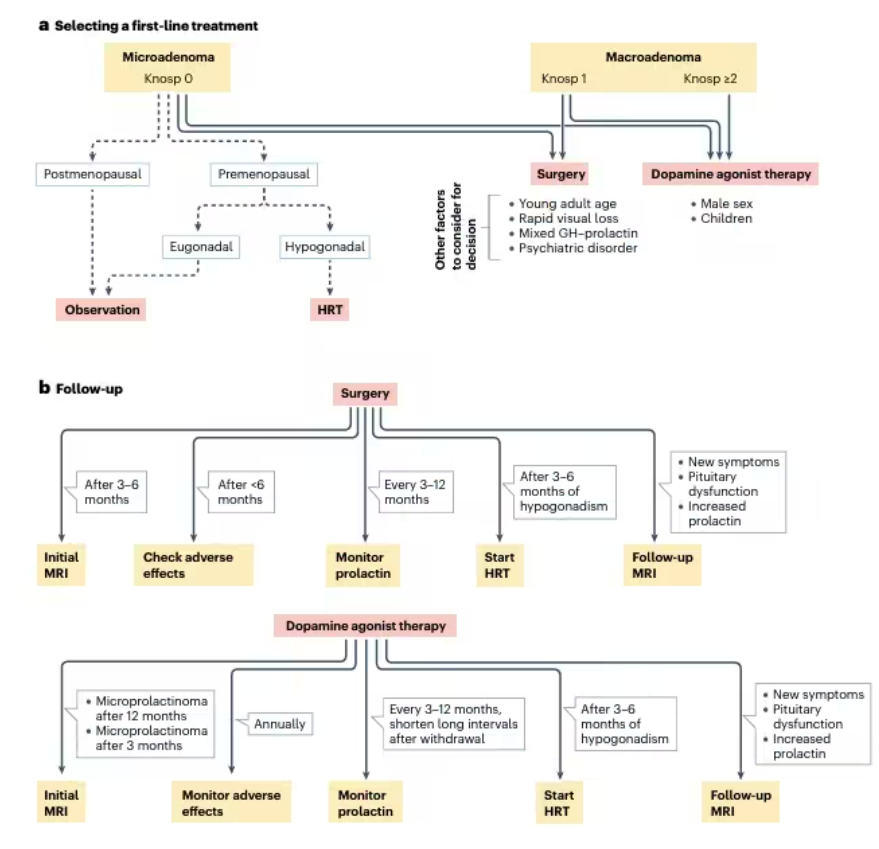
Surgical decision-making requires comprehensive evaluation of multiple factors: tumor size and morphology, baseline serum PRL concentration, therapeutic response to medication, overall patient physical status, personal treatment preferences, and future fertility requirements. The international consensus statement Diagnosis and management of prolactin-secreting pituitary adenomas: a Pituitary Society international Consensus Statement, co-authored by 36 global experts, states that surgical resection or dopamine agonist therapy may be selected for prolactinomas based on adenoma size, clinical manifestations and patient preference.

For patients with microadenomas, individualized regimens are formulated according to menopausal status, gonadal function, and patient preference for active surveillance or hormone replacement therapy (HRT). Key surveillance endpoints during follow-up include serial serum prolactin levels, longitudinal MRI changes, HRT demand, emerging complications or drug side effects, and eligibility for dopamine agonist discontinuation.
For recurrent or treatment-refractory disease, clinicians may escalate dopamine agonist dosage or evaluate surgical candidacy. Drug intolerance may be managed by switching to an alternative dopamine agonist or proceeding with surgery. All patients with prolactinomas are recommended to receive standardized long-term multidisciplinary care at a specialized pituitary tumor center.