2026-06-11
Trigeminal schwannomas (TSs) are relatively uncommon brain tumors, accounting for 1% of all intracranial tumors and 0.8% of all intracranial schwannomas. TSs originate from the Schwann cells of the nerve sheath, typically with an insidious onset and slow growth rate. Symptoms are determined by tumor location and may involve dysfunction of multiple cranial nerves, including ptosis, diplopia, facial numbness, facial paresthesia, facial pain, masticatory muscle weakness, facial palsy, and hearing loss.
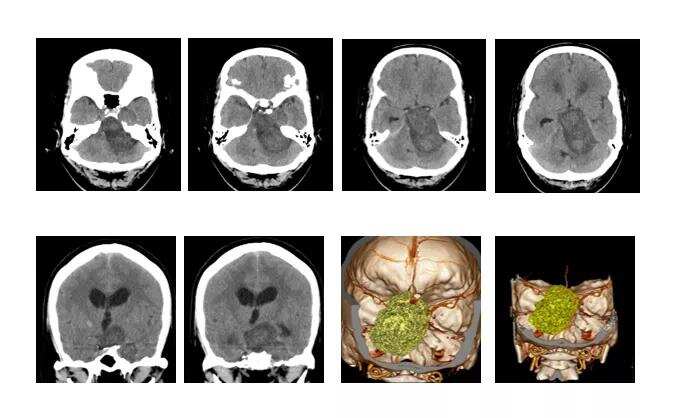
How Should Treatment for Trigeminal Schwannomas Be Selected?
The treatment strategy for trigeminal schwannomas is determined primarily by the patient's age, symptoms, severity of presentation, and tumor characteristics (size, location, and growth pattern). Three key principles must be borne in mind:
1. The initial treatment decision is of paramount importance. An ill-chosen treatment modality will not only fail to resolve the patient's symptoms but will also increase the difficulty of subsequent management.
2. Surgical infrastructure and the technical expertise of the operating surgeon are critical. Smaller trigeminal schwannomas generally present a lower degree of surgical difficulty; however, large tumors with extensive involvement or firm consistency remain highly challenging to treat. The operative technique is complex, and single-stage complete resection demands excellent surgical facilities, exceptional technical skill on the part of the operating surgeon, and unwavering determination.
3. Early detection and early treatment are equally essential. As a trigeminal schwannoma enlarges, surgical difficulty increases and progressive compression of surrounding structures gives rise to additional symptoms, such as facial palsy, gait instability, and hearing loss. General clinical recommendations are as follows:
For small tumors (typically less than 2 cm) in asymptomatic patients or in elderly patients, radiotherapy may be considered as a treatment option.
For larger tumors (≥2.5 cm) or patients presenting with clinical symptoms, radiotherapy generally cannot provide immediate symptom relief or achieve meaningful tumor reduction within a short timeframe. Moreover, the development of radiation necrosis may cause further tumor volume expansion, resulting in more severe compressive symptoms. In such cases, surgical resection is the superior treatment option.