2026-06-09
Trigeminal schwannomas are rare, slow-growing encapsulated tumors composed of Schwann cells. They are the second most common intracranial schwannomas, far less frequent than vestibular schwannomas, and follow a characteristically benign growth pattern. Intracranial trigeminal schwannomas are uncommon tumors, accounting for 0.07% to 0.3% of all intracranial tumors and 0.8% to 5% of all intracranial schwannomas. Patients typically present with symptoms of trigeminal nerve dysfunction, the most common of which is facial pain. Schwannomas may arise from any peripheral nerve, cranial nerve, or autonomic nerve.
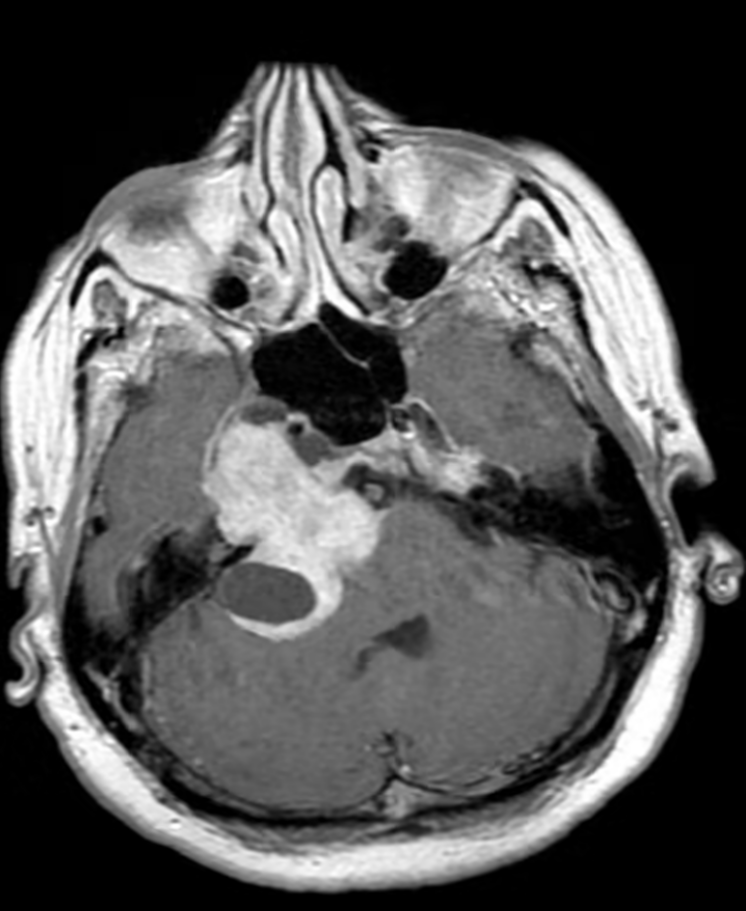
What Causes Trigeminal Schwannoma?
Tumors are abnormal growths resulting from the proliferation of aberrant cells that serve no physiological function. Cell division is regulated by tumor suppressor genes, which also play a role in repairing any damage sustained by DNA. Tumor suppressor genes are in constant opposition to oncogenes. When tumor suppressor genes are rendered dysfunctional by mutations that impair protein coding, dysregulated cell division and growth occur, leading to tumor development.
The body's natural defense mechanisms are designed to detect and eliminate abnormal cells under optimal conditions. However, tumors may produce substances that interfere with the immune system's ability to recognize tumor cells as aberrant, and tumor cells may ultimately overwhelm all internal and external checks on their growth.
The precise cause of schwannomas is not fully understood, but certain genetic disorders — such as neurofibromatosis — may increase susceptibility to this condition.
Early Detection of Trigeminal Schwannoma
Many patients with trigeminal schwannomas are entirely asymptomatic, while others present with facial pain or numbness, headache, and auditory disturbances. In rare and more severe cases, seizures may occur, and changes in mood, behavior, or cognitive function may also be present.
Diagnosis of trigeminal schwannoma is established through neurological examination in conjunction with imaging studies such as CT scanning and MRI. To determine whether the tumor is malignant or benign, biopsy of the tumor may also be necessary.
How Is Trigeminal Schwannoma Treated?
Treatment of skull base tumors such as trigeminal schwannomas involves various surgical approaches to tumor resection. The type of surgery depends on the location and size of the lesion but includes transnasal endoscopic surgery, craniotomy using an endoscope, and endoscope-assisted microsurgery — all of which are minimally invasive procedures. If the tumor is malignant or cannot be completely resected, postoperative radiotherapy may be recommended.
Intraoperative Monitoring: An Essential Component of Surgery
Intraoperative monitoring via somatosensory evoked potentials (SEP) and motor evoked potentials (MEP) is an indispensable component of this surgery. When the tumor extends into the posterior fossa and compresses the brainstem or cranial nerves, brainstem auditory evoked potentials (BAEP) are also required as part of the intraoperative monitoring setup, reducing the risk of cranial nerve injury.
Surgical Approach Selection for Trigeminal Schwannoma
The selection of a surgical approach for trigeminal schwannoma is primarily determined by the location of the tumor within this region. Tumors originating from the Gasserian ganglion or whose principal component lies within the cavernous sinus (Type A) may benefit from a temporal craniotomy with an anterolateral interdural approach with or without zygomatic osteotomy (Dolenc approach), or from a frontotemporal craniotomy with extradural temporal resection. Tumors arising from the root of the fifth cranial nerve (Type B) can be addressed via a straightforward suboccipital craniotomy and retrosigmoid approach. A combined approach may be employed for tumors extending into both the middle and posterior cranial fossae (Type C); in certain cases, a combined approach may be necessary, consisting of a temporal craniotomy combined with a presigmoid approach. For lesions spanning the middle to posterior fossa, a staged surgical resection may also be performed within a shorter overall operative timeframe. In such cases, we recommend that the initial approach target the more symptomatic component of the lesion, with the remaining approach for residual tumor deferred to two to three months later. Endoscope-assisted approaches may also be of benefit in complex cases in which the tumor extends into both the middle and posterior cranial fossae — such as the endoscope-assisted retrosigmoid supradural approach (EA-RISA) — which may facilitate gross total resection in these settings. Type D tumors may be resected via various approaches depending on which extracranial division of the trigeminal nerve is involved.
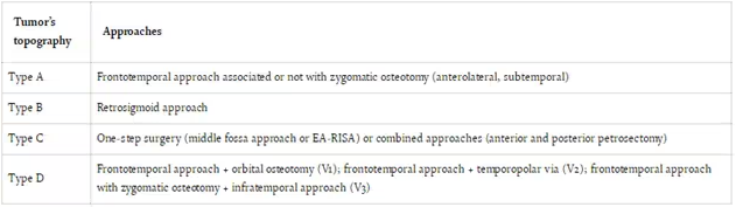
Source: Submitted September 22, 2017; Reviewed January 17, 2018; Published August 22, 2018. DOI: 10.5772/intechopen.74115
The Dolenc Approach
The Dolenc approach was developed by Slovenian neurosurgeon Professor Vinko Dolenc and is one of the classical approaches for resecting lesions of the cavernous sinus and its immediate vicinity. Professor Vinko V. Dolenc is an internationally renowned pioneer in skull base neurosurgery. He introduced the technique of extradural drilling of the anterior clinoid process, was the first to describe the Dolenc triangle, and developed the Dolenc approach for managing lesions of the central skull base region. He has reported among the largest surgical series of cavernous sinus operations in the world.
Professor Vinko V. Dolenc was born on June 29, 1940, in Ptuj, Slovenia, and received his education at the University of Ljubljana — Slovenia's oldest and largest institution of higher learning — where he obtained his medical degree in neurosurgery and a Doctor of Science degree. He subsequently joined the neurosurgical research faculty of that institution and rose through academic ranks to become Chairman of the Department of Neurosurgery. During his tenure, Professor Dolenc performed thousands of neurosurgical procedures, encompassing the treatment of aneurysms, arteriovenous malformations, cavernous malformations, meningiomas, vestibular schwannomas, and numerous other complex conditions. He also developed the complex central skull base approach that bears his name — the Dolenc approach. The technique of direct microsurgical repair of intracavernous vascular tumors has likewise been named after him. Professor Dolenc is currently an active member of 23 international neurosurgical societies.
As a member of the International Neurosurgical Advisory Group (WANG) under INC International Neurosurgeon's Circle, Professor Vinko V. Dolenc has been consistently committed to fostering the exchange, collaboration, and advancement of neurosurgical techniques between China and the international community. With the support of INC, he has brought cutting-edge treatment technologies and innovative management strategies to patients in China with refractory tumors, offering them new therapeutic options.
Reference: https://www.incsg.com/sanchaqiaoliu/sanchashenjing.html