2026-06-08
What Is a Trigeminal Schwannoma?
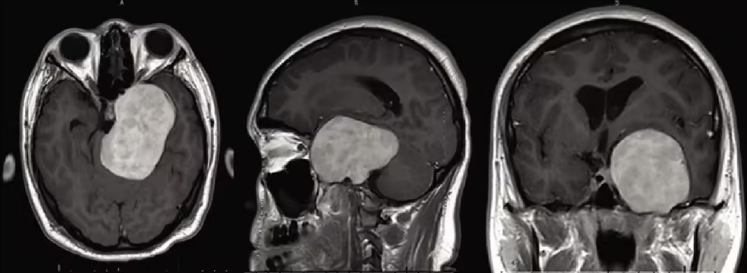
A trigeminal schwannoma is a peripheral intracranial schwannoma that arises at the skull base and originates from Schwann cells. Schwann cells are a type of glial cell that play a protective role in facilitating the transmission of information and signals by neurons within the peripheral nervous system. They accomplish this by forming a protective coating around nerve cells known as the myelin sheath.
Schwannomas are typically benign, or non-cancerous, and grow slowly. Although they do not invade brain tissue, they can exert pressure on the brain as they increase in size, and may also damage adjacent nerves as they enlarge. Trigeminal schwannomas are the second most common type of schwannoma, surpassed in frequency only by the more prevalent vestibular schwannoma.
What Causes Trigeminal Schwannoma?
Tumors are abnormal growths resulting from the proliferation of aberrant cells that serve no physiological function. Cell division is regulated by tumor suppressor genes, which also play a role in repairing DNA damage. Tumor suppressor genes are in constant opposition to oncogenes. When tumor suppressor genes are rendered dysfunctional by mutations that impair protein coding, dysregulated cell division and growth may occur, ultimately leading to tumor development.
The body's natural defense mechanisms are designed to detect and eliminate abnormal cells under optimal conditions. However, tumors may produce substances that interfere with the immune system's ability to recognize tumor cells as aberrant, and tumor cells may ultimately overwhelm all internal and external checks on their growth.
The precise etiology of trigeminal schwannomas is not yet fully understood, but certain genetic disorders — such as neurofibromatosis — may increase susceptibility to this condition.
Symptoms and Diagnosis of Trigeminal Schwannoma
Clinical presentation varies considerably, and some patients are entirely asymptomatic. Symptoms of trigeminal schwannoma may include facial pain or numbness, headache, and hearing disturbances. Additional symptoms may include seizures and cognitive or behavioral changes. Diagnosis is established following a thorough review of the patient's medical history and completion of physical and neurological examinations. The treating physician will use biopsy or imaging studies — such as MRI or CT scanning — to confirm the diagnosis and determine the optimal treatment approach.
How Is Trigeminal Schwannoma Treated?
Several distinct surgical approaches are available for the removal of skull base tumors. The choice of procedure depends on the tumor type, location, and additional factors including the patient's overall health status and whether the tumor is benign or malignant. Available approaches include minimally invasive transnasal endoscopic surgery, craniotomy performed using a minimally invasive endoscope, and endoscope-assisted microsurgery. If the tumor is malignant or cannot be completely resected, postoperative radiotherapy may be administered following surgery.