2026-06-05
Introduction: Trigeminal schwannoma is a relatively uncommon intracranial tumor arising from the trigeminal nerve sheath, growing primarily at the skull base and within the cranial cavity. Although its growth rate is relatively slow, the tumor enlarges progressively over time, compressing the surrounding nerves, vessels, and brain tissue and producing a range of clinical symptoms. For this reason, the earlier treatment is initiated, the better.
A 5 cm trigeminal schwannoma represents a serious clinical situation. From a purely volumetric standpoint, a tumor of this size already falls into the large category, and its compressive effect on surrounding structures is correspondingly greater. Furthermore, given the tumor's location at the skull base and within the cranium — in close proximity to multiple critical nerves and vessels — its growth affects not only trigeminal nerve function but may also damage adjacent neural and vascular structures, potentially leading to more serious consequences.
Although the growth rate of trigeminal schwannoma is generally slow, its degree of invasiveness should not be underestimated. As the tumor continues to enlarge, it becomes progressively more aggressive, potentially invading surrounding brain tissue and bone and further worsening the patient's condition. A 5 cm trigeminal schwannoma therefore demands serious attention and timely, appropriate intervention.
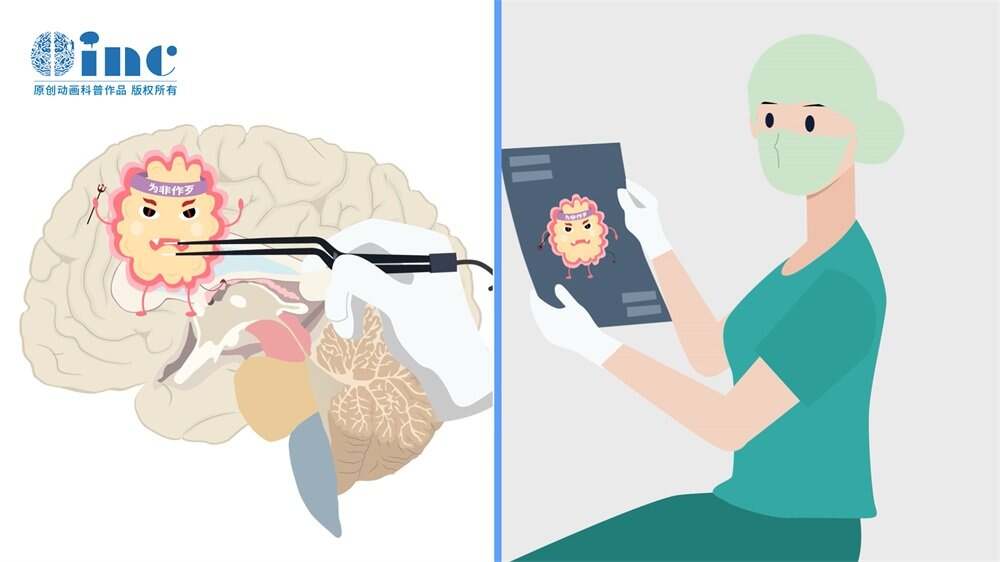
Specific Challenges in Treating a 5 cm Tumor
1. High surgical difficulty
The tumor's location — adjacent to multiple critical nerves and vessels — necessitates a larger operative exposure, with correspondingly higher risks of blood loss and infection.
2. Significant invasiveness
The tumor's invasive nature means it may encroach upon surrounding brain tissue and bone, further increasing the complexity and risk of surgery.
3. Elevated risk of postoperative recurrence
Because surgical resection cannot reliably eliminate every last tumor cell, the risk of recurrence following surgery is meaningful — and is particularly pronounced for large tumors.
4. Patient age and general health
The patient's age and overall physical condition are important determinants of treatment outcome. For elderly patients or those in poor general health, the risks and technical demands of surgery are greater.
Treatment Options
The primary treatment modalities for trigeminal schwannoma are surgical resection, radiotherapy, and pharmacological treatment, of which surgical resection is the preferred approach. Complete operative removal of the tumor can eliminate the lesion, relieve symptoms, and improve the patient's quality of life.
For a 5 cm tumor, however, surgical resection carries considerable inherent difficulty and risk. The tumor's deep location — at the skull base and within the cranium, immediately adjacent to critical neurovascular structures — requires the surgeon to meticulously dissect the tumor away from surrounding anatomy to avoid injury to normal tissue. The large tumor volume necessitates a correspondingly larger surgical exposure, raising the risk of intraoperative blood loss and infection. The tumor's invasive growth into surrounding brain tissue and bone demands careful intraoperative assessment of the extent of disease and a well-conceived surgical plan, with the overriding priority of maximizing patient safety.
Radiotherapy and pharmacological treatment also have roles in the management of trigeminal schwannoma. Radiotherapy employs high-energy radiation to destroy tumor cells and arrest tumor growth, while pharmacological agents are used primarily to control growth and palliate symptoms. For a 5 cm tumor, however, the efficacy of both radiotherapy and pharmacological treatment alone is relatively limited; surgical resection remains the cornerstone of treatment.
In summary, treating a 5 cm trigeminal schwannoma presents substantial challenges and carries significant risk. Patients should therefore take the time to thoroughly understand the risks and potential benefits of surgery, follow their physician's treatment recommendations, and work collaboratively with their clinical team to optimize outcomes. Physicians, in turn, must formulate a carefully individualized treatment plan based on the patient's specific circumstances and tumor characteristics, with the aim of preserving the patient's safety and quality of life to the greatest possible extent.
The above content is provided for informational reading purposes only and does not constitute medical advice or treatment guidance. For further information on schwannoma, please contact us or visit the INC official website and public account. INC is a physician group dedicated to academic exchange among expert neurosurgeons worldwide. Its affiliated faculty members include members of the World Federation of Neurosurgical Societies (WFNS) and various international neurosurgical organizations, editors-in-chief of leading international neurosurgical journals, and neurosurgical authorities whose names have been given to surgical techniques and anatomical structures in standard neurosurgical textbooks.