2026-06-04
One Surgical Case Example
Introduction: This case was treated by Professor Henry W.S. Schroeder, a member of the World Advisory Neurosurgical Group (WANG) under the INC International Neurosurgeons Circle, and former Chairman of the Endoscopy Committee of the World Federation of Neurosurgical Societies (WFNS). Under Professor Schroeder's skillful hands, a craniotomy assisted by neuroendoscopy was performed, achieving complete tumor resection.
The patient, a 57-year-old individual, presented with left-sided facial numbness. Magnetic resonance imaging (MRI) revealed a trigeminal schwannoma approximately 2 cm in diameter located in the cerebellopontine angle region.
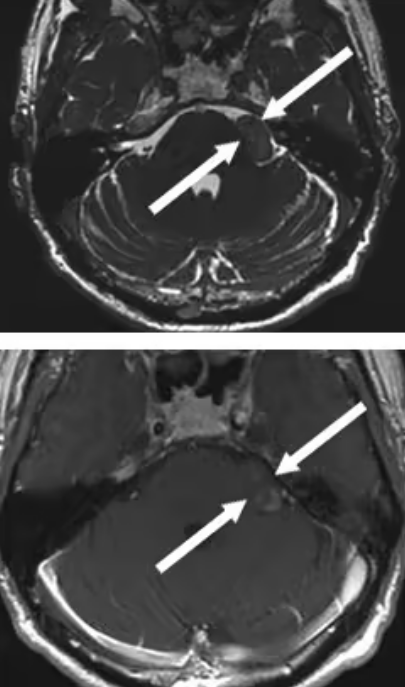
MRI shows a tumor in the patient's cerebellopontine angle region, as indicated by the arrow.
Professor Schroeder first performed a craniotomy, creating a small opening in the patient's skull. The size of this opening was approximately 2 x 2.5 cm, sufficient to allow surgical instruments to enter and expose the operative field. Through this opening, Professor Schroeder could clearly visualize the structures of the cerebellopontine angle and successfully expose the precise location of the tumor.
During the surgery, Professor Schroeder employed a "combined dual-endoscope" technique using both a microscope and a neuroendoscope. Under this dual visual control, he precisely identified the tumor boundaries and meticulously dissected the trigeminal schwannoma from the surrounding normal nerves and vascular structures. Through his exquisite surgical skills, Professor Schroeder successfully achieved complete resection of the trigeminal schwannoma while maximally protecting the patient's neurological function and avoiding potential postoperative complications.
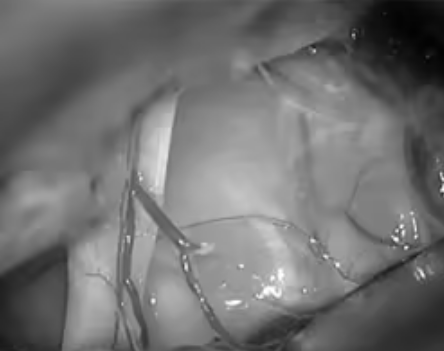
Visual control of the tumor under the surgical microscope.
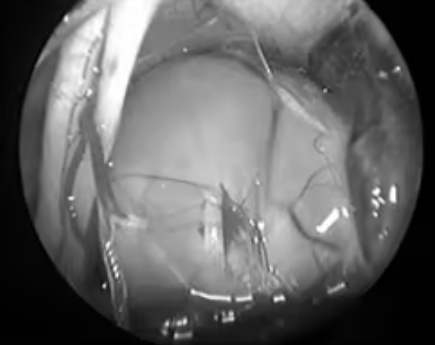
Visual control of the tumor under the neuroendoscope.
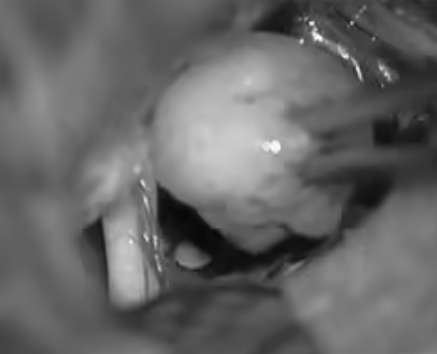
Dissecting and removing the tumor from sensitive facial nerve fibers.
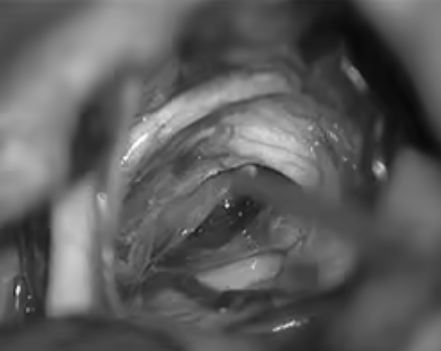
Final inspection showing complete tumor removal with preservation of facial nerve integrity.
After the surgery, the patient's hearing was preserved without any decline or loss. Furthermore, the preoperative facial numbness completely resolved, and normal facial sensation was restored. This indicates that the protective measures for neural structures during the operation were appropriate, effectively avoiding potential postoperative neurological deficits and thus ensuring the patient's quality of life.
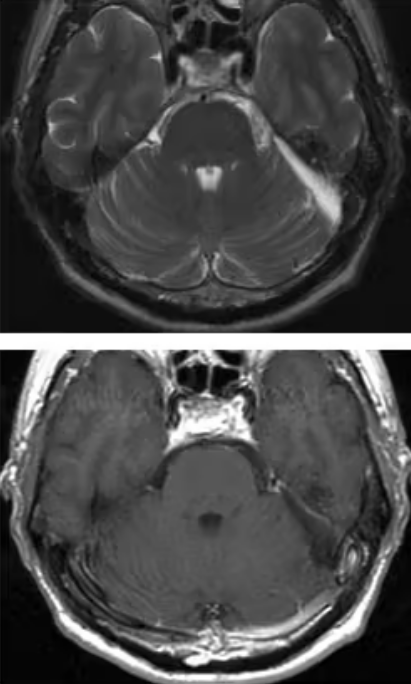
Postoperative MRI image showing complete tumor resection.
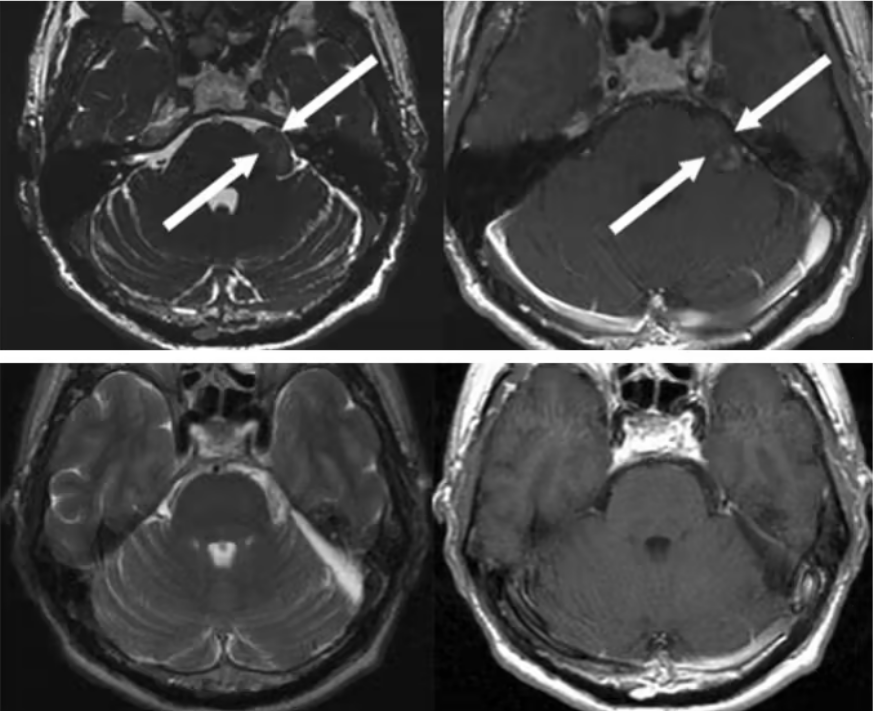
Preoperative and postoperative comparison images.
The Seven Major Surgical Difficulties
• Anatomical Complexity: The trigeminal nerve originates from the brainstem, traverses multiple skull base foramina, and has a deep distribution, surrounded by the brainstem, cavernous sinus, internal carotid artery, and multiple cranial nerves. This complex anatomical relationship makes the selection of the surgical approach and tumor exposure difficult.
• Deep Tumor Location: Trigeminal schwannomas are deeply located with complex adjacent structures, resulting in high surgical difficulty and risk. The tumor may be located in the middle and posterior cranial fossae and may extend both intracranially and extracranially, making complete resection difficult intraoperatively and leading to a high postoperative recurrence rate.
• Functional Preservation: One of the main complexities of surgery is selecting the correct surgical approach to achieve maximal resection with minimal complication rates while preserving trigeminal nerve function. Trigeminal schwannomas may involve the cavernous sinus and extend into the posterior fossa. Therefore, skull base approaches offer many advantages, such as shortening the distance to the lesion, eliminating brain retraction, facilitating work under the temporal lobe, while preserving draining veins beneath the intact dura mater.
• Surgical Approach Selection: For most trigeminal schwannomas, a supratentorial approach is preferred to reduce injury to the posterior fossa cranial nerves and cerebellum. However, for tumors primarily located in the left posterior fossa, an infratentorial approach is used to reduce impact on language function. The choice of surgical approach is crucial for achieving total resection, improving preoperative neurological deficits, and reducing postoperative neurological deficits.
• Risk of Complications: Common surgical complications include bleeding, infection, and nerve injury. Among these, nerve injury is a common complication, potentially leading to symptoms such as facial numbness, pain, and facial palsy. Additionally, surgery can cause serious complications such as increased intracranial pressure and cerebral edema, which may be life-threatening.
• Adhesion of the Tumor to Critical Structures: Trigeminal schwannomas are relatively soft in consistency. For large, multiloculated trigeminal schwannomas predominantly located in the middle cranial fossa, total resection can be achieved via a middle fossa extradural approach. However, the tumor typically compresses and displaces the brainstem, cranial nerves, and cavernous sinus. Under microscopic visualization, sharp anatomical dissection is often possible. Incomplete resection is usually due to inadequate exposure.
• Postoperative Recurrence: The recurrence rate after trigeminal schwannoma surgery is influenced by multiple factors, including tumor type, extent of resection, pathological grade, etc. Generally, completely resected tumors have a low recurrence rate, while partially resected or biopsied tumors have a higher recurrence rate.
EANS Consensus
The Skull Base Section of the European Association of Neurosurgical Societies (EANS) published a systematic review and consensus statement on the management of non-vestibular schwannomas in adult patients. In Part II, trigeminal and facial nerve schwannomas (CN V, VII) are discussed in detail.
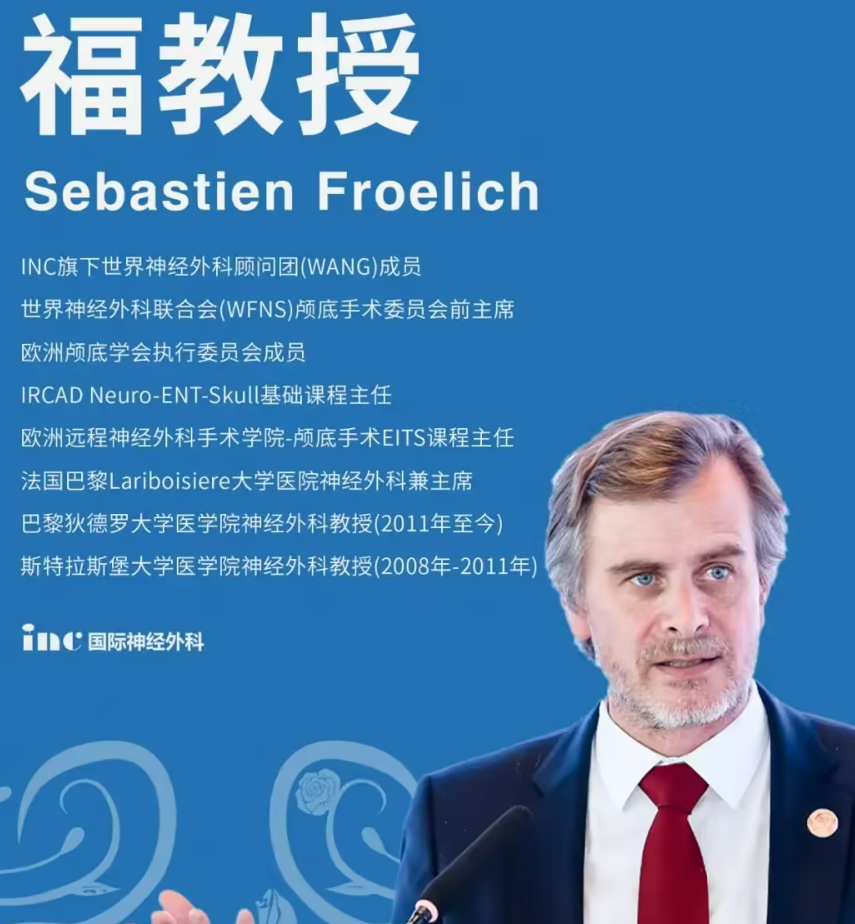
Two members of the INC World Advisory Neurosurgical Group (WANG), Professor Schroeder and Professor Sebastien Froelich (former Chairman of the WFNS Skull Base Surgery Committee), both participated in the research and compilation of this work.
Paper published in the journal Acta Neurochirurgica: The European Journal of Neurosurgery titled: "Management of non-vestibular schwannomas in adult patients: a systematic review and consensus statement on behalf of the EANS skull base section Part II: Trigeminal and facial nerve schwannomas (CN V, VII)"
Anatomy of the Trigeminal Schwannoma
Trigeminal nerve fibers connect to the brainstem at the mid-portion of the pons on its ventral side, consisting of a large sensory root and a smaller medial motor root. These fibers extend upward to the petrous ridge, traverse the cerebellopontine cistern, and exit the posterior cranial fossa through the trigeminal foramen (porus trigeminus). After passing through the trigeminal foramen, the fibers other than the motor root converge to form the trigeminal ganglion (also known as the semilunar or Gasserian ganglion).
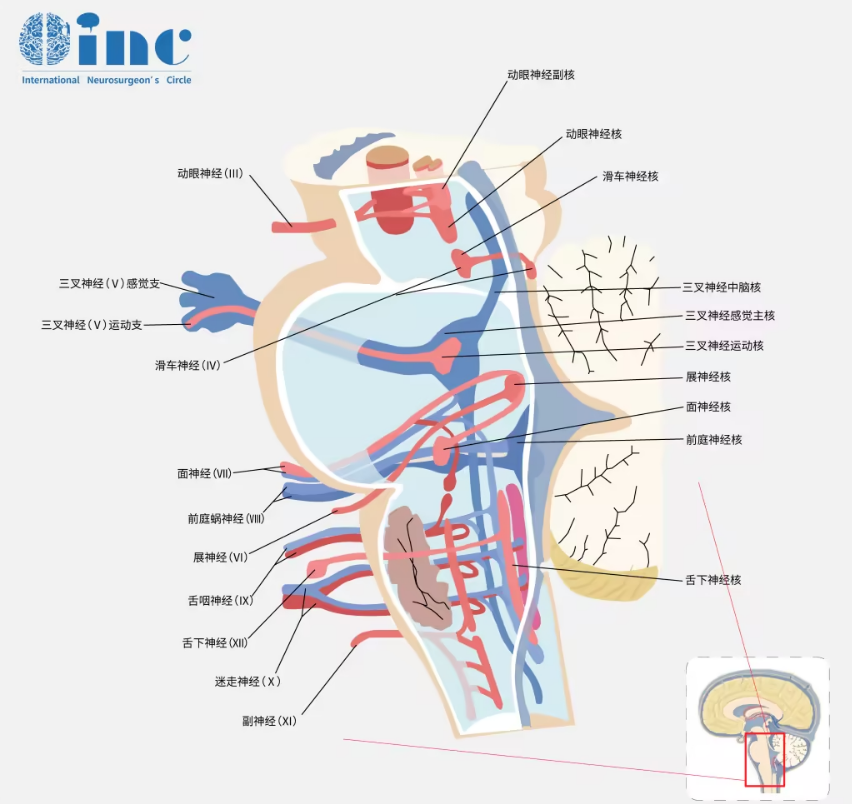
The trigeminal ganglion is located within Meckel's cave, which is formed by the dura mater and arachnoid mater and is shaped like a "three-fingered glove." Each "finger" corresponds to a branch of the trigeminal nerve. The ophthalmic branch (V1) runs along the lateral wall of the cavernous sinus and enters the orbit. The maxillary branch (V2) passes through the dura mater below the fusion point of the medial wall of the cavernous sinus dura and exits the cranial cavity through the foramen rotundum. The mandibular branch forms the mandibular nerve, containing sensory fibers and motor fibers that innervate the masticatory muscles.
Treatment Options for Trigeminal Schwannoma
Two main focuses of trigeminal schwannoma surgery: the surgical approach and the surgical goal (complete resection or subtotal resection followed by radiotherapy).
When performing surgical treatment, selecting an appropriate surgical approach is very important to maximize tumor resection while minimizing the risk of complications. Currently, various surgical techniques exist, including traditional craniotomy, endoscopic surgery, and endoscope-assisted craniotomy. With the development of microsurgical techniques and skull base approaches, the surgical treatment of trigeminal schwannoma has become safer, the risks of mortality and disability have decreased, and the tumor resection rate has improved.
The endoscopic endonasal approach (EEA) technique has been widely used in treating tumors of the pterygopalatine fossa, infratemporal fossa, and Meckel's cave. Compared to traditional microsurgery, endoscopic endonasal surgery offers several advantages, such as reduced brain retraction, less invasiveness, and a clearer surgical field. However, endoscopic approaches also have certain drawbacks, such as a relatively higher risk of cerebrospinal fluid leakage and the internal carotid artery potentially limiting the surgical working space.
Endoscopic techniques for accessing Meckel's cave are a research hotspot. Access to Meckel's cave can be achieved via an anteromedial route, known as the expanded endonasal approach (EEA) via the transmaxillary route. For tumors located in the posterior cranial fossa ventral to the brainstem, this approach can be combined with a transclival approach. This technique provides an effective route for treating tumors extending into the infratemporal fossa and Meckel's cave. The endonasal approach is also considered an alternative for surgical resection when a biopsy is required and a percutaneous biopsy is not feasible or unsuccessful.
Stereotactic radiosurgery (SRS) can be used as primary or adjunctive treatment following subtotal resection, or for residual tumors that grow postoperatively. Traditionally, most experts have favored maximal safe surgical resection for trigeminal schwannomas. Common problems after SRS are central necrosis and increased tumor volume, which often lead to cranial nerve dysfunction. A study by Ji et al. indicated that after SRS, 27% (6 cases) of patients developed new or worsened cranial nerve symptoms, with 50% (3 cases) of these symptoms being permanent. This study also confirmed this, particularly noting that tumor extension in the cavernous sinus region is especially likely to lead to new cranial nerve dysfunction.
Summary
This article represents the consensus opinion of the working group on the treatment of trigeminal schwannomas. The treatment goal is to achieve the greatest possible extent of tumor resection while ensuring patient safety and preserving neurological function without damage. Choosing the appropriate surgical approach requires careful consideration. For most trigeminal schwannomas located in the middle cranial fossa, surgery can be safely performed via a subtemporal extradural middle fossa approach.
When surgical conditions are not suitable, radiotherapy can serve as an adjunctive treatment for small to medium-sized tumors, residual tumors, or recurrent tumors. For trigeminal schwannomas that cannot be completely resected, a strategy of initial surgical resection followed by radiotherapy to control residual tumor can effectively reduce the risk of new-onset cranial nerve dysfunction and improve the patient's overall prognosis.
International Schwannoma Experts
Professor Henry W.S. Schroeder (Germany)
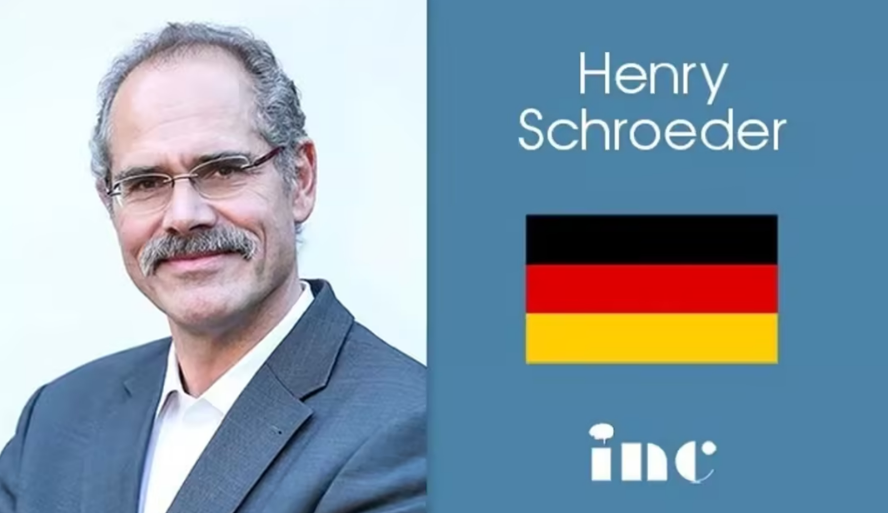
• Former Chairman of the Endoscopy Committee of the World Federation of Neurosurgical Societies (WFNS)
• Former President of the European Society of Neuroendoscopy
• Former President of the German Society for Neuroendoscopy and Neuronavigation
• Professor and Chairman of Neurosurgery at the University of Greifswald, Germany
• Member of the Scientific Committee of the German Skull Base Society
Professor Schroeder is a Professor and Chairman of Neurosurgery at the University of Greifswald (one of the oldest universities in the world, with three Nobel Prize laureate alumni) in Germany. He is also a member of the German Society of Neurosurgery, the Academy of Neurosurgeons, and the American Association of Neurological Surgeons. His main research areas include the treatment of pituitary adenomas, meningiomas, and other intracranial tumors, with a focus on neuroendoscopic surgery, micro neurosurgery, and micro-skull base surgery.
Professor Schroeder enjoys a high reputation internationally in the field of neuroendoscopic surgery, with over 20 years of experience in consulting on neurosurgical diseases. He has expertise in multiple areas, including endoscopic neurosurgery (hydrocephalus, cysts, intraventricular lesions), endoscopic skull base surgery (meningiomas, vestibular schwannomas, epidermoid cysts), endonasal endoscopic skull base surgery (pituitary adenomas), minimally invasive neuronavigated intracranial surgery, peripheral nerve surgery, and epilepsy surgery. He is particularly skilled in minimally invasive endoscopic endonasal single-nostril surgery for pituitary adenomas. In the cases of pituitary adenomas and meningiomas treated by his neuroendoscopic surgery, both the resection rate and cure rate are high, and the recurrence rate is relatively low.
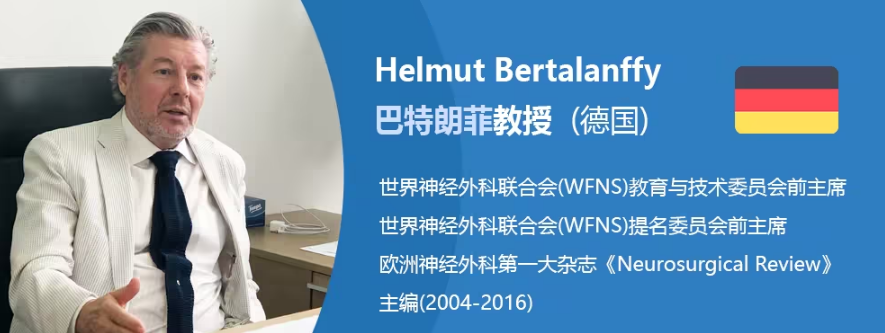
Professor Helmut Bertalanffy (Germany)
Professor Sebastien Froelich (France)
Reference: https://www.incsg.com/sanchaqiaoliu/4719.html