What is Melanoma?
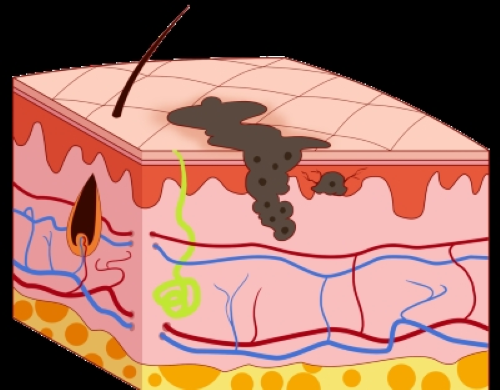
Melanoma is a malignant tumor arising from the cancerous transformation of melanocytes. In its early stages, it typically presents as a raised, pea-sized papule or nodule on the skin, appearing gray-black or brown in color.
What is the Current Status of Melanoma in Indonesia?
Melanoma is relatively uncommon among malignant tumors in Indonesia, with approximately 1,200 new cases reported in 2022, accounting for about 15% of all skin malignancies. Due to low early diagnosis rates and its aggressive nature, the overall 5-year survival rate is only 50-60%, significantly lower than the 90% seen in developed countries like Australia.
Regarding risk factors, Indonesian melanoma patients are primarily influenced by three major factors: Firstly, ultraviolet (UV) exposure, where intense solar radiation in the equatorial region leads to a threefold increase in incidence among outdoor workers. Secondly, genetic factors, with CDKN2A gene mutations found in some familial cases. Additionally, chronic trauma and inflammation are considered important triggers for acral melanoma, particularly repeated friction injuries on the soles of the feet.
What are the Symptoms of Melanoma?
· Color: Most malignant melanomas have an uneven mix of brown, black, red, white, or blue colors. Be concerned if an existing mole changes color.
· Border: The borders of a suspicious mole are often irregular and jagged, caused by the tumor spreading outwards or undergoing spontaneous regression.
· Surface: The surface of a changing mole is often not smooth. It may be rough and accompanied by scaly or flaky peeling. Sometimes there may be oozing or bleeding. The lesion may be raised above the skin surface.
· Shape & Surroundings: The skin around the lesion may become swollen or lose its normal skin luster, turning white or gray.
· Sensation: The affected mole often causes local itching, a burning sensation, or tenderness. The changing mole might not only alter itself but may also be accompanied by the appearance of many smaller dark moles on the surrounding skin.
What are the Conventional Diagnostic Methods for Melanoma?
· Laboratory Tests: Complete blood count, liver and kidney function tests, Lactate Dehydrogenase (LDH), and tumor markers.
· Imaging Studies: Ultrasound is used to assess regional lymph nodes and characterize subcutaneous nodules. Non-contrast + contrast-enhanced CT and MRI are used to evaluate treatment response. PET-CT provides a comprehensive assessment of lymph node involvement and distant organ metastasis.
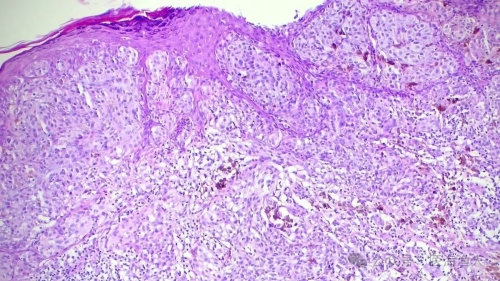
· Lesion Biopsy: Methods include excisional biopsy, incisional biopsy, and punch biopsy. Shave biopsy is generally not recommended. Excisional biopsy is routinely recommended with a margin of 0.3–0.5 cm. The incision should follow the natural skin tension lines (e.g., along the long axis on limbs).
What are the Treatment Options for Melanoma?
Surgical Treatment
Overall, most early-stage melanomas can be cured by surgery.
· Stage I-II: Wide local excision of the primary lesion is recommended (the extent of surgery is determined by the depth of invasion). Sentinel lymph node biopsy (SLNB) is recommended for patients with a tumor thickness >1 mm or the presence of ulceration. SLNB is typically not recommended for primary tumors <0.75 mm thick. For tumor thickness between 0.76-1 mm, SLNB may be considered based on clinical factors.
· Stage III: In addition to wide local excision, regional lymph node dissection is recommended.
· Stage IV: Surgery may also be recommended for isolated metastases.
Radiation Therapy
Indications for radiotherapy include:
1. Inability to tolerate surgery.
2. Positive surgical margins when a second surgery is not feasible.
3. Inadequate surgical margins from the primary excision where re-excision with wider margins is not possible.
4. Adjuvant therapy after lymph node dissection, palliative radiotherapy for brain and bone metastases, and treatment of small or medium-sized uveal melanoma.