
Prostate cancer begins in the prostate gland, a small walnut‑shaped organ that produces seminal fluid. It is one of the most common cancers in men, often growing slowly, and when detected early, it is highly treatable with excellent long‑term outcomes.
Globally, prostate cancer is the second most common cancer in men, with over 1.4 million new cases diagnosed annually. Many cases are asymptomatic in early stages, but timely intervention can still open a window for curative outcomes — so prompt medical evaluation, especially for those at risk, is crucial.
China sees approximately 150,000 new cases of prostate cancer each year, with incidence rising rapidly due to aging and improved screening. At Fosun Health, this growing case volume gives our expert teams a depth of experience that ensures precision in every aspect of care — from accurate early diagnosis and risk stratification to robotic‑assisted surgery, advanced radiotherapy, and individualized systemic therapy.
Every prostate cancer program has surgery, radiation, and hormones. Here is what makes ours different:
"If I have the surgery, will I be incontinent? Will I ever be intimate with my partner again?"
The challenge: For men with prostate cancer, this fear outweighs even the fear of death itself. The prostate sits millimeters from the external urethral sphincter (the muscle that controls urine flow) and the neurovascular bundles (the nerves and vessels that enable erections). Traditional open surgery damages these structures in a substantial proportion of patients—leaving them dependent on pads and medications for the rest of their lives.
Our answer: Robotic nerve-sparing radical prostatectomy that treats the cancer without taking your manhood:
- Da Vinci Robot: "3D Eyes and Tremor-Free Hands" : The robot provides 10–15× magnified 3D vision and 540° wristed instruments that operate in the narrow, confined space deep in the pelvis. The surgeon can see the neurovascular bundles and urethral sphincter in sub-millimeter detail—preserving them with precision impossible in open surgery.
- Bilateral Nerve-Sparing Technique: For appropriately selected patients, we meticulously dissect the prostate away from both neurovascular bundles—maximizing the chance of erectile function recovery without compromising cancer control.
- Urethral Sphincter Preservation: By preserving maximum urethral length and avoiding thermal injury near the sphincter, continence rates exceed 90% in experienced hands—most men are pad-free within weeks to months.
- Retzius-Sparing (Posterior) Approach: For select patients, this novel robotic approach further accelerates continence recovery—many men are dry immediately after catheter removal.
What this means for you: You do not have to choose between curing the cancer and remaining the man you are. With robotic precision, we remove the cancer while protecting the nerves and muscles that matter most.
"I do not want surgery at all. Is there a way to destroy the cancer while keeping my prostate—and my function—completely intact?"
The challenge: Many men are simply not candidates for surgery due to age, comorbidities, or personal preference. Others want to avoid any risk of incontinence or erectile dysfunction. External-beam radiation can work, but conventional protocols require 7–8 weeks of daily treatment—and the radiation margin often damages the bladder, rectum, and sphincter.
Our answer: CyberKnife M6 stereotactic body radiotherapy (SBRT) with prostate-specific precision:
- 5 Sessions, Not 40: CyberKnife delivers ablative radiation doses in just 1–5 sessions (each under 1 hour), compared to 7–8 weeks of daily conventional radiation. You are done in days, not months.
- 0.1mm Precision with Sphincter Protection: The CyberKnife's real-time tracking follows the prostate's subtle motion and converges radiation from thousands of angles. The urethral sphincter, neurovascular bundles, bladder neck, and rectal wall receive near-zero radiation dose. This is what makes CyberKnife uniquely suited for prostate cancer.
- International 25-Year Track Record: CyberKnife has treated prostate cancer for over a quarter-century with published long-term data showing cancer control rates equivalent to surgery, with lower rates of severe incontinence and rectal toxicity than conventional radiation.
- Iodine-125 Seed Implantation (Brachytherapy): For select low-risk patients, we also offer permanent seed brachytherapy—implanting tiny radioactive seeds directly into the prostate under image guidance. One procedure, continuous internal radiation over months, minimal impact on surrounding organs.
What this means for you: If surgery is not your path, CyberKnife offers a genuine curative alternative—non-invasive, completed in a handful of sessions, with long-term cancer control and functional preservation that rivals or exceeds conventional radiation.
"My PSA is rising after treatment, and the bone scan shows spots. Is this the beginning of the end?"
The challenge: Biochemical recurrence (rising PSA after surgery or radiation) and oligometastatic bone disease are terrifying milestones. Many men are told "watch and wait" until widespread metastases develop—or are put on lifelong hormonal therapy with debilitating side effects (hot flashes, osteoporosis, muscle loss, metabolic syndrome, loss of libido).
Our answer: Early, aggressive, multi-modal salvage therapy that treats recurrence and metastases before they multiply:
- Oligometastatic Radiosurgery: For 1–5 bone metastases, CyberKnife M6 delivers 0.1mm precision ablation—destroying the lesions without a single incision, preserving bone strength, and preventing pathological fractures. For bone pain, cryoablation naturally numbs pain fibers while destroying the tumor.
- Iodine-125 Seeds for Bone Lesions: For painful vertebral or pelvic metastases, radioactive seeds implanted directly into the bone deliver continuous local radiation—controlling pain and preventing fracture.
- Pelvic Salvage for Local Recurrence: For local recurrence after radiation, salvage cryoablation or high-intensity focused ultrasound (HIFU) destroys recurrent tissue through the perineum—no repeat radiation, no open surgery.
- Tumor Hyperthermia for Radiosensitization: For widespread bone metastases receiving palliative radiation, regional hyperthermia to 40–43°C makes cancer cells more vulnerable to the same radiation dose—improving pain control and local tumor destruction without increasing toxicity.
- Metastasis-Directed Therapy (MDT): Rather than immediately plunging into lifelong hormonal suppression, our approach targets visible metastases aggressively while sparing you from premature androgen deprivation side effects.
What this means for you: A rising PSA or a few bone spots does not mean inevitable progression. We attack recurrence and metastases early and precisely—buying you years of quality life before systemic therapy becomes necessary.
"I have been on hormone therapy for years, and now my PSA is rising again. They say it is castration-resistant. What is left for me?"
The challenge: Metastatic castration-resistant prostate cancer (mCRPC) is where the disease becomes truly lethal. When first-line androgen deprivation therapy (ADT) and antiandrogens fail, the landscape can feel barren. Next-generation hormonal agents, PARP inhibitors, and PSMA-targeted radioligand therapies exist—but in many regions they are unavailable, unaffordable, or approved years later.
Our answer: In China, the next line is mapped to your tumor's genetics—and it is accessible at a fraction of the cost:
- Next-Generation Hormonal Agents: Abiraterone, enzalutamide, darolutamide, and apalutamide are all approved and in routine use in China—for both metastatic hormone-sensitive and castration-resistant disease. These extend survival by years, not months.
- PARP Inhibitors: For BRCA1/2 or ATM-mutated mCRPC, olaparib and rucaparib are approved—targeting the DNA repair defect with precision.
- Lutetium-177 PSMA Radioligand Therapy: For PSMA-positive mCRPC after multiple lines, this novel therapy delivers targeted radiation directly to prostate cancer cells wherever they are in the body—bone, lymph nodes, or viscera. Tumor destruction with minimal damage to healthy tissue.
- Immunotherapy: For MSI-H/dMMR prostate cancers, PD-1 inhibitors can induce deep responses.
- Phase III Clinical Trial Fast-Track: When standard options are exhausted, rapid access to trials of next-generation androgen receptor degraders, novel PSMA-targeted agents, and combination immunotherapy—typically 3–5 years ahead of availability elsewhere.
Because these therapies are developed and manufactured within China's ecosystem, comprehensive treatment costs are 30%–50% of what you would pay in Europe or the US—with zero compromise in quality.
Guided by NGS-based BRCA/ATM/MSI testing and physicians who have sequenced thousands of prostate cancer cases through multiple lines of resistance.
What this means for you: "Castration-resistant" is a stage, not a sentence. Your BRCA, PSMA, or androgen receptor status opens a direct path to drugs that are available here, now—at a cost that makes long-term, multi-line treatment sustainable.
When standard therapies reach their limit, we provide rapid access to China's full portfolio of Phase III clinical trials—therapies typically 3–5 years ahead of availability elsewhere. NGS-based molecular matching identifies trials targeting your specific mutation (BRCA, ATM, MSI, PSMA). Every enrollment is ethics-approved with full medical supervision.
Our TCM program runs alongside your primary treatment as a "vitality and hormonal balance optimizer":
Toxicity Reduction: Herbal formulations help mitigate hot flashes and night sweats from androgen deprivation, protect bone density, reduce chemotherapy-induced fatigue and neuropathy, and support urinary function.
Efficacy Enhancement: Selected preparations may improve tumor sensitivity to hormonal agents or chemotherapy.
Acupuncture provides additional support for hot flashes, urinary urgency, fatigue, and treatment-related anxiety. The goal: reduce treatment burden, protect your energy and quality of life, and keep you strong enough to complete every planned cycle.
Every prostate cancer case is reviewed by a panel comprising urologic oncology surgery, radiation oncology, medical oncology, interventional radiology, nuclear medicine (for PSMA imaging and Lutetium therapy), radiology, and pathology specialists. Prostate cancer decisions are uniquely complex: active surveillance versus immediate treatment; nerve-sparing robotic surgery versus CyberKnife SBRT versus seed brachytherapy; sequencing of hormonal agents through lines of resistance; and precision selection for PARP inhibitors or PSMA radioligand therapy.
The MDT convenes within 48 hours of complete documentation. Your plan is a consensus decision optimized for your cancer stage, Gleason score, PSA level, molecular profile, age, comorbidities, and your priorities.
In 2023, A 57 years old man presented with right lower limb pain. Examinations revealed osteolytic destruction of the L4 vertebral body, and his Prostate-Specific Antigen (PSA) was significantly elevated. Further workup, including a whole-body PET/CT scan and a prostate biopsy, confirmed the diagnosis: Prostate Cancer with an isolated bone metastasis to the L4 vertebra.
Clinical Diagnosis: Low-Volume (Oligo) Metastatic Castration-Sensitive Prostate Cancer, cT2bN0M1b, Stage IVB.
PSA: 180.153 ng/ml. Gleason Score: 4+4=8.
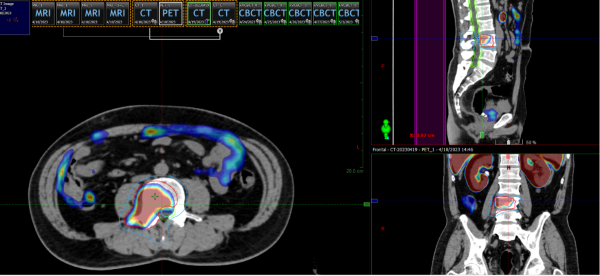
The patient's PET/CT scan report
Treatment Goals: ① Strive for long-term survival and potential cure; ② Alleviate pain symptoms and improve quality of life.
2023/4/14, The patient started ADT + Bicalutamide oral therapy. Concurrently, Zoledronic Acid was administered for bone protection. 2023/4/24 - 5/3, the patient underwent Linear Accelerator-based SBRT to the L4 bone metastasis. 2023/6/12 - 6/21, the patient underwent CyberKnife SBRT to the primary prostate lesion using dose-painting techniques and fiducial marker tracking. The patient has continued monthly ADT injections since completing radiotherapy.Tolerance to all treatments was good, with no significant adverse effects reported.
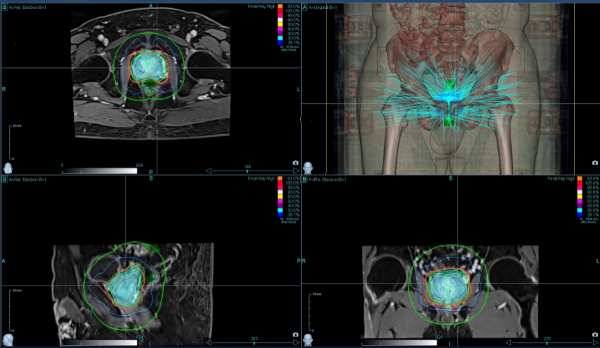
The patient's right lower limb pain significantly improved after radiotherapy
Post-treatment, the patient's right lower limb pain completely resolved. No significant intestinal or urinary side effects occurred following ADT and radiotherapy. The patient's mental state is excellent, and his life and work have returned to normal!
Serial PSA checks show a dramatic drop from the peak of 180.153 ng/ml. The most recent result is 0.07 ng/ml, representing a decrease of over 2500-fold!

Led by Dr. Yang Jun, Prof. Luo Pengfei, and Prof. Chen Tao, the Fosun Oncology Center brings together more than 20 world-class medical experts, each with over a decade of extensive oncology experience. Supported by a comprehensive range of advanced therapies — including robotic surgery, precision radiotherapy, minimally invasive intervention, CAR-T cell therapy, and Tumor Treating Fields (TTFields) — the center delivers one-stop, integrated cancer care designed to make treatment more accessible, efficient, and high-quality for every patient.
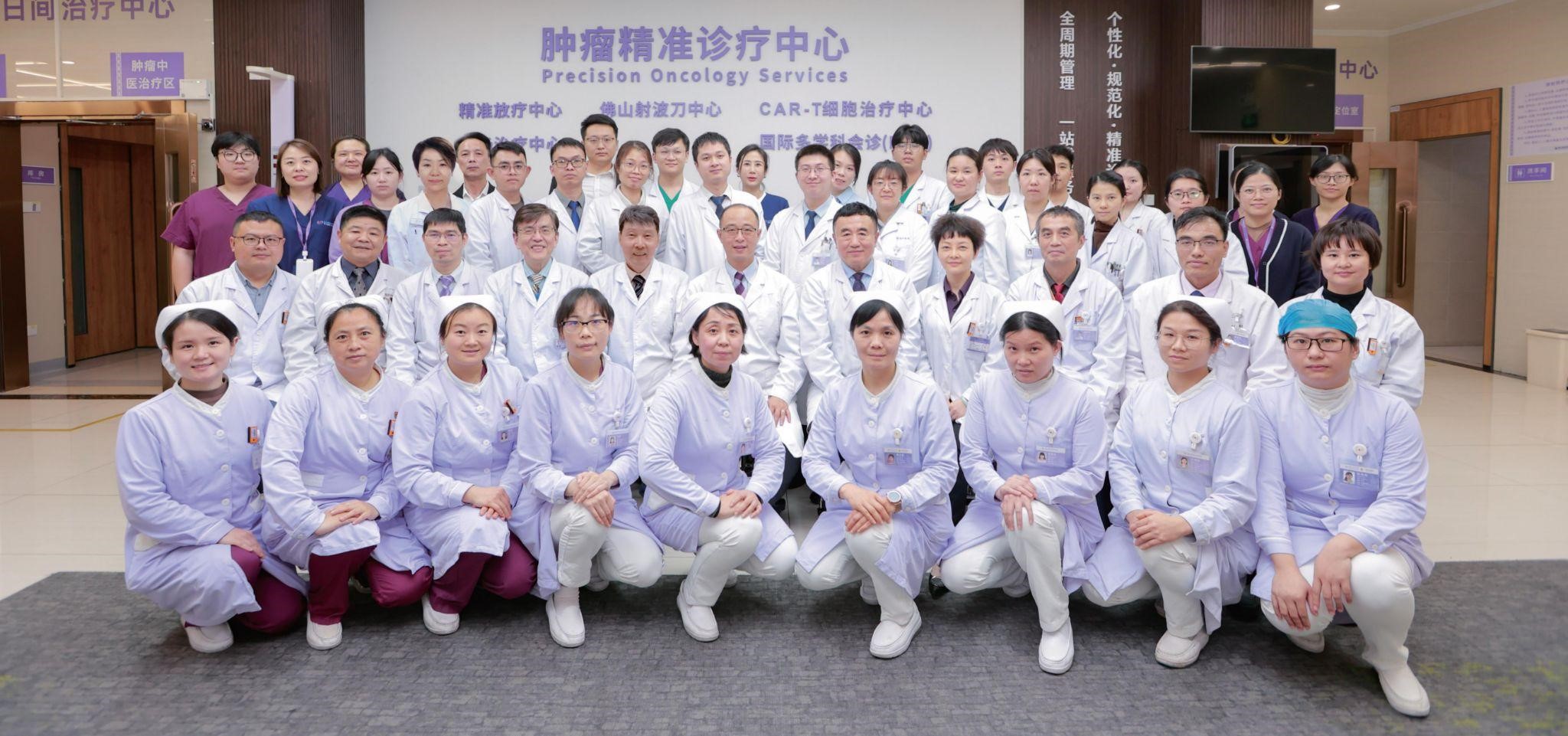
Key Highlights
- Over 60,000 annual oncology patient admissions across Fosun’s major international hospitals in 2025
More than 17,000 cumulative TACE procedures completed between 2023 and 2025 at Fosun Hospital Guangzhou alone, with international patients accounting for over 10% of total cases
- More than 1,000 successful CyberKnife treatments performed, demonstrating world-class expertise in precision radiotherapy
- A 29.3% five-year survival rate achieved for Glioblastoma Multiforme (GBM) through combined TTFields therapy, representing a significant improvement over the 4.7% baseline
Core Services
- Robotic surgery
- Precision radiotherapy
- Minimally invasive intervention
- CAR-T cell therapy
- Tumor Treating Fields (TTFields)
- Medical oncology
- PET/CT imaging
- Pulmonary nodule diagnosis
- VIP inpatient wards
- Integrated oncology clinics
- Traditional Chinese medicine for oncology
- Cancer screening and early detection
- Genetic testing and counseling
Founded in 1992, Fosun has grown over the past three decades into a global innovation-driven consumer group. In 2007, Fosun International Limited was listed on the Main Board of the Hong Kong Stock Exchange (stock code: 00656.HK). As one of the few Chinese enterprises with strong global operational and investment capabilities, Fosun has developed substantial technological expertise and innovation capacity across multiple industries.
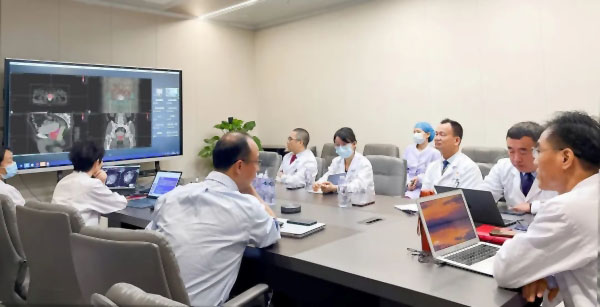
Established in 2010, Shanghai Fosun Health Technology is dedicated to building a world-renowned healthcare group in Asia. Today, the group operates 19 affiliated medical institutions across Foshan, Guangzhou, Shenzhen, Zhuhai, Shanghai, and other major cities, with a total of 6,600 hospital beds and 9 Internet Hospital licenses. Fosun Health ranks No. 1 among China’s private comprehensive medical groups. Its flagship institution, Fosun Foshan Chancheng Hospital, has ranked first among private hospitals in China for eight consecutive years and was honored with the 2026 Global Health Asia-Pacific “Oncological Medical Service Provider of the Year” award.

As the flagship hospital of Fosun Health, Fosun Foshan Chancheng Hospital was founded in 1958. The hospital currently hosts 28 key specialty development programs, including 2 provincial-level, 13 municipal-level, and 13 district-level key specialties. Its services span 22 medical disciplines, including spinal orthopedics, traditional Chinese medicine gynecology, obstetrics and gynecology, cardiovascular medicine, clinical laboratory medicine, anesthesiology, pediatrics, critical care medicine, ultrasound medicine, rehabilitation medicine, general practice, general surgery, and urology.
The hospital is equipped with globally advanced medical technologies, including the CyberKnife system and the Da Vinci Surgical Robot. It has 1,750 approved hospital beds and a multidisciplinary team of more than 2,800 medical professionals. The hospital records nearly 3.19 million outpatient visits annually and more than 67,000 inpatient discharges each year.
Fosun Foshan Chancheng Hospital has received numerous prestigious recognitions, including:
Global Health Asia-Pacific “Traditional Chinese Medicine Hospital of the Year”
Global Health China “Hospital of the Year”
No. 1 ranking on the GAHA Top 500 Private Hospitals in China list for eight consecutive years
The hospital has also been recognized as:
A National Model Unit for Improved Medical Services
A National Drug Clinical Trial Institution (GCP)
A National Standardized Residency Training Base
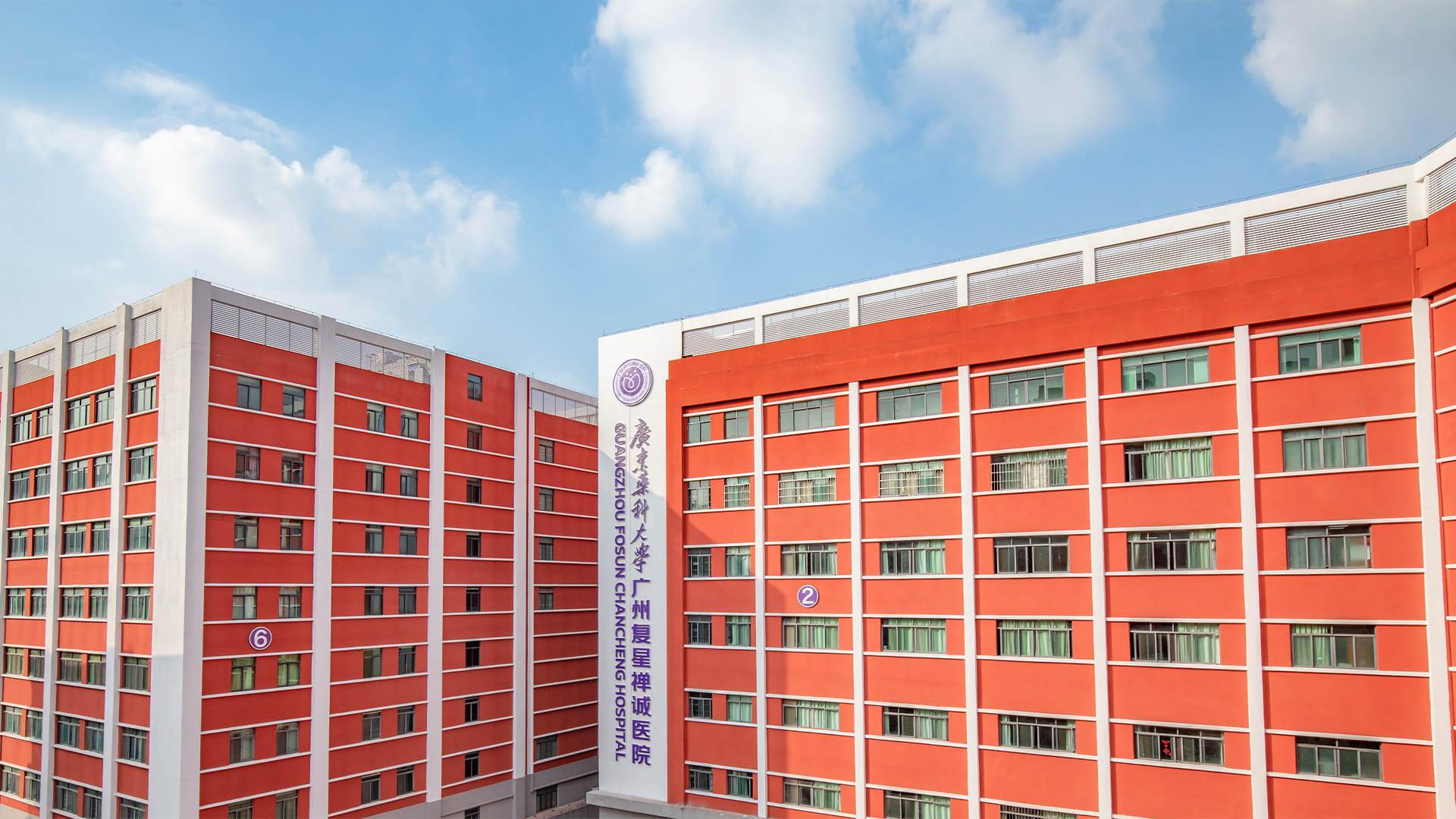
Established in 2003, Guangzhou Fosun Chancheng Hospital specializes in cardiovascular medicine, oncology, and neurosciences. The hospital has established a National Chest Pain Center, Stroke Center, Trauma Center, and MDT Center, supporting the development of emergency medicine, obstetrics and gynecology, intensive care, anesthesiology, gastroenterology, general surgery, urology, and general practice.
The hospital operates more than 800 inpatient beds and 48 clinical and medical technology departments, supported by a team of over 880 healthcare professionals.
Guangzhou Fosun Chancheng Hospital has received several honors and industry recognitions, including:
EMBA Innovation Practice Base
Guangdong Private Medical Reform & Innovation Brand
Guangdong Private Medical Industry Pioneer Brand
Outstanding Brand Hospital for Medical Investment Contribution
Upload your PSA levels, mpMRI images, biopsy pathology report, PSMA PET-CT, and NGS results (BRCA, AR, MSI). Our multidisciplinary prostate cancer team will provide a personalized treatment plan—including potency and continence preservation assessment and interventional downstaging strategy—within 48 hours.