
2026-01-22
Recently, 70-year-old Mr. Li (pseudonym) sought medical attention due to abdominal pain and distension. Following examination, he was diagnosed with rectal cancer complicated by bowel obstruction, as well as liver metastasis.
Under the guidance of the Multidisciplinary Team (MDT) at Foshan Chancheng Central Hospital ("Foshan Chancheng Hospital"), surgeons utilized the Da Vinci Surgical System to perform a synchronous resection. Both tumors were removed in a single operation, allowing the patient to regain a new lease on life.
Sudden Abdominal Pain Reveals Hidden Danger: Obstruction and Metastasis
Mr. Li initially presented to the emergency department with "sudden abdominal pain and distension." He was diagnosed with intestinal obstruction caused by a rectal tumor. Further CT imaging revealed a space-occupying lesion in the liver, confirming rectal cancer with hepatic metastasis.
Given the acute obstruction, the medical team first placed a stent to decompress the bowel and relieve symptoms. Following this, further evaluation indicated that while the condition was severe, the liver metastasis was technically resectable, offering a window for surgical intervention.
MDT Collaboration: A "One-Stage" Curative Strategy
In response to such a complex case, Foshan Chan Medical Center immediately activated a multidisciplinary team (MDT) model, with experts from departments such as gastrointestinal surgery and hepatobiliary and pancreatic surgery conducting joint consultations and repeated discussions to formulate a minimally invasive surgical plan that takes a two-pronged approach: first, removing the liver metastases and gallbladder, and then performing a radical resection of the rectal cancer, thus resolving both lesions in one surgery and reducing patient trauma and recovery time.
Phase I: Precision Resection of Complex Liver Metastasis + Cholecystectomy
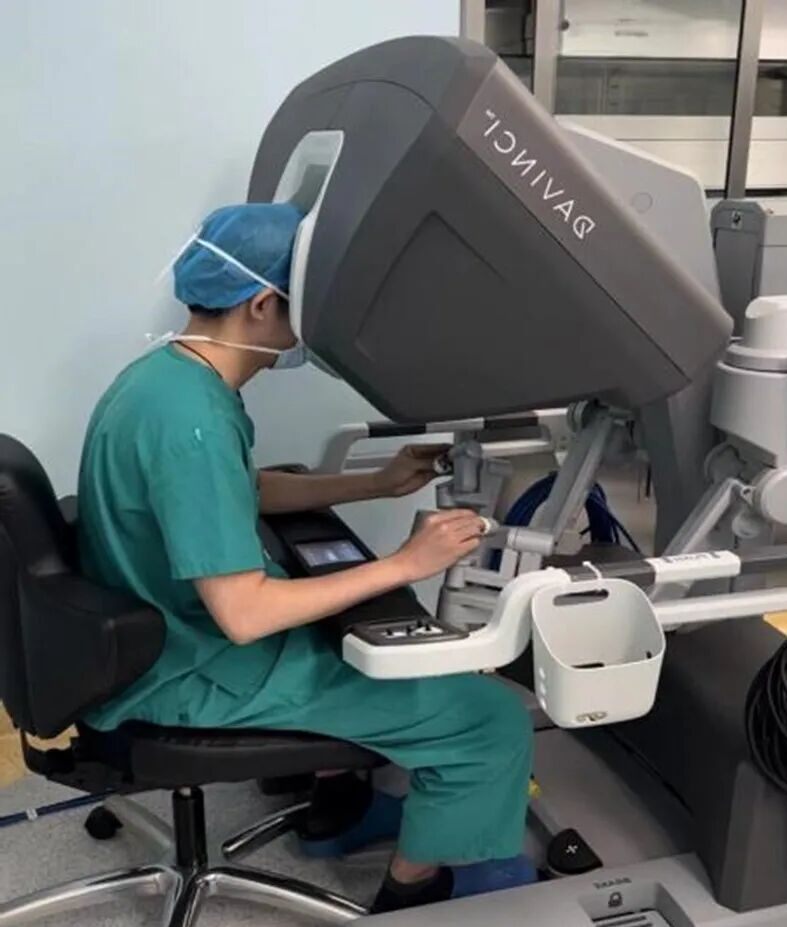
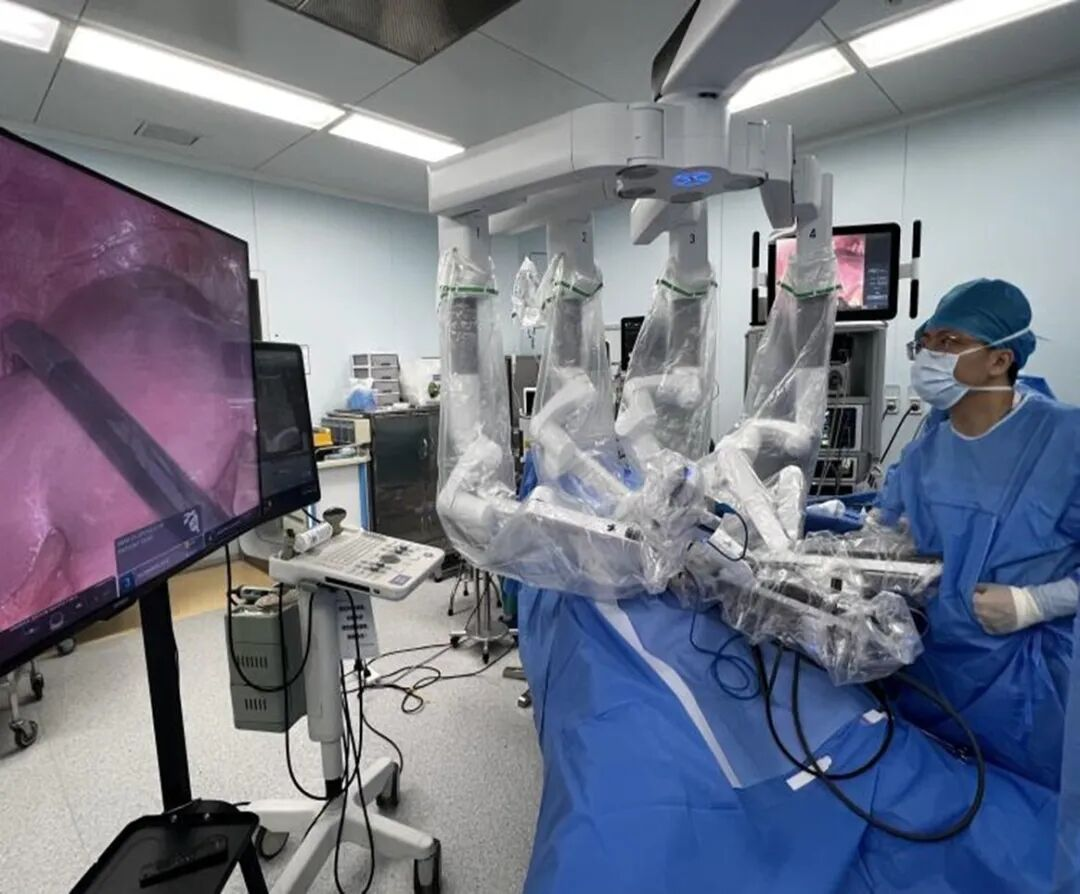
The first phase of the surgery was led by Associate Chief Physician Zhang Haixiong of the Hepatobiliary and Pancreatic Surgery Department. Utilizing the high-definition magnification of laparoscopic technology, the surgical field could be precisely magnified up to 10 times, achieving millimeter-level localization of liver metastases. Combined with the flexible operation of the da Vinci robotic arm, the team meticulously and completely removed the liver tumor tissue.
Considering the prevention of postoperative biliary system complications, Associate Chief Physician Zhang Haixiong simultaneously performed a cholecystectomy during the operation, further ensuring surgical safety.
Phase II: Da Vinci Robot Conquers the Rectal Tumor
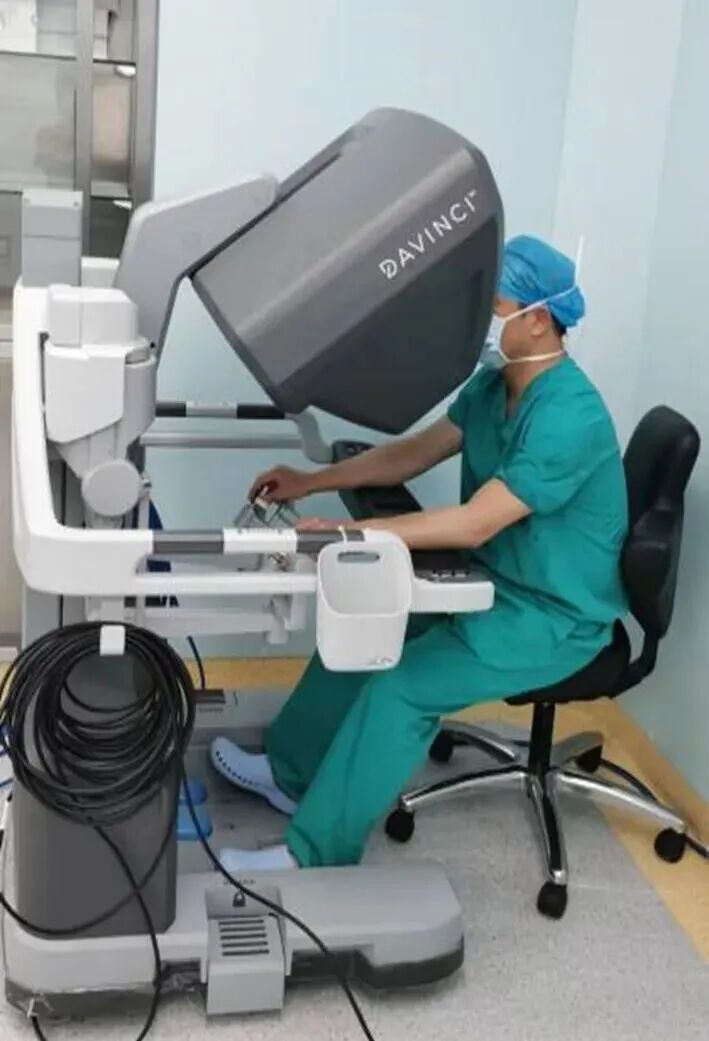
Following the liver and gallbladder surgeries, the procedure seamlessly transitioned to the da Vinci robotic-assisted system, with Dr. Liao Jiannan, Chief Physician of Gastrointestinal Surgery, leading the radical resection of rectal cancer. The narrow pelvic space presented significant challenges, but the robotic arms, capable of 540° rotation, overcame the limitations of traditional surgical vision. Under Dr. Liao's precise control, tissues were dissected layer by layer, and the lesion was accurately removed.
During the surgery, the team not only removed the rectal tumor and potentially affected lymph nodes but also effectively managed abdominal adhesions caused by tumor infiltration. The entire process was smooth and efficient, creating favorable conditions for Mr. Li's rapid postoperative recovery.
Advantages of Minimally Invasive Technology
According to Directors Liao Jiannan and Zhang Haixiong, complex cases of dual tumors with metastasis previously often required multiple open surgeries, which were not only highly invasive but also resulted in long recovery periods for patients. However, with the help of minimally invasive techniques such as the da Vinci surgical robot, combined with a multidisciplinary collaborative approach, "dual cancer treatment" can be completed under a single anesthesia, significantly reducing surgical trauma and accelerating postoperative recovery.
Mr. Li was able to get out of bed and move around on the third day after surgery, and his physical condition steadily improved. He subsequently started further adjuvant therapy smoothly, demonstrating a good recovery trend.
Hope for Advanced Stage Malignancy
Many people believe that tumor metastasis means "no cure," but clinical practice shows that patients with rectal cancer liver metastasis can improve their 5-year survival rate through standardized comprehensive treatment, including radical surgery combined with postoperative adjuvant chemotherapy and targeted therapy, bringing real hope for survival to patients with advanced disease.
For these complex cases, the core of scientific and effective treatment lies in three points:
Minimally invasive technology support: Relying on advanced equipment such as the da Vinci robot and laparoscopy, surgical trauma is reduced, patient pain is alleviated, and the recovery period is shortened;
Close multidisciplinary collaboration: Seamless cooperation among departments such as surgery, oncology, and radiology breaks down disciplinary barriers to develop personalized optimal treatment plans for patients;
Individualized precision treatment: Based on the location, number, and size of tumor metastases, surgical strategies are flexibly adjusted to balance treatment effectiveness and patient quality of life.
Expert Reminder: Early Detection is Key
Early symptoms of rectal cancer can easily be confused with hemorrhoids, leading to delayed diagnosis and treatment for many patients. Experts advise that if the following symptoms occur, it is necessary to seek medical attention promptly for examination to rule out the possibility of a tumor:
Persistent abdominal pain, blood or mucus in the stool;
Changes in stool shape and bowel habits (such as alternating diarrhea and constipation);
Unexplained weight loss, fatigue, and anemia.
Early detection, early diagnosis, and early treatment are key to improving the cure rate and survival rate of colorectal cancer. Regular colonoscopies are an effective means of colorectal cancer screening.